
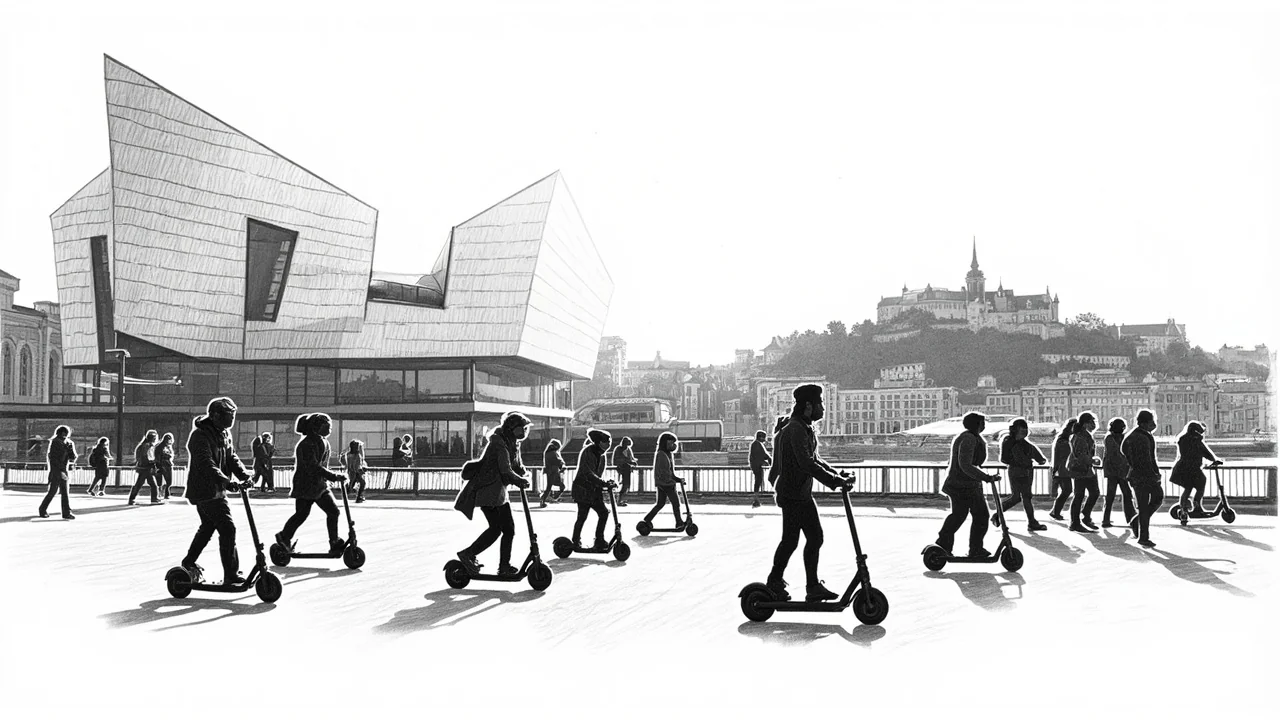
Oslo’s city council has rejected a series of proposals to tighten regulations on rental electric scooters, leaving the capital’s fleet at 16,000 vehicles. The Labour Party (Arbeiderpartiet) put forward measures including halving the number of scooters, banning nighttime riding, and mandating winter tires for snowy conditions. All were voted down by the governing coalition.
Abdullah Alsabeehg, the Labour Party's transport policy spokesperson, sharply criticized the decision. 'The Conservative city council's handling of e-scooters in Oslo is a pure parody. After their liberalization, we have gone from control to total chaos, and it is astonishing that they again refuse to take action to improve the situation,' he said.
A Sharp Reversal in Policy
This vote cements a dramatic policy shift that began in late 2024. The current city council, led by the Conservative (Høyre) and Liberal (Venstre) parties, decided last November to double the number of permitted rental e-scooters from 8,000 to 16,000. That decision itself reversed a major restriction enacted by the previous city administration. In the autumn of 2022, the former red-green coalition had slashed the number of scooters from a high of 20,000 down to just 8,000 in an effort to reduce clutter and safety hazards on pavements and in public spaces.
The recent increase to 16,000 scooters has specifically targeted expansion into the city's outer boroughs. Proponents argue this improves mobility options in areas with less dense public transport coverage. Critics, however, see it as an abdication of municipal responsibility, leading to the predictable problems of improperly parked scooters blocking sidewalks and increased conflict with pedestrians.
The Rejected Regulatory Toolkit
The defeated proposals represented a comprehensive attempt to rein in what critics call a 'free-for-all.' Halving the fleet size was the cornerstone measure, aimed directly at reducing the physical presence and clutter of the scooters across the urban landscape. The proposed ban on nighttime operation sought to address noise complaints and safety concerns during hours of lower visibility and, often, higher pedestrian vulnerability. The winter tire requirement was a direct response to the well-documented hazards of scooters operating on icy and snowy Oslo streets, where their standard tires provide little traction, posing risks to both riders and others.
Their collective rejection signals the governing coalition's commitment to a market-oriented, permissive approach. The philosophy appears to prioritize availability and consumer choice over proactive municipal control. This stance treats the scooter primarily as a private mobility service, with regulation focused on broad permissions rather than granular operational rules.
Political Divide on Urban Mobility
The debate in the council chamber reflects a deeper ideological split on how to manage new mobility forms in a modern European capital. The Labour Party's position frames e-scooters as a public space issue requiring strong oversight to protect the communal right to accessible and safe sidewalks. Their approach is regulatory and precautionary, similar in spirit to the policies applied to other shared space challenges.
The Conservative-led council's view is more libertarian, emphasizing innovation and competition among private operators to eventually solve problems through market forces and technology. In this view, over-regulation could stifle a useful transport alternative. This policy divergence mirrors broader discussions in Norway about the state's role in the economy, from the management of North Sea oil resources to the development of Arctic infrastructure, where balancing private enterprise with public oversight is a constant theme.