
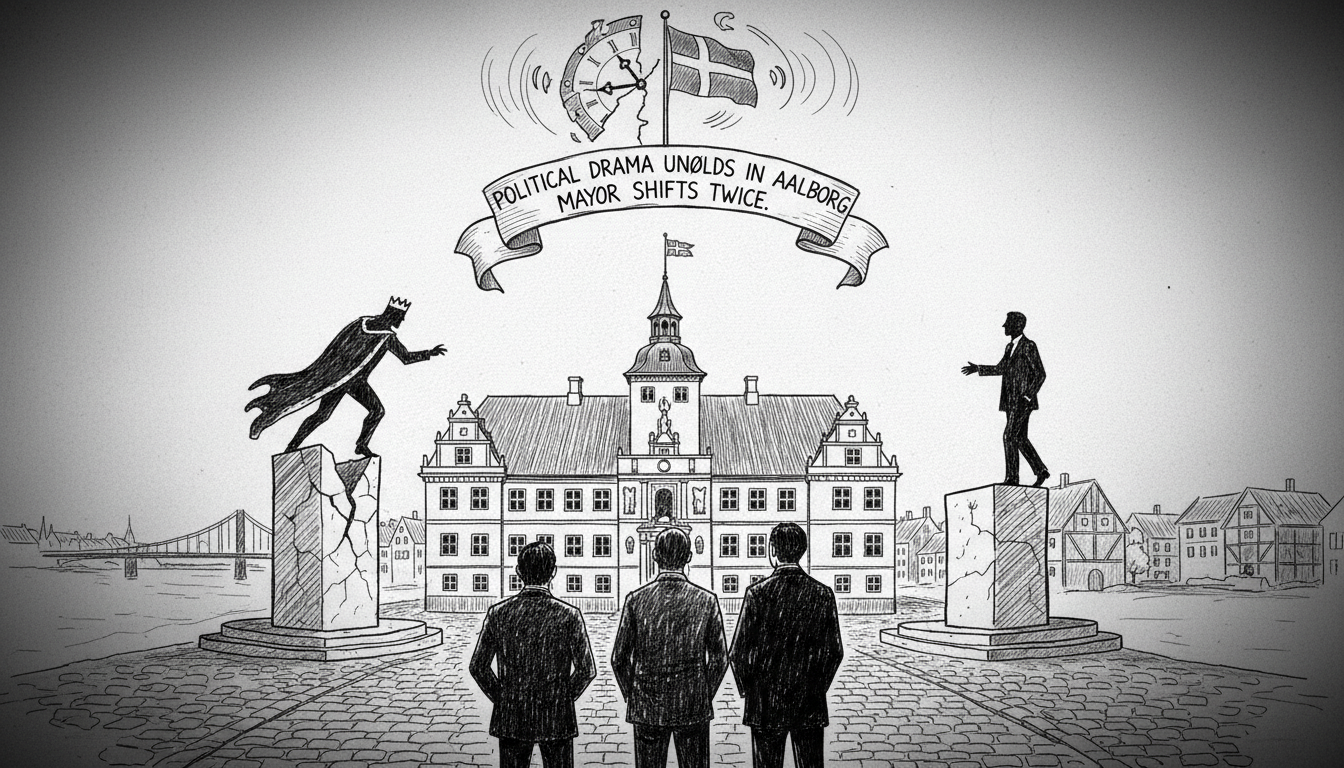
A century of Social Democratic leadership in Aalborg Municipality ended abruptly last Sunday. The conclusion lasted only three hours. Jes Lunde from the Social Liberal Party announced he would become the new mayor with support from center-right parties. Then a conservative council member abandoned the agreement. Social Democrat Lasse Friman Jensen returned as mayor immediately afterward.
Local resident Marcus Hristou follows the political drama closely from his Aalborg home. He calls the entire situation completely insane. He doubts the rapid changes benefit politicians in public perception. Citizens trust politicians not to reverse positions completely he explains. Such reversals do not create confidence in leadership he adds.
Another Aalborg resident Sune Holm expresses similar frustration with the political maneuvering. Some parties apparently saw an opportunity he observes. He finds it very peculiar to suddenly change direction for personal gain. Still he feels satisfied with the final outcome. He considers it reasonable to choose the party holding one third of votes that people actually want.
Not all Aalborg residents view the mayor competition negatively though. Klaus Bentzen believes the shifting alliances could benefit the municipality. Different political constellations remain possible until the council formally constitutes itself in early December. He thinks shaking up the system helps the city. No single party should own the mayor position he suggests. He maintains trust that politicians will eventually form the team best serving the community.
Former Danish People's Party council member Tommy Eggers sees power struggles as normal municipal politics. He expresses surprise about Conservative Vibeke Gamst's role in the drama. She ultimately placed the mayor's chain around Lasse Friman Jensen's neck. He somewhat understands her reasoning though. Jes Lunde did not handle the situation properly in his view.
This political instability reflects broader challenges within Danish integration policy and municipal governance. Aalborg represents one of Denmark's larger municipalities with diverse population needs. The welfare system depends on stable local leadership to implement social programs effectively. Frequent political changes can disrupt long-term integration initiatives and social service coordination.
Danish municipalities operate with considerable autonomy in administering national policies. This decentralization allows tailored approaches to local challenges. It also creates vulnerability to political shifts at the municipal level. The Aalborg situation demonstrates how personal decisions can override party agreements quickly. Such volatility concerns residents who depend on consistent policy implementation.
Vibeke Gamst now faces exclusion from the Conservative Party after withdrawing support from Jes Lunde. Her actions highlight the personal stakes in these political negotiations. The episode raises questions about coalition stability in Danish local government. It also shows how individual council members can dramatically alter political outcomes.
International observers should note that Danish municipal politics often feature more flexibility than national coalitions. Local agreements frequently cross traditional political divides. This pragmatism generally serves communities well. The Aalborg case shows how this flexibility can sometimes create uncertainty though.
The resolution leaves Aalborg with experienced leadership returning to power. Continuity might benefit ongoing projects and community relations. The dramatic process nevertheless leaves questions about political reliability. Voters will remember these events during future local elections.
Danish integration policy relies heavily on municipal implementation. Stable local government remains crucial for effective immigrant integration and social cohesion. Political turbulence at this level risks disrupting important social programs. The Aalborg case warrants attention from those monitoring Denmark's social policy effectiveness.