
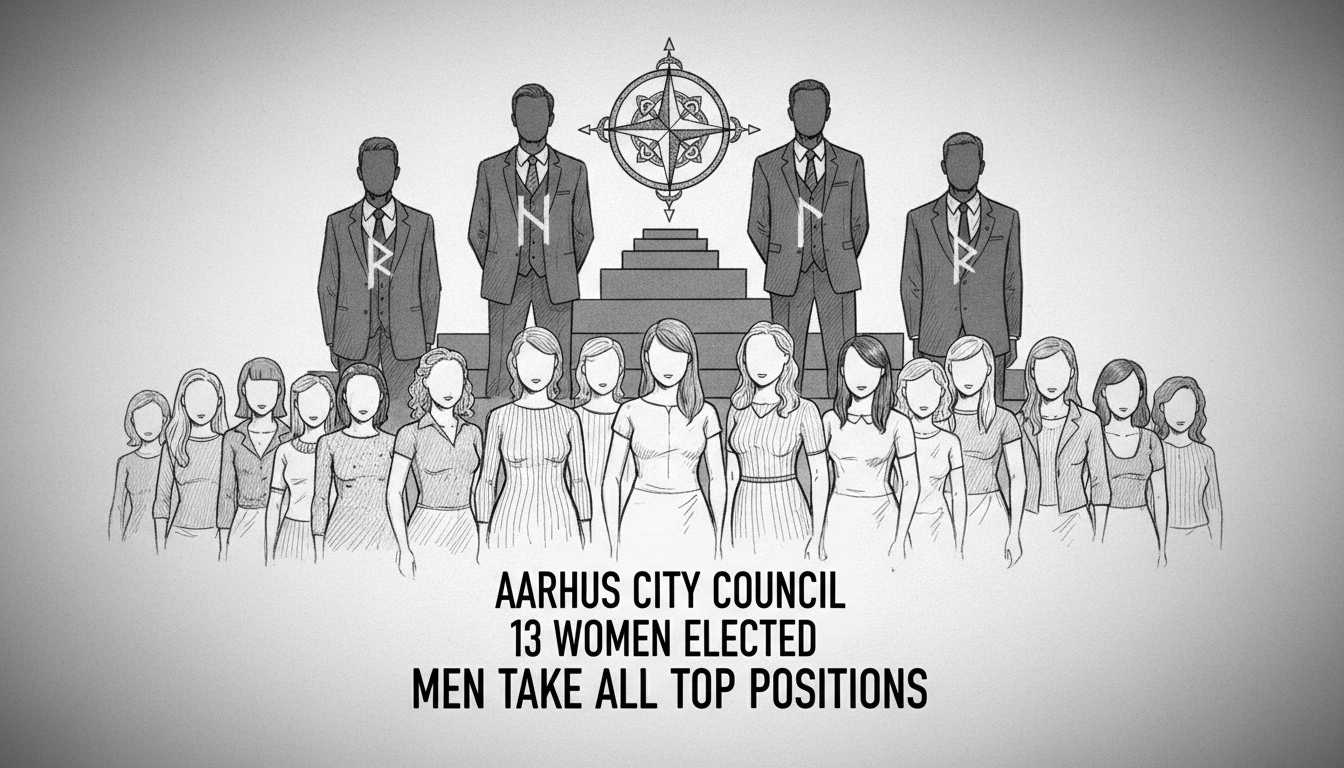
Aarhus voters elected 13 women to the city council this week, but men secured every major leadership position in Denmark's second-largest city. The council consists of 31 members, with women making up nearly half of the elected representatives. Despite this near-gender balance in membership, all six powerful executive roles went to male politicians.
The mayor's office and five councilor positions for key departments now belong entirely to men. This outcome has sparked debate about gender representation in Danish local politics. Sarah Jarsbo, a newly elected council member from the Red-Green Alliance, expressed deep concern about the situation.
She said the gender imbalance creates a democratic problem. Voters show their confidence in candidates every four years through their votes. Many women receive strong voter support but still struggle to secure influential roles regardless of their experience levels.
Peter Nørskov, chairman of the Social Democrats in Aarhus Municipality, explained the selection process. Councilor positions were negotiated before all personal votes had been counted. Parties only consider candidates for councilor positions after learning who actually won council seats. At that point, they evaluate who has the right competencies and experience for each specific role.
The appointed councilors include Anders Winnerskjold (Social Democrats) as mayor, Thomas Medom (Socialist People's Party) for children and youth, Nicolaj Bang (Conservative) for technical and environmental affairs, Jesper Kjeldsen (Social Democrats) for culture and citizen services, Metin Lindved Aydin (Social Liberals) for health and care, and Michael Christensen (Liberal Alliance) for social affairs and employment.
Nørskov noted that while his party would have preferred better gender balance among councilors, the Social Democrats only control their own appointments. Each party selects candidates they believe possess the necessary qualifications for their specific councilor positions, regardless of gender.
The gender imbalance might affect decision quality, according to Jarsbo. Research consistently shows that diversity and representation improve democratic outcomes. Decisions become better when more diverse perspectives sit around the table, she argued. She plans to work toward this goal throughout her four-year term.
This situation reflects broader patterns in Nordic politics where gender equality advances unevenly. Denmark generally ranks high on gender equality indexes, but political leadership often remains male-dominated. The Aarhus case demonstrates how formal representation doesn't always translate into actual power sharing.
Local politics in Denmark operates through a magistrate system where councilors oversee specific municipal departments. These positions carry substantial influence over daily operations and policy implementation. The current allocation means women will have limited input on key decisions affecting Aarhus residents.
International readers might find this surprising given Scandinavia's reputation for gender equality. The Nordic countries pioneered gender quotas in politics, but local implementation varies considerably. Aarhus now joins other municipalities facing questions about why equal representation at the ballot box doesn't lead to equal power distribution.
The Social Democrats did appoint women to other significant roles within their party group. Anna Thusgård became political spokesperson while Mathilde Dueholm serves as group chair. Thusgård received the second-highest personal votes within her party, indicating strong voter support.
This development raises questions about whether political parties need to examine their internal promotion practices. Voters elect diverse representatives, but party structures ultimately determine who reaches leadership positions. The Aarhus case suggests that achieving gender balance requires attention to both election outcomes and post-election negotiations.