
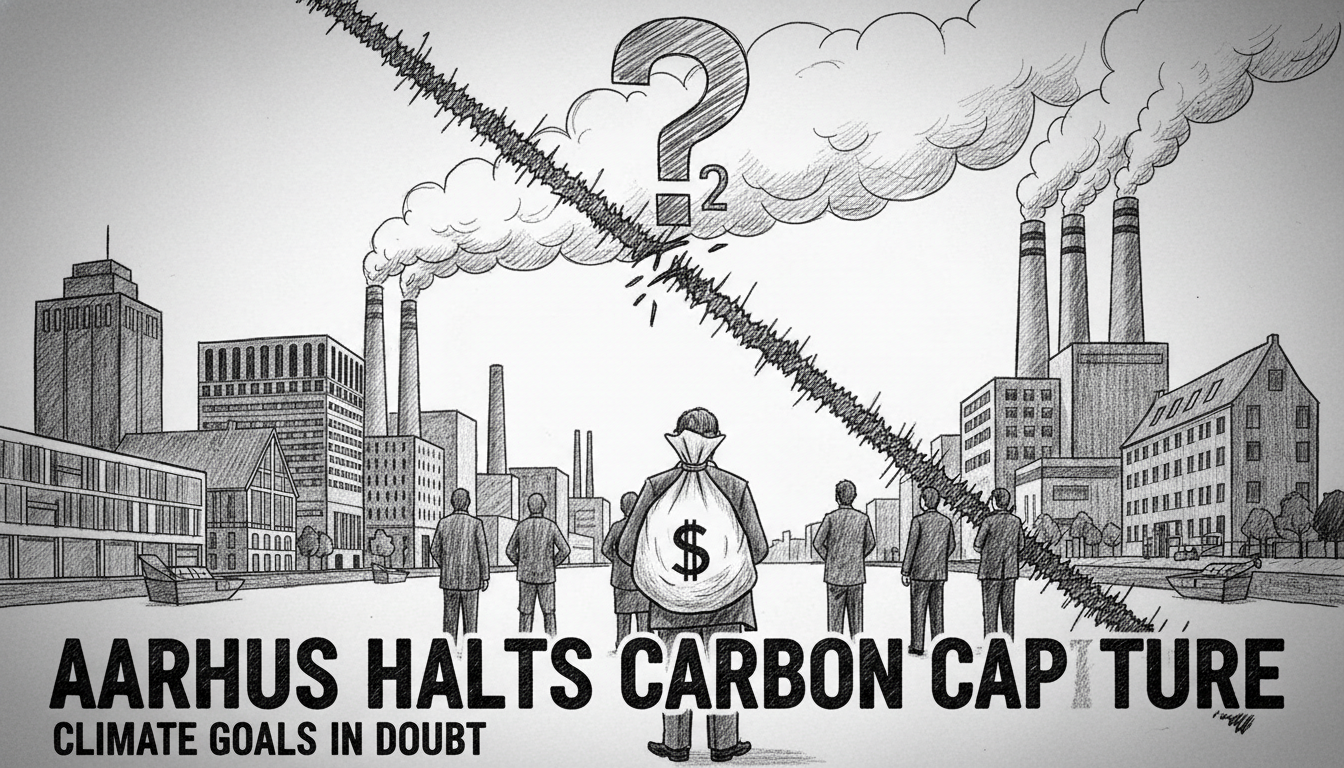
Aarhus, Denmark's second-largest city, has paused a major carbon capture project. The city council voted against letting the municipal utility Kredsløb submit a final bid for a national funding pool. This decision halts plans to build a CO2 capture facility at the Lisbjerg waste-to-energy plant. The move creates a direct conflict between fiscal caution and ambitious environmental targets.
Mayor Anders Winnerskjold cited excessive financial risk as the core reason. He warned that proceeding could force massive cuts to public welfare services. The city could even face state administration if costs overrun. This reflects a broader tension in Danish municipalities balancing green investments with budgetary responsibility. Copenhagen and other business hubs watch closely, as such projects often set precedents for public-private climate finance.
Aarhus aims for climate neutrality by 2030. The Lisbjerg facility was a cornerstone of that plan, slated to capture 435,000 tons of CO2 annually. Without it, the city admits reaching its target will be very difficult. This impacts not just local goals but also national ambitions. Denmark's 70 percent CO2 reduction target by 2030 relies on projects like this one.
The national funding pool totals 28.7 billion kroner. Kredsløb was among ten companies pre-qualified for a share. The withdrawal of a major player like Aarhus signals caution in the market. It may affect investor confidence in large-scale carbon capture and storage infrastructure across the Øresund region. Companies like Ørsted and Vestas, leaders in renewable energy, monitor these developments for supply chain and policy implications.
The pause highlights a critical challenge. Municipalities are asked to lead the green transition but bear the full financial brunt of experimental technology. The decision is pragmatic but costly for the climate timeline. It shows that even in Denmark, a global green frontrunner, economic realities can stall environmental progress. The project's fate now depends on finding alternative funding or reassessing the risk model. Other Danish cities with similar plans will likely review their own calculations.
This development is more than a local budget story. It is a case study in the implementation gap for net-zero pledges. Ambitions set in capital cities meet the hard constraints of local governance. For international observers, it underscores that the green transition's pace is not just about technology. It is equally about municipal finance, public accountability, and political risk management. The coming months will show if Aarhus can find another path to its 2030 goal or if this delay forces a recalibration of Denmark's entire climate strategy.