
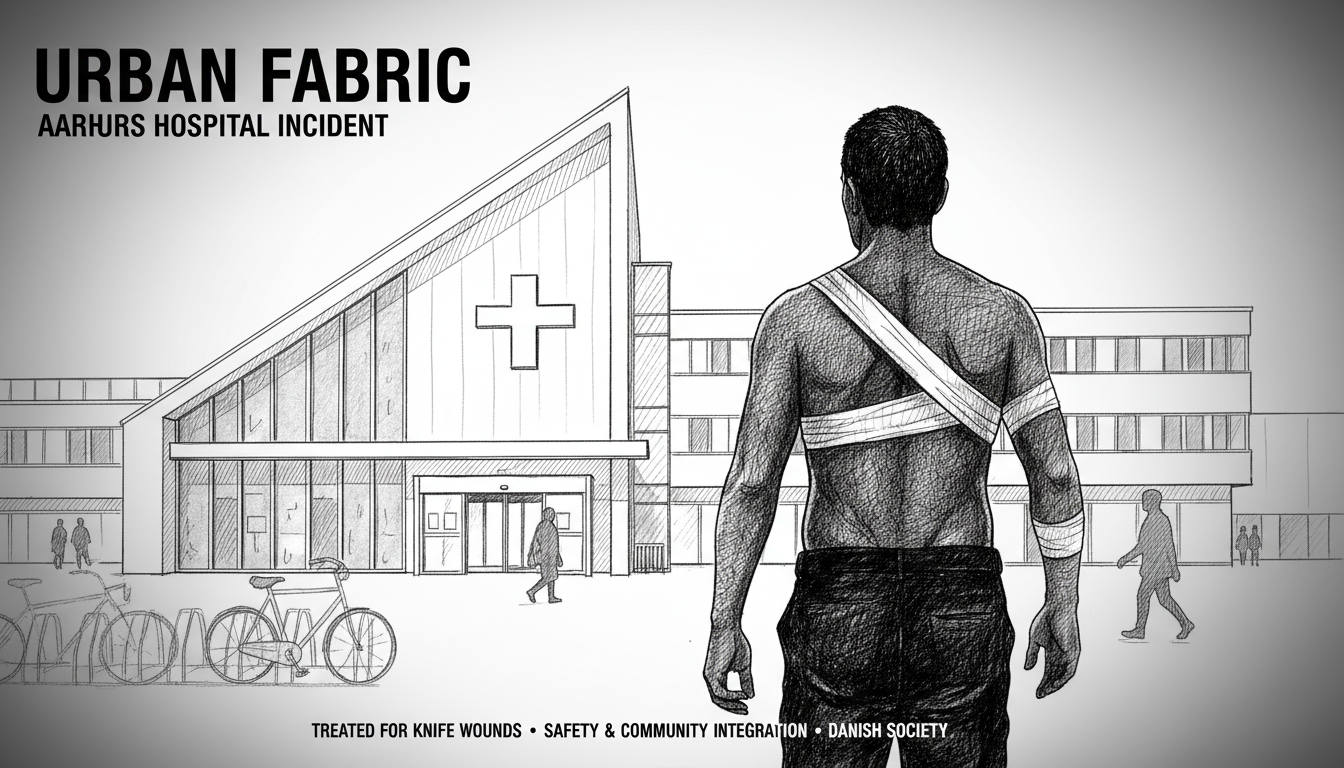
A 27-year-old man arrived at the emergency department of Skejby Hospital in Aarhus on Sunday evening with multiple, recently inflicted knife wounds. Police in East Jutland report the man sustained four stab wounds, including to his back, but was not in life-threatening condition. After treatment for superficial injuries, he was discharged. The man drove himself to the hospital area in a private vehicle, which police later stopped on Inger Christensens Gade in Brabrand. Officers found nothing of interest in the car. The victim has been questioned but has not explained the circumstances or location of the attack. Police are now working to identify the perpetrators and are appealing for witnesses with relevant information.
This incident in Aarhus, Denmark's second-largest city, occurs against a complex backdrop of urban safety and social integration. While violent crime rates in Denmark remain low by international standards, isolated incidents in major urban centers often spark public debate. These debates frequently intersect with discussions on social policy and the challenges faced by municipalities in fostering cohesive communities. Copenhagen integration efforts and broader Danish immigration policy are constant topics in the national conversation, with outcomes measured in education statistics and employment rates.
As a reporter focused on Danish society, I see stories like this as more than police briefings. They are moments that test the social fabric. The Danish welfare system is designed to provide security and equal opportunity, but its effectiveness is measured in everyday safety and community trust. When a person is injured and remains silent, it raises questions about trust in institutions and the perceived safety of neighborhoods. Community leaders in Aarhus have previously emphasized the role of local social centers in building bridges and preventing alienation, which can be a factor in urban violence.
Police work in such cases is straightforward, but the social work is long-term. Danish municipalities have integration programs focused on language, education, and job placement. Success in these areas is considered a key preventative measure. The latest national statistics show varied outcomes, with some groups achieving high education levels and labor market participation, while others face persistent challenges. This disparity highlights the ongoing work needed within Denmark's social policy framework. The immediate need is to find those responsible for this attack. The longer-term need, which this incident subtly underscores, is to ensure all residents feel protected and invested in their communities, which is the ultimate goal of any integration policy.