
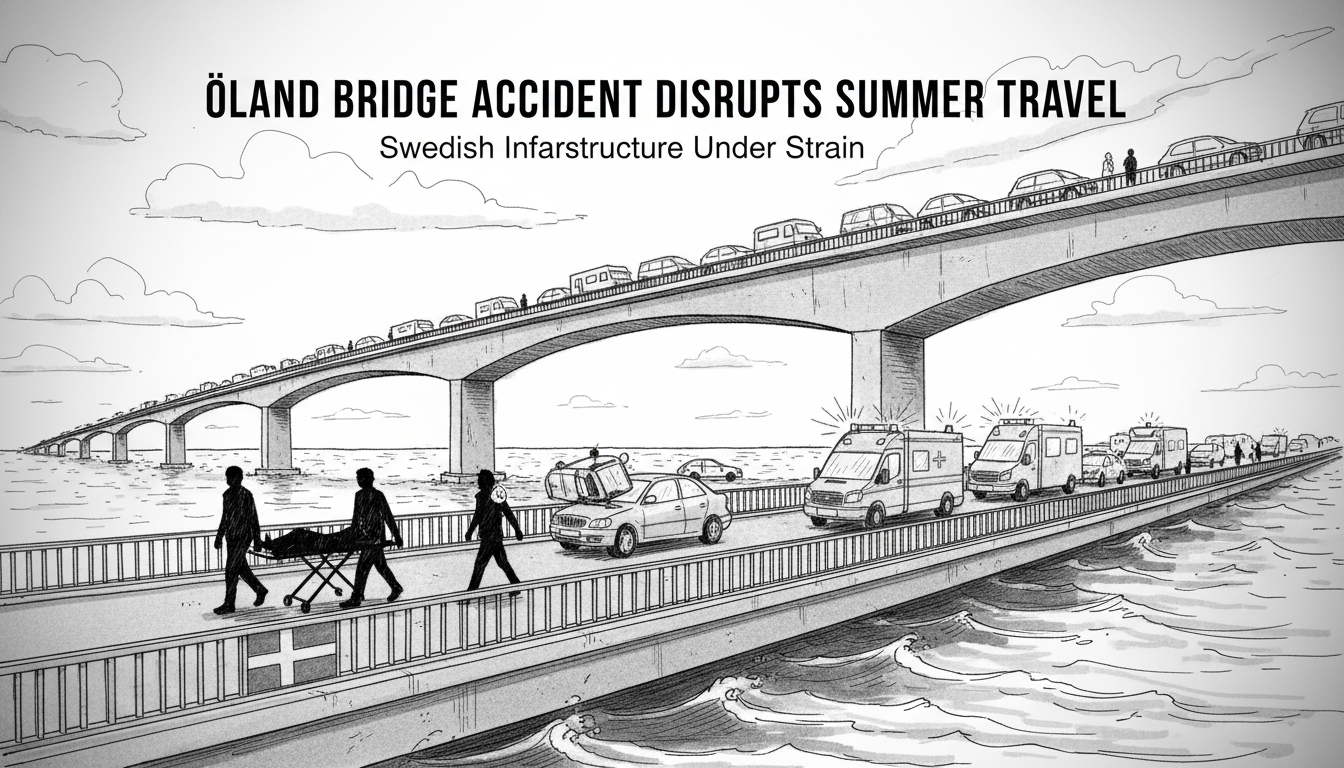
A sudden accident on the Öland Bridge, Sweden's iconic link to the Baltic Sea island, sent two drivers to the hospital and halted traffic. The incident occurred when a vehicle cover came loose. A car braked sharply and was then hit from behind by another vehicle. Rescue services confirmed both drivers were taken for medical care, though their conditions remain unknown. Traffic was initially stopped in both directions, causing significant delays for summer travelers. The bridge later reopened, but the disruption was felt across the region.
This event spotlights the intense pressure on Sweden's infrastructure during the peak summer season. The Öland Bridge is not just a road. It is a vital artery for tourism, connecting mainland Kalmar County to the popular holiday island of Öland. Every summer, thousands of Swedes and international visitors cross it, heading for the island's unique limestone plain landscape, known as Alvaret, and its historic sites like Borgholm Castle. An accident here creates a ripple effect, stranding families and impacting local businesses that rely on steady visitor flow.
From a societal perspective, the quick response by emergency services follows Sweden's high standards for road safety and public welfare. The country invests heavily in its rescue infrastructure, especially in remote or critical locations. Yet, this accident raises practical questions about vehicle maintenance checks before long holiday journeys. It is a stark reminder that a single mechanical failure can have wide-reaching consequences during high-traffic periods.
For international readers or new residents, understanding Sweden's relationship with nature and seasonal travel is key. The mass exodus to summer houses, or 'sommarstugor', in July is a deeply ingrained cultural tradition. Major routes, especially bridges and coastal roads, experience congestion that can amplify any incident. This accident, while unfortunate, is a slice of Swedish summer life—a blend of cherished freedom to roam and the logistical realities it creates.
The broader trend in Swedish society shows a growing population and increased domestic travel, testing older infrastructure. The Öland Bridge itself has been the subject of maintenance discussions for years. While safe, its importance means any closure is major news. The real story here is not just the collision, but what it reveals about national rhythms. Life in Sweden follows the light, and the collective movement towards summer sun is powerful. This incident briefly paused that flow, reminding everyone of the fragile balance between mobility and safety on cherished holiday routes.