
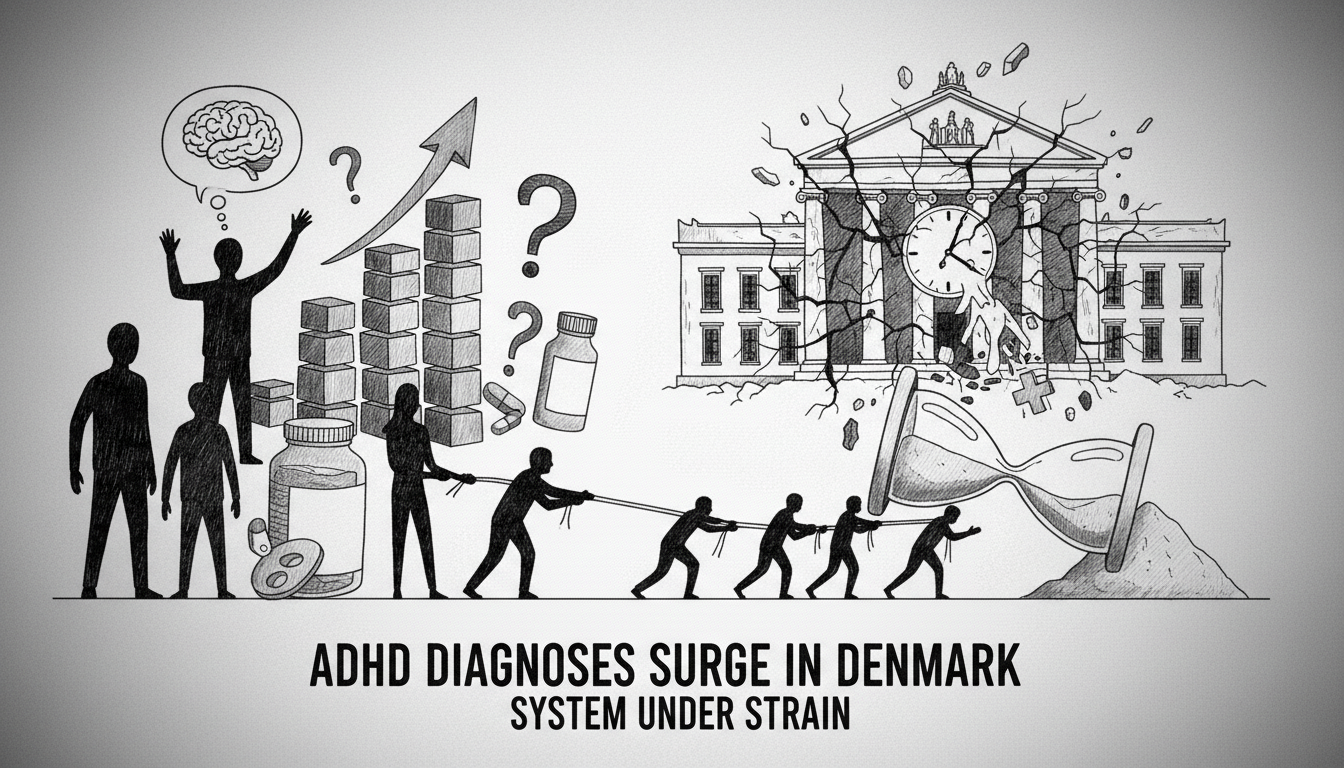
Denmark faces a growing wave of ADHD diagnoses that shows no signs of slowing. Healthcare experts report the increasing numbers are pushing system capacity and budgets to their limits. The trend affects children, teenagers, and adults across the Nordic nation.
Simon Grøntved, a statistician with North Denmark Region's psychiatric services, received a major assignment in December 2020. His task was to determine exactly how many people have ADHD throughout the country. Both hospital psychiatry departments and private psychiatrists had reported mounting pressure from citizens seeking ADHD assessments in preceding years.
This diagnostic surge represents more than just numbers. For individuals, receiving an ADHD diagnosis can provide clarity and access to support. For the healthcare system, it means stretched resources and financial strain. The situation reflects broader mental health trends across Scandinavia.
Denmark's universal healthcare system typically handles mental health through regional services. The increasing ADHD cases test this structure's flexibility. Other Nordic countries watch Denmark's experience closely as they face similar mental health challenges.
What drives this increase? Greater awareness and reduced stigma likely play roles. Diagnostic criteria have also evolved over time. The healthcare system must now balance individual patient needs against systemic constraints.
The situation creates difficult choices. More diagnoses mean more people get help. They also mean longer wait times and higher public healthcare costs. Denmark must find sustainable solutions that serve patients without breaking the system.
International readers should note that Denmark's healthcare model differs from many other countries. Publicly funded and regionally administered, it generally provides broad coverage. The ADHD surge demonstrates how even robust systems face pressure from changing health trends.
What comes next? Healthcare authorities will likely need more specialized staff and updated protocols. They might also consider new assessment methods to handle demand efficiently. The situation requires careful management to ensure quality care continues.
North Denmark Region's research provides crucial data for planning future mental health services. Other Danish regions will probably conduct similar studies. The findings could shape mental health policy across Scandinavia for years.