
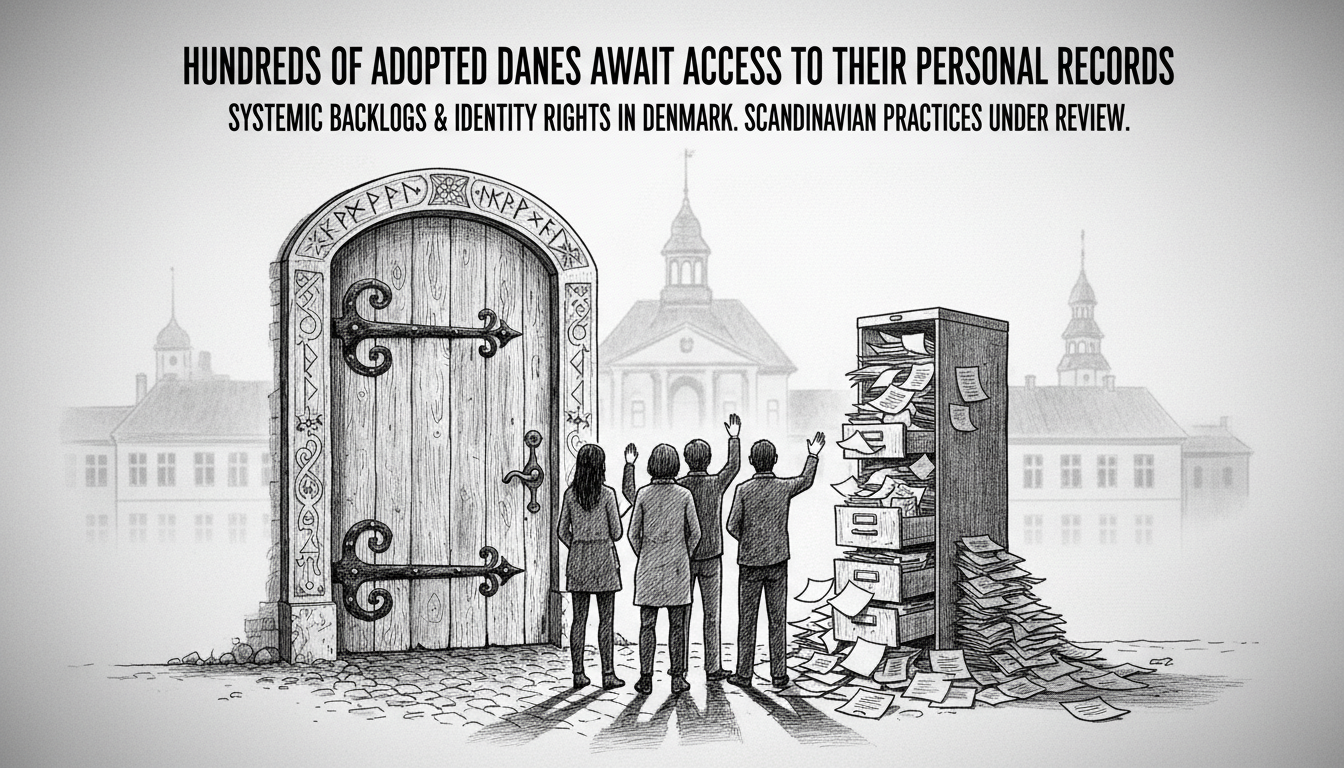
Nearly four hundred adopted individuals in Denmark remain in bureaucratic limbo, waiting for fundamental information about their origins. The Appeals Authority has processed 519 cases regarding access to adoption files since assuming responsibility last November. This situation reveals deeper challenges within Denmark's welfare system and its approach to identity rights.
The government body inherited 525 unresolved requests when it took over from Danish International Adoption, the country's former sole adoption agency. Officials have addressed 475 of these legacy cases, with average processing times stretching to 5.4 weeks. Meanwhile, 388 new requests have arrived, creating a persistent backlog that leaves many adopted Danes waiting months for answers.
Copenhagen integration specialists note this case exemplifies broader administrative challenges. Social centers across Danish municipalities regularly encounter citizens struggling with complex bureaucratic processes. The current adoption file situation particularly affects individuals seeking connections to their cultural heritage and medical histories.
Denmark's international adoption framework has faced mounting scrutiny in recent years. Statistics show Danish International Adoption facilitated 465 international adoptions between 2015 and 2022. Its predecessor organizations arranged 20,621 foreign adoptions from 1969 through 2015, creating a substantial community now seeking transparency.
Authorities prioritize cases based on waiting time, according to official statements. This first-in-first-out approach aims to ensure fairness but cannot accelerate the overall pace of document review. The system's limitations become apparent when considering the emotional significance these files hold for adopted individuals.
Denmark immigration policy historically supported international adoption as part of family formation. Now the practice faces unprecedented examination. A comprehensive investigation will analyze adoptions from 70 countries between 1964 and 2016, including government practices during that period.
A political agreement established parameters for this independent inquiry last June. The investigation represents one of Scandinavia's most extensive reviews of international adoption practices. Simultaneously, a working group will propose reforms for Denmark's future adoption system by summer 2026.
Community advocates emphasize the human impact beyond the statistics. Each pending case represents someone awaiting crucial personal information. Danish society increasingly recognizes adopted individuals' rights to understand their backgrounds, creating pressure for systemic improvement.
The situation reflects wider Scandinavian debates about transparency in social services. Denmark's welfare system traditionally enjoys high public trust, yet this case shows even robust systems face challenges adapting to evolving expectations about information access and individual rights.