
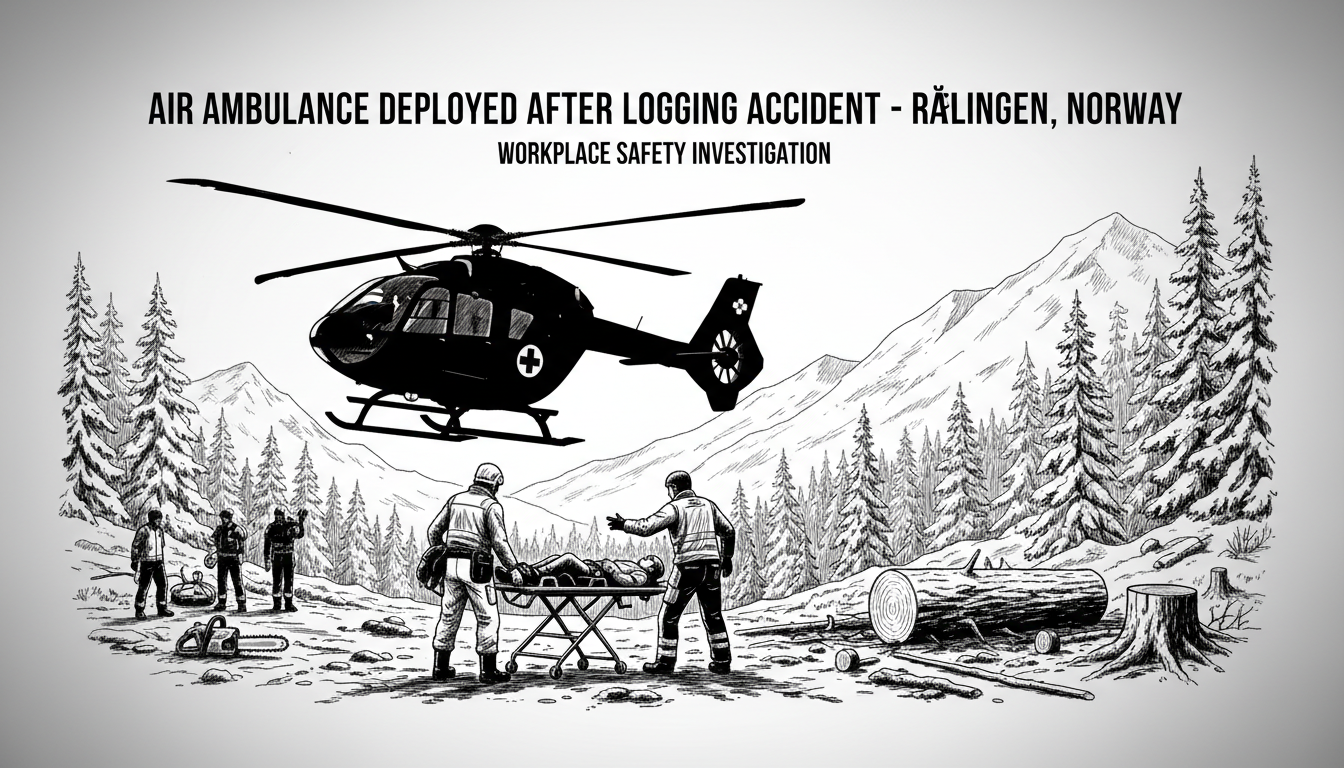
A patient was airlifted to Oslo's Ullevål University Hospital with unspecified injuries following a serious workplace accident in Rælingen. The incident occurred during tree felling operations on Nordy island in the Akershus county municipality. Emergency services responded to the scene, and police confirmed the air ambulance transport. The patient's current condition remains undisclosed as investigations into the precise cause begin.
This accident highlights the persistent dangers within Norway's forestry and land management sectors. Despite the country's global reputation for stringent workplace safety standards, high-risk manual operations continue to pose a threat. The immediate deployment of an air ambulance, or 'luftambulanse', underscores the critical nature of the emergency response system. This network is vital for reaching remote or difficult-to-access areas across Norway's varied terrain.
Workplace safety is a cornerstone of Norwegian labor policy, governed by the robust Framework Directive on health and safety. The Norwegian Labour Inspection Authority (Arbeidstilsynet) holds strict enforcement powers. Any serious incident triggers a mandatory investigation. The findings can lead to substantial fines for regulatory breaches and compel changes in operational procedures. For international readers, it is important to understand that Norway's social model places a high premium on worker protection, with strong unions and clear legal liabilities for employers.
The location of this accident, Rælingen, is part of the densely populated area around Oslo, known as the Oslo Fjord region. It is not a remote wilderness but a municipality with mixed residential and forested areas. This context makes the accident particularly notable, occurring near urban zones where such industrial activities are carefully managed. The response demonstrates the integration of local police, ground ambulances, and the national air ambulance service, which is often coordinated from Sola Air Station near Stavanger.
What are the broader implications? Every serious accident puts the involved company's safety protocols under a microscope. It can influence insurance premiums and industry-wide safety bulletins. For Norway, maintaining its low accident rate is both an economic and ethical imperative. The country's wealth is built on high-risk industries like offshore oil, shipping, and forestry. Public trust in these sectors depends on demonstrable safety records. This incident serves as a sobering reminder that no system is perfect, and constant vigilance is required. The coming days will reveal more about the operational failures that led to this airlift, and whether they point to a need for tighter controls in forestry work near communities.