
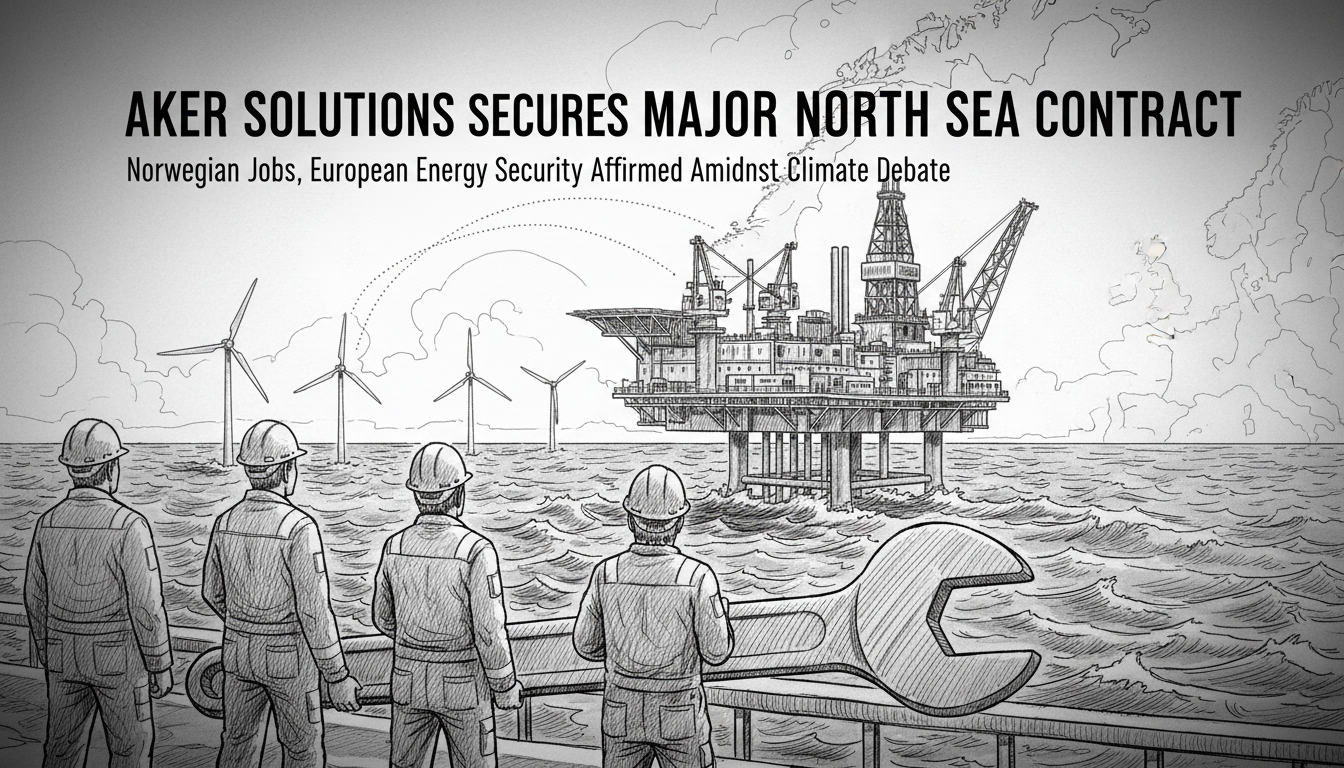
Aker Solutions has secured a six-year framework agreement with ConocoPhillips for maintenance and modification work on the Eldfisk and Ekofisk fields in the North Sea. The contract begins in January 2027 and contains options for extension up to six additional years. Company officials classify the agreement as substantial, with estimated value between 2.5 and 4 billion Norwegian kroner. This arrangement guarantees activity for the Stavanger office, the Egersund shipyard, and offshore employees throughout the contract period. The company's group director stated they look forward to continuing their long-term cooperation with ConocoPhillips as a trusted partner.
This contract represents a substantial commitment to Norway's offshore energy sector at a time when political debates about oil exploration continue. The Storting recently debated future petroleum licensing rounds while balancing climate commitments against energy security needs. Such long-term maintenance contracts demonstrate industry confidence in Norway's offshore infrastructure despite political uncertainties. The agreement ensures continuous employment in the Rogaland region, where offshore operations anchor the local economy.
Norwegian oil industry contracts typically follow strict national regulations requiring extensive safety protocols and environmental safeguards. The Eldfisk and Ekofisk fields have operated since the 1970s, making ongoing maintenance crucial for continued production. These mature fields require regular upgrades to maintain output levels and operational safety. The Norwegian Petroleum Directorate monitors all such activities to ensure compliance with national standards.
International readers should understand that Norway's sovereign wealth fund, built from oil revenues, remains the world's largest. Continued offshore activity directly contributes to this national savings account while funding Norway's extensive welfare services. The country maintains a unique position as both a major oil producer and a global leader in renewable energy investment. This dual approach reflects the practical Norwegian energy policy that prioritizes both economic stability and environmental responsibility.
The contract's timing coincides with broader European energy security discussions following recent geopolitical developments. Norway has become Europe's largest petroleum supplier after regional supply shifts, increasing the strategic importance of its offshore operations. Maintenance agreements like this one help ensure reliable production from Norway's continental shelf. The work will involve upgrading platforms and infrastructure that have supplied European markets for decades.
What does this mean for Norway's energy future? The country continues approving new offshore projects while simultaneously investing in wind power and carbon capture technology. This balanced approach receives support across the political spectrum, though disagreements exist about the pace of transition. The practical Norwegians understand that oil revenues fund their green transition, creating what analysts call the Norwegian energy paradox.