
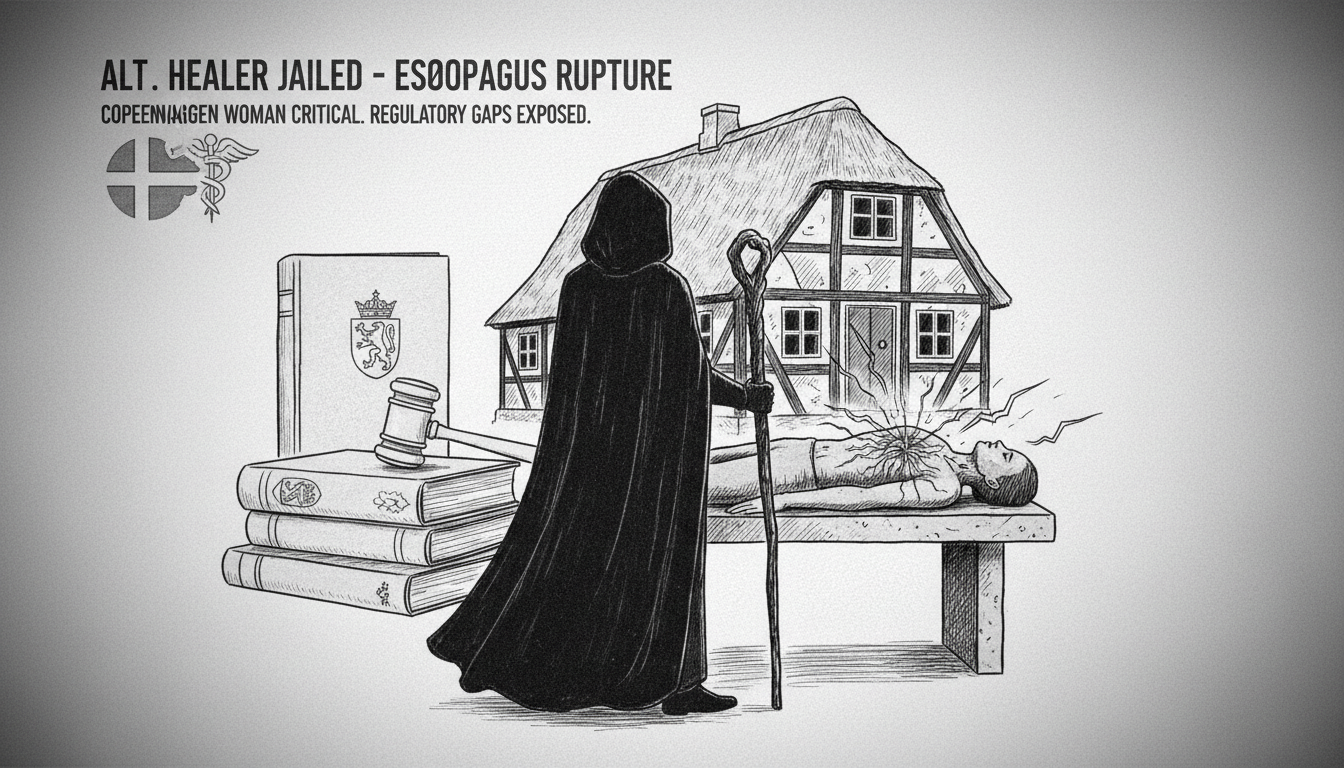
A Danish court has sentenced a 61-year-old alternative healer to four months of conditional imprisonment. The sentence follows a dangerous healing weekend near Give that left a 68-year-old woman with life-threatening injuries. The woman suffered a ruptured esophagus, brain swelling, and dangerously low blood sodium. This case raises serious questions about the regulation of alternative therapies within the Danish welfare system and the social integration of unregulated practices.
The incident occurred during a weekend retreat in Kollemorten. The participant consumed a mixture of Ayahuasca, a psychedelic brew, and a substance called "dragon's blood," which is an herbal drink known as sangre de grado. She also drank large quantities of water. This combination triggered a medical crisis involving seizures, loss of consciousness, and vomiting blood. Her body's salt levels plummeted, fluid accumulated in her brain, and a hole tore in her esophagus.
A critical point in the trial was the healer's failure to call emergency services. Instead of dialing 112, he chose to drive the unresponsive woman to Vejle Hospital himself. She was later transferred to Odense University Hospital, where she remained for over three months. The court found the healer guilty of negligent bodily harm for causing the injuries and for neglecting to summon professional medical help. He received a conditional prison term, must perform 100 hours of community service, and was ordered to pay 48,520 kroner in compensation to the victim. Authorities also confiscated various medications, including two and a half liters of the "dragon's blood" preparation.
This tragedy highlights a gap in Copenhagen integration and Danish social policy. While Denmark maintains a robust, state-supported healthcare model, a parallel world of unregulated alternative healing exists. Municipal social centers and community programs often focus on traditional immigrant integration, but this case shows other forms of cultural or spiritual practices can also pose integration challenges when they operate outside legal and safety frameworks. There are no clear statistics on how many people engage with such unlicensed practitioners, but each case risks severe public health outcomes.
The legal outcome sends a clear message about accountability. The sentence underscores that individuals offering services with clear health risks bear legal responsibility, regardless of how they label their practice. For international observers, this is a stark example of the Danish legal system intervening where personal belief systems collide with public safety. The case also prompts a necessary discussion. Should Danish municipalities play a greater role in monitoring or providing information about the potential dangers of certain alternative therapies? This is not just a criminal matter but a societal one, touching on education, consumer protection, and the limits of personal autonomy within a communal welfare state. The healer has denied guilt, and his response to the court's verdict remains unknown.