
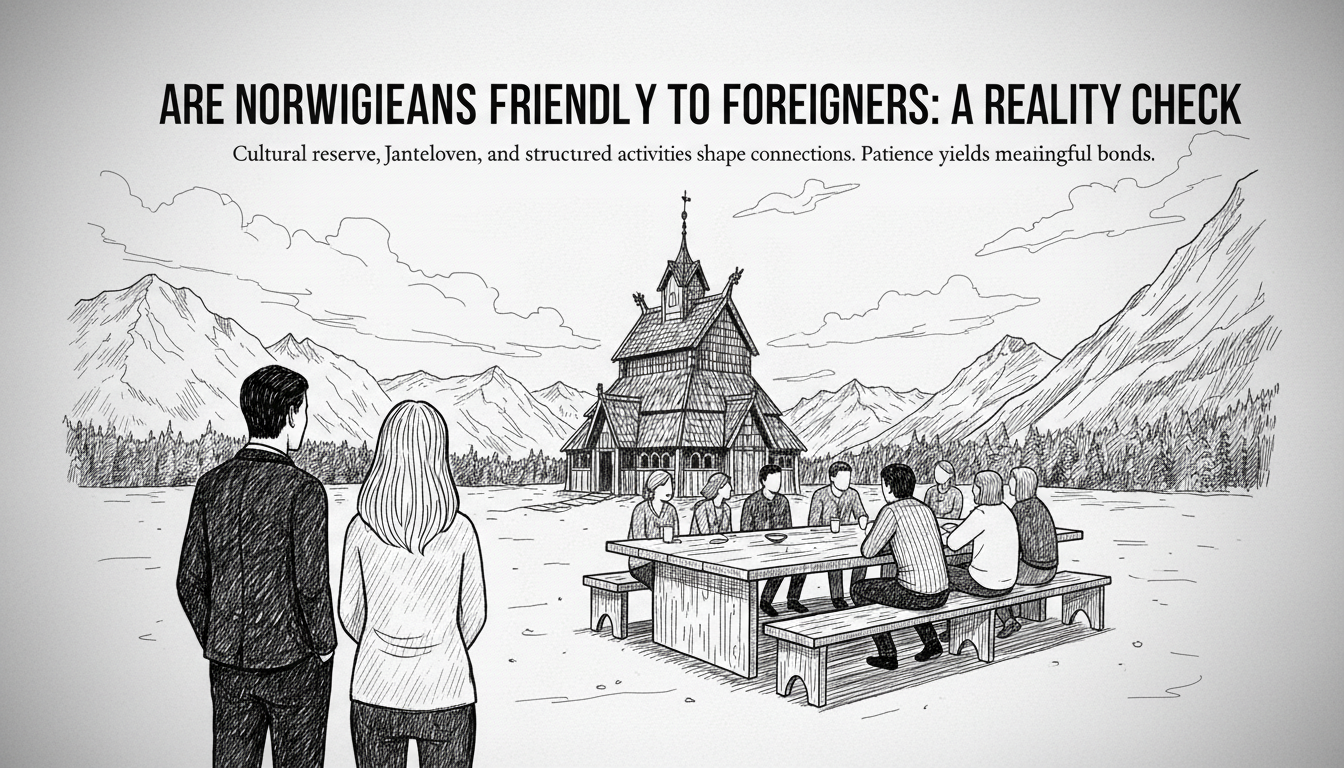
Introduction: The Norwegian Social Paradox
The First Impression: Reserved or Unfriendly?
Maria from Spain waited three months for her first Norwegian dinner invitation. She initially thought her colleagues disliked her. This experience mirrors many foreigners' first months in Norway. Norwegians appear distant to newcomers from more expressive cultures. Their quiet demeanor often gets misinterpreted as coldness or rejection.
Why Understanding Norwegian Social Norms Matters for Expats
Norway hosts over 800,000 immigrants according to Statistics Norway. Social integration directly impacts job satisfaction and mental health. Misreading Norwegian reserve can lead to unnecessary frustration. Understanding cultural codes prevents misunderstandings before they damage relationships.
What This Guide Will Help You Navigate
This reality check explains Norwegian social behavior. It provides practical strategies for building connections. You will learn why Norwegians act as they do. More importantly, you will discover how to bridge the cultural gap successfully.
Understanding Norwegian Social Culture
The Janteloven Influence: Equality and Modesty
Janteloven remains Norway's unwritten social code. It emphasizes collective well-being over individual achievement. Norwegians avoid standing out or showing off. This explains why direct compliments often get deflected. A Norwegian might respond to praise about their new car by mentioning its high maintenance costs.
Norwegian Reserve vs. Rudeness: Key Differences
Norwegian silence signifies comfort, not disapproval. On public transport, complete quiet demonstrates respect for others' privacy. At work, Norwegians value concise communication without small talk. They consider excessive friendliness with strangers as insincere or intrusive behavior.
The Role of Nature and Outdoor Activities in Social Life
Weekend cabin trips form Norway's true social currency. Friluftsliv (outdoor life) bonds Norwegians more than bars or restaurants. Join DNT (Norwegian Trekking Association) for 500 NOK annual membership. Participate in their Sunday hiking groups. Nature provides the neutral ground where Norwegian reserve naturally melts away.
How Norwegians View Personal Space and Privacy
Norwegians maintain larger physical distances than southern Europeans. They rarely touch during conversations except with close friends. Personal questions about salary or family seem rude. Work relationships develop slowly over months, not weeks. This protects individual autonomy while building trust gradually.
Practical Tips for Making Norwegian Friends
Where to Meet Norwegians: Best Social Settings
Volunteer with Red Cross Norway or local sports clubs. Attend cultural events at your nearest kulturhus. Join workplace sports teams or Friday breakfast gatherings. These structured activities provide natural interaction without pressure. Avoid approaching strangers in supermarkets or on streets.
Breaking the Ice: Conversation Starters That Work
Discuss hiking trails, weather, or recent sports events. Ask for advice about local nature spots. Compliment Norway's natural beauty rather than personal achievements. Share your own outdoor experiences. Norwegians appreciate practical knowledge and nature enthusiasm over personal compliments.
Joining Clubs and Organizations: Sports, Hobbies, and Volunteering
Register with Oslo Sports Club for team activities (1,200 NOK quarterly). Join photography groups at Fotogalleriet. Volunteer for neighborhood clean-up days through your commune. Consistent participation matters more than brilliant conversation. Norwegians trust regular presence over charming words.
Understanding Norwegian Humor and Communication Style
Norwegian humor leans toward dry understatement and self-deprecation. They rarely laugh loudly at jokes. Sarcasm works only with close friends. Direct communication values clarity over politeness. "That's wrong" means just that, not personal criticism. Learn to appreciate their straightforward style.
The Importance of Consistency and Patience
Attend the same coffee shop every Friday morning. Join the same swimming lane at your local pool. Participate in regular neighborhood meetings. Norwegians need repeated, casual encounters to build trust. Three months of consistent presence often precedes the first home invitation.
Common Challenges Foreigners Face
The Language Barrier: When English Isn't Enough
Norwegians switch to English for efficiency, not exclusion. But social intimacy requires Norwegian. Take courses at Folkeuniversitetet (8,000 NOK per semester). Practice with colleagues during lunch breaks. Learn key phrases about weather, sports, and food. Language investment signals serious commitment to integration.
Navigating Norwegian Social Invitations and Etiquette
Norwegians issue invitations weeks in advance. Last-minute plans seem disrespectful. Always arrive exactly on time, never early. Bring wine or flowers to dinner parties. Offer to help with cleaning afterward. These gestures demonstrate respect for Norwegian values of equality and reciprocity.
Dealing with Cultural Misunderstandings
A Brazilian man thought his Norwegian neighbor disliked him for months. The truth emerged during a shared snow shoveling session. The Norwegian was simply respecting his privacy. Assume positive intentions behind puzzling behavior. Most cross-cultural conflicts stem from different social scripts, not ill will.
Seasonal Factors: How Weather Affects Social Interactions
Winter darkness reduces spontaneous socializing. Norwegians hibernate from November to February. Summer brings constant outdoor gatherings and cabin visits. Plan major social efforts between May and September. Accept that relationship building slows during winter months.
Success Stories: How Other Expats Built Meaningful Connections
Real Experiences from International Residents
German engineer Klaus joined his local cross-country skiing group. After six months of weekly practice, his teammates invited him to their mountain cabin. American teacher Sarah volunteered at Bergen International Festival. She now celebrates Christmas with Norwegian colleagues annually.
Lessons Learned from Successful Integration
Persistence outweighs personality in Norwegian social circles. Shared activities create stronger bonds than conversation. Investing in language learning demonstrates serious intentions. Most successful integrations required 12-18 months of consistent effort before deep connections formed.
What Worked and What Didn't in Building Relationships
Successful strategies included regular club participation and outdoor activities. Failed approaches involved trying to make friends in bars or through excessive compliments. The most effective method was showing up consistently without pressure for immediate closeness.
Frequently Asked Questions
How long does it typically take to make Norwegian friends?
Most expats report 6-12 months for casual friendships. Close friendships often take 18-24 months. Consistency matters more than personality. Join regular activities and be patient.
Do Norwegians really not talk to strangers on public transport?
Yes, this is normal behavior. Silence shows respect for others' privacy. Norwegians consider unnecessary conversation with strangers intrusive. This changes completely in social settings like clubs or parties.
What are the best cities in Norway for foreigners to make friends?
Bergen and Trondheim often feel more welcoming than Oslo. Smaller cities have tighter communities. University towns like Tromsø have more international social scenes. Choose based on your interests and patience level.
Should I learn Norwegian to make friends?
Yes, basic Norwegian helps significantly. While English works for daily tasks, Norwegian builds deeper connections. Start with Folkeuniversitetet courses. Even limited language skills show commitment.
Why do Norwegians take so long to invite people home?
Home invitations signify deep trust in Norwegian culture. Norwegians separate social spheres carefully. Most expats receive their first home invitation after 3-6 months of regular contact in neutral settings.
What mistakes do foreigners commonly make?
Trying to force friendships quickly. Interpreting silence as dislike. Giving excessive compliments. Making last-minute plans. These behaviors conflict with Norwegian values of gradual trust-building and modesty.
Are Norwegians more open during summer?
Yes, dramatically so. Midnight sun and warmer weather increase socializing. Outdoor activities and cabin visits create natural bonding opportunities. Schedule your major social efforts between May and August.