
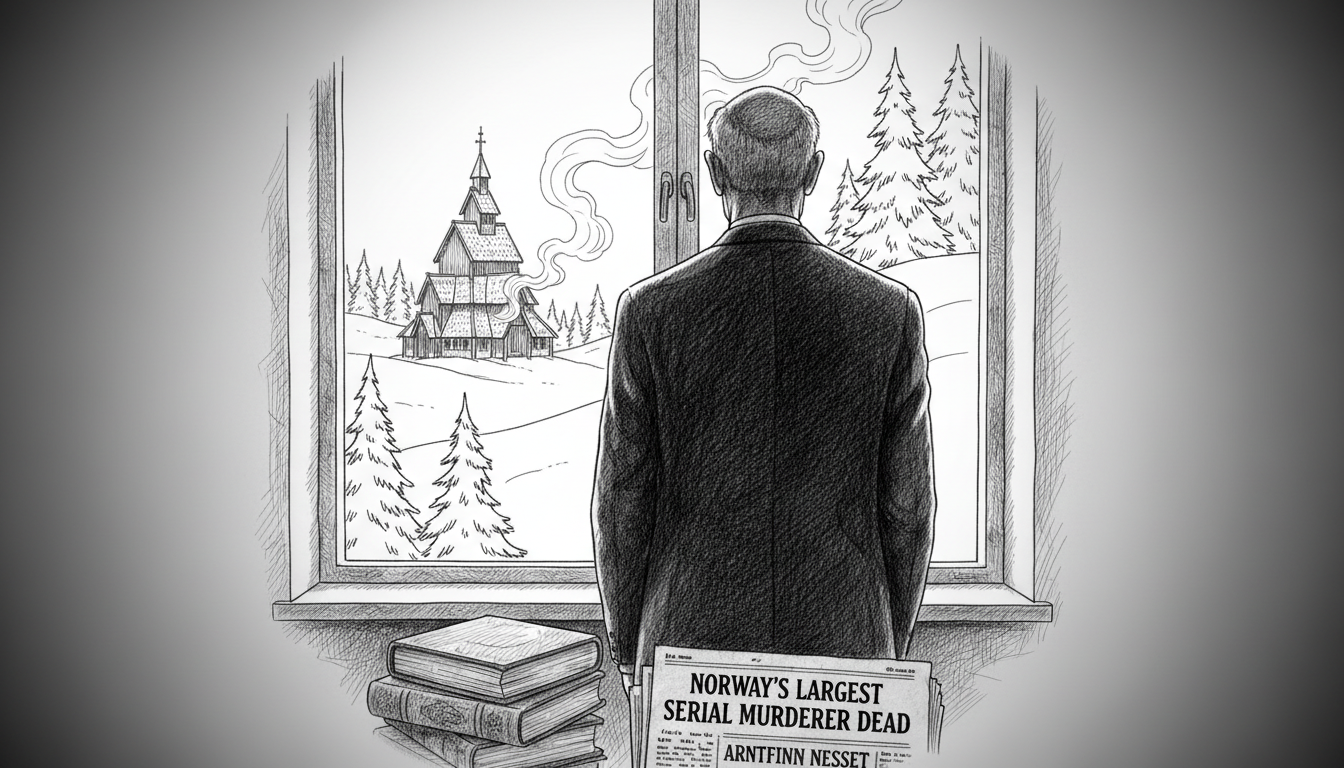
Arnfinn Nesset, the man convicted of Norway's most extensive serial murder case, has died. His lawyer confirmed he passed away quietly at a care home. Nesset was serving a life sentence for the murders of 22 nursing home residents in Trøndelag during the early 1980s. He was released on parole in 1993 after serving 12 years of a 21-year sentence. The case remains one of the nation's most profound criminal mysteries.
Nesset worked as the manager at the Orkdal nursing home. The investigation involved 967 hours of police interrogation. He initially confessed to 30 murders using the paralyzing drug curacit. He later retracted his confession in court and maintained his innocence until his death. He claimed police pressure led to his false admissions. The police considered exhuming bodies to find evidence of poison but stopped after his confession.
A journalist who recently interviewed Nesset described him as physically frail but mentally clear. Nesset expressed he was ready to die. He had lived a largely isolated life after his release. He held onto his religious faith and continued to hope for a case review. Recent weeks saw new developments with people willing to help reopen his case. He learned of this possibility shortly before his death.
Author Simen Sætre, who wrote a book on Nesset, calls the case a major unresolved mystery. Sætre states mistakes were made in both the police investigation and the trial. He also criticizes the press for publishing untrue claims. Regardless of guilt, Sætre says no one deserves such treatment. After prison, Nesset lived quietly in a small house with a cat and a garden. He was involved in Christian charity work and was protected by a small group of friends.
In a past interview, Nesset said he felt persecuted despite being free. He worked in a laundry in Oslo but hoped to return to nursing. His professional license was revoked. He stated he always had great care capacity and would be a nurse in his heart. He claimed the months in isolation and long interrogations broke him down. He confessed to murders he did not commit out of fear.
Nesset had written his will and chosen a simple natural stone for his gravestone. He said he had served his sentence and wanted peace. The journalist's final meetings revealed a man reconciled with his fate but steadfast in his claims. The full truth of what happened at the Orkdal nursing home may never be known. The case leaves a permanent shadow on Norway's judicial history and the local community in Trøndelag.
This story highlights enduring questions about justice, confession reliability, and media influence in high-profile cases. It shows how a single case can dominate a person's life for decades. The Nordic principle of rehabilitation allowed Nesset a quiet life after prison. Yet the victims' families and the public are left with unanswered questions. The legal system's final word stands, but public doubt persists. This duality is a challenging aspect of any society dealing with historical crimes.