
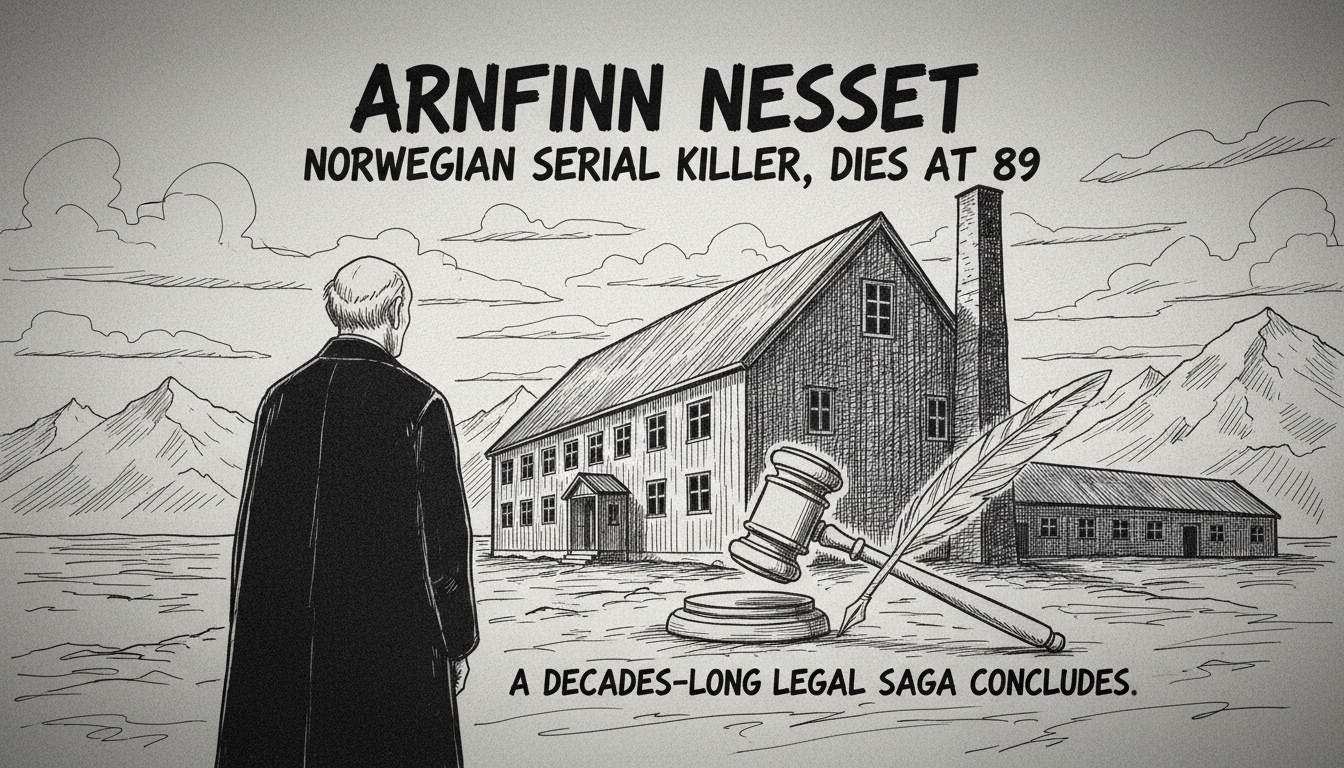
Arnfinn Nesset, the former nursing home manager convicted of one of Norway's most notorious serial murder cases, has died. He was 89 years old. His lawyer confirmed he passed away peacefully at a care home in Østfold county. Nesset was serving a life sentence, the country's harshest penalty at the time, for 22 murders committed in the early 1980s at the Orkdal nursing home in Trøndelag.
The case, often referred to as the Orkdal murders, remains a dark chapter in Norwegian criminal history. Nesset was convicted in 1983 after a trial that gripped the nation. Police investigated 60 suspicious deaths at the facility he managed. He initially confessed to the killings during police interrogation but later retracted his statements, maintaining his innocence until his death. He claimed investigators pressured him by threatening to exhume the bodies of the deceased patients.
Norwegian authorities consistently denied any misconduct during the investigation. The lead prosecutor in the original trial stated recently he saw no grounds for reopening the case, despite persistent claims of a potential miscarriage of justice from Nesset's supporters. Nesset was released on parole in 2004 after serving 21 years of his sentence, followed by a period of supervised security detention.
This case profoundly impacted Norway's legal and healthcare systems. It led to stricter oversight protocols for care institutions and intensified debates on interrogation methods. The scale of the alleged crimes challenged Norway's self-image as a safe and trusting society. It forced a national conversation about vulnerability in care settings and the limits of institutional trust.
The story's longevity is notable. A major television series revisited the case, and discussions about a potential Hollywood adaptation have surfaced. The enduring public and media fascination stems from the breach of trust involved. A caregiver in a quiet community was accused of preying on the most vulnerable. The legal ambiguity, with a retracted confession and claims of coercion, adds a layer of complexity that prevents simple closure.
Nesset's death ends the possibility of a formal judicial review he long sought. It closes the book on the personal legal battle but ensures the Orkdal case will remain a subject of forensic and ethical study. For the families of the victims, his passing may bring a different kind of end. The case continues to serve as a grim benchmark in Norwegian criminal justice, a reminder of the catastrophic consequences when systems of care fail.