
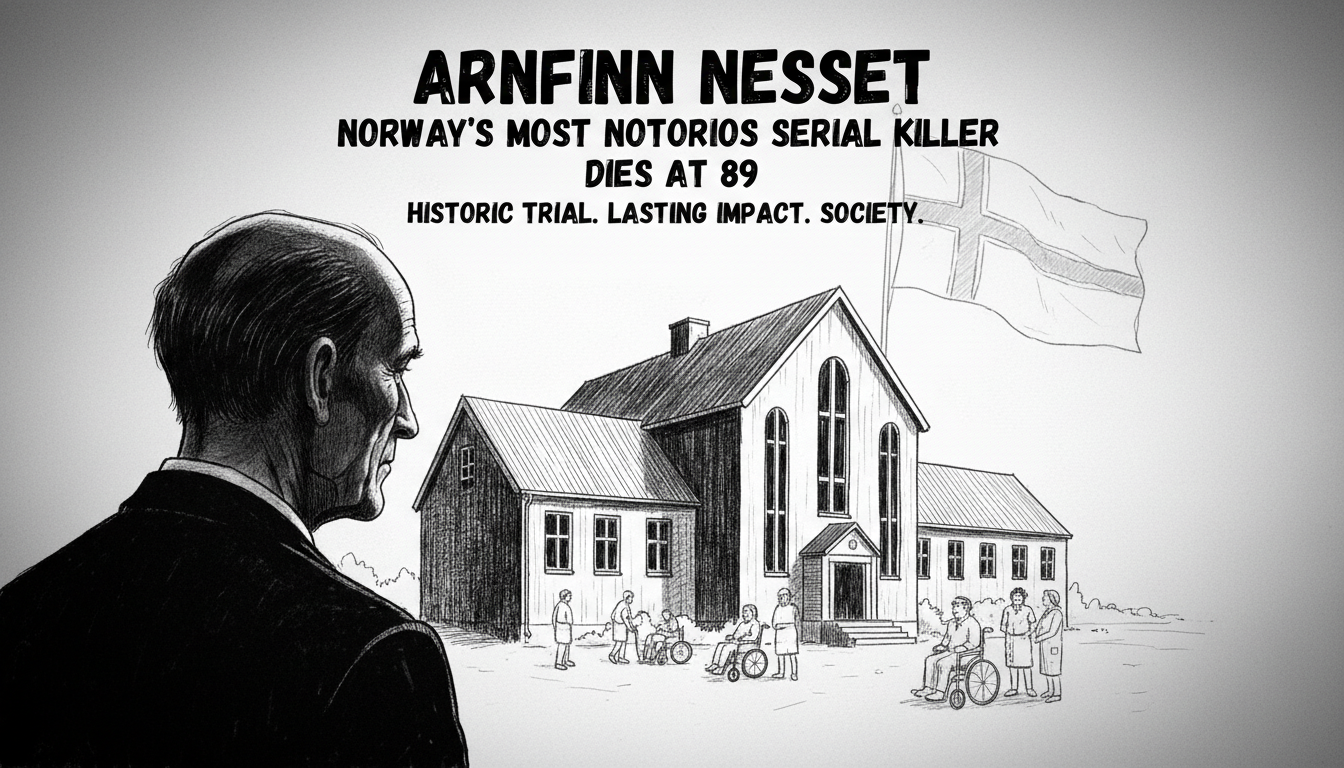
Arnfinn Nesset, the man convicted in one of Norway's most infamous criminal cases, has died. He was 89 years old. His lawyer confirmed the death this week. Nesset passed away peacefully at a nursing home. He was the central figure in a case that shocked the nation and reshaped Norwegian forensic medicine and elder care oversight.
In the early 1980s, a court found Nesset guilty of murdering 22 patients. The killings occurred at a nursing home in Orkdal. Prosecutors said he used the poison curacit. The Frostating Court of Appeal sentenced him to 21 years in prison plus ten years of preventive detention. He entered open prison conditions in 1993. Authorities released him in 2004.
The case remains a dark chapter in Norwegian legal history. It exposed vulnerabilities in care institutions. The scale of the crimes was unprecedented in modern Norway. Investigators said Nesset initially confessed to using Curacit. He later retracted all statements before his trial. In recent years, he maintained his innocence. He claimed he was a victim of a miscarriage of justice.
Some voices, including author and journalist Simen Sætre, have called for the case to be reopened. They cite lingering doubts about the evidence. This reflects a broader Norwegian cultural tendency to re-examine major historical verdicts. The Norwegian justice system, while generally trusted, has faced scrutiny over past high-profile cases.
The implications of the Nesset case extend beyond the courtroom. It led to stricter controls on pharmaceuticals in care homes. It prompted national debates on euthanasia and the treatment of the elderly. Norway's social democratic model places high trust in public institutions. A breach of that trust, as seen in Orkdal, forces systemic introspection. The case also influenced crime reporting and public perception of serial violence in a low-crime society.
For international observers, the case offers a window into Norway's legal evolution. The country has a rehabilitative justice focus, yet this case resulted in a severe sentence. The use of 'forvaring' or preventive detention highlighted the system's capacity for containment when public safety is paramount. The fact that Nesset lived his final years in a nursing home, not a prison, also speaks to Norwegian norms on aging and detention.
His death closes a grim narrative but not the questions surrounding it. The debate over his guilt or innocence persists in some circles. The story endures as a cautionary tale about oversight in care systems. It reminds us that profound evil can emerge in the most trusted settings. The Norwegian public must now reconcile the memory of the crimes with the final, quiet end of the convicted perpetrator.