
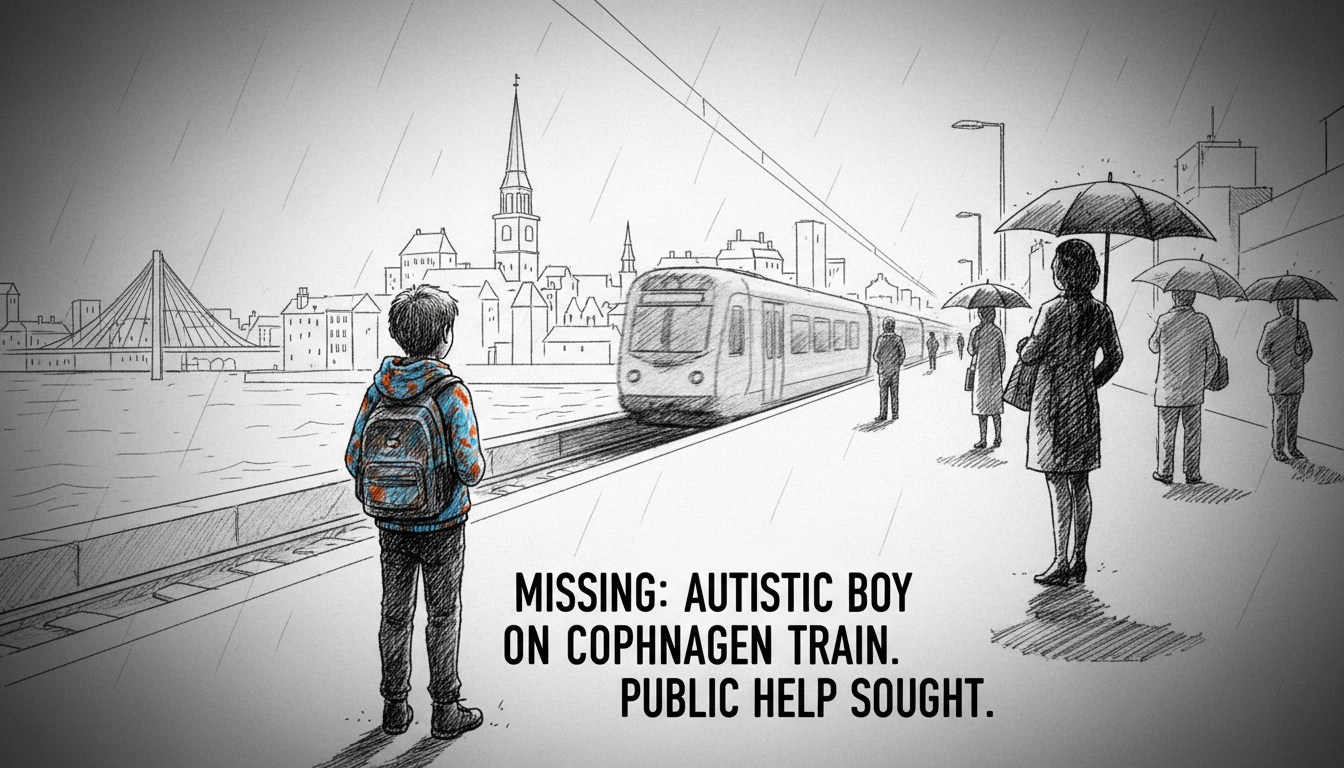
Danish authorities continue searching for a 12-year-old autistic boy who disappeared during his train commute to school. Marco from Kvaglund near Esbjerg was last seen leaving home Friday morning. He never arrived at his educational institution, triggering a nationwide alert.
Police confirmed the boy shares a deep fascination with trains. A fellow passenger reported speaking with Marco during the Esbjerg to Copenhagen route. That traveler disembarked in Middelfart, leaving the child continuing his journey alone. Witnesses later spotted Marco exiting at Copenhagen Central Station around lunchtime.
This situation highlights broader questions about support systems for neurodivergent children in Denmark. The country maintains strong social safety nets, yet vulnerable individuals can still slip through. Municipalities operate extensive welfare services, but real-time protection remains challenging.
Integration policies often focus on immigrant communities, yet native Danes with special needs require equal attention. Copenhagen integration programs typically address cultural adaptation, while local social centers serve diverse populations. This case reminds us that vulnerability crosses all demographic lines.
Police describe Marco wearing distinctive clothing: a blue patterned beanie, orange neck warmer, blue scarf, black jacket, and dark blue trousers. He carries a red-striped bag, a school backpack, plus a cushion and stuffed animal in a separate bag. Authorities urge public vigilance and immediate reporting of any sightings.
Denmark's social policy emphasizes inclusion, with substantial education investments for special needs students. Recent statistics show over 85% of autistic children attend mainstream schools with support. Still, incidents like this reveal system limitations during transitional moments.
Community leaders express concern about transportation safety for vulnerable youth. Social policy experts note Denmark's welfare system typically performs well, but continuous improvement remains necessary. The search continues across Funen and Zealand regions, with police coordinating multiple municipal resources.
What happens when protective measures fail during ordinary routines? This incident demonstrates how daily transitions between home, school, and community spaces present potential risks. Danish social services now face questions about preventing similar disappearances while maintaining individual independence.