
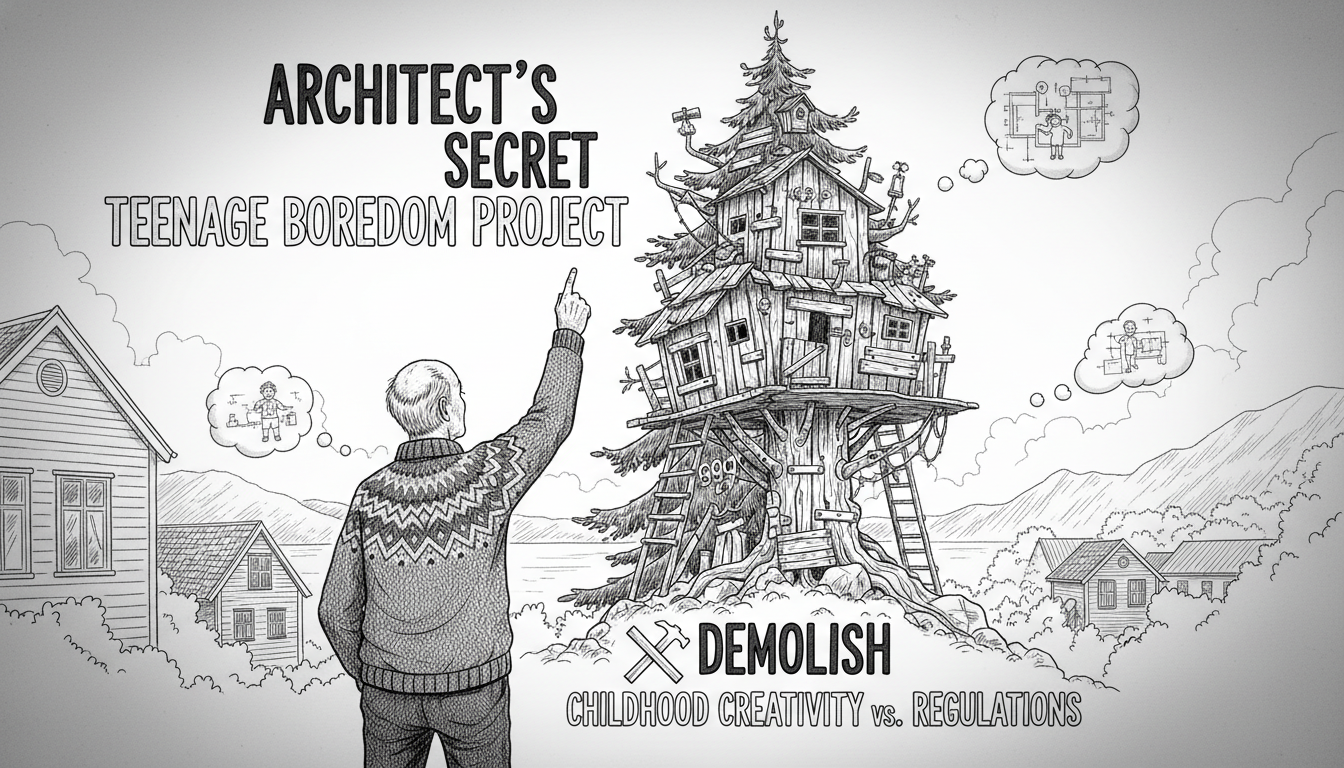
An architect in Bergen has come forward as the builder of a mysterious treehouse that local authorities plan to demolish. Erlend Andreassen Bolstad says the structure began as a teenage boredom project with a friend.
"It started because my friend and I were a bit bored," Bolstad explained. The 42-year-old architect confirmed he built the treehouse that Bergen municipality wants removed.
He found the situation amusing after reading speculation that the owners "probably lay in their graves" due to the structure's aged appearance. The treehouse many believed dated from the 1980s actually originated in summer 1999.
Two 16-year-olds created the structure using recycled materials they found. "We had access to lots of reused materials," Bolstad recalled. "After a forest walk we found the tree and started with a platform. Then it snowballed and a whole group joined in."
Bergen's urban environment department recently inspected the deteriorating treehouse near Løvstien after a concerned resident reported safety concerns. Officials concluded the structure posed dangers and must be removed, though they needed to notify the owner first.
The case drew public attention and criticism of municipal resource allocation when warning signs appeared at the site. Bolstad only realized his childhood project was the subject of discussion when friends sent him media coverage.
He now plans to take responsibility and organize a cleanup with his original building crew. "I understand the municipality wants it gone - it hasn't been maintained," Bolstad said. "This will be a good opportunity to gather the old friend group for a work party."
Despite the pending demolition, Bolstad hopes the treehouse can symbolize the disappearing tradition of childhood construction projects. He believes such unstructured creative play remains crucial for children over 10, who now have few opportunities beyond organized sports and screens.
Both original builders pursued creative professions as adults, crediting their treehouse summer as important creative exploration that's increasingly rare today.
Bolstad suggests the urban environment department could use this case to identify areas where children might legally build treehouses or play freely. A department representative acknowledged several people have since claimed ownership of the structure.
"We won't investigate this thoroughly - we still believe it's best for the urban environment department to remove the treehouse," said department representative Kamilla Berven Bischof.
When asked about facilitating more treehouse construction, she noted the department works to enable outdoor activities for all ages but has no specific plans for designated treehouse areas.
The situation highlights how childhood creativity sometimes clashes with urban regulations, though officials appear focused on safety concerns rather than discouraging imaginative play.