
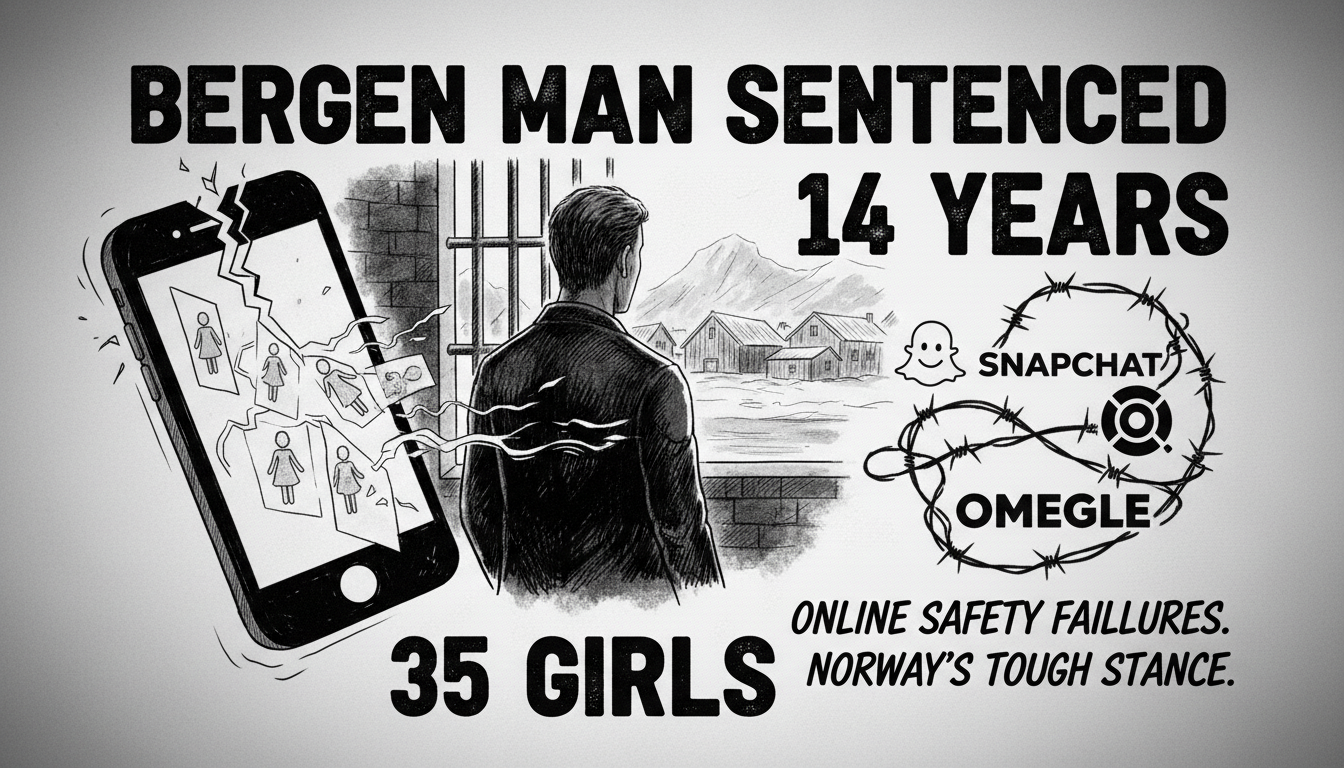
A man from Bergen has been sentenced to 14 years in prison by the Hordaland District Court for the systematic abuse of 35 girls aged 8 to 13 via social media platforms. The court found the man guilty of instructing the children to perform sexual acts on webcam after contacting them on Snapchat and Omegle. He also admitted to charges of performing sexual acts himself in front of the children and storing the recorded videos. The man partially or fully confessed to all charges during the trial, according to court officials.
This case highlights a severe and growing challenge for Norwegian authorities. It underscores the critical need for robust digital safety measures and parental vigilance. The exploitation occurred through popular platforms that are widely used by Norwegian youth. The sheer number of victims, 35, points to a methodical and predatory pattern of behavior over an extended period. The sentencing reflects the gravity of the crimes and sends a clear message about the judicial system's stance on such exploitation.
Norway has strict laws against child sexual abuse material, with penalties that rank among the most severe in Europe. The 14-year sentence, while substantial, is within the framework of Norwegian penal code for such systematic and large-scale offenses. The case will likely reignite debates in the Storting about online platform regulation and law enforcement resources for cybercrime units. Politicians from both the Labour Party and the Conservative Party have previously called for stronger cooperation with international tech companies to prevent such abuse.
For international readers, this case offers a window into Norway's legal and social response to digital crime. While Norway is often praised for its high quality of life and social trust, it is not immune to the global epidemic of online child exploitation. The country's response combines punitive legal measures with a strong social welfare system aimed at victim support. The conviction demonstrates the operational capacity of Norwegian police cyber units, but also reveals the persistent vulnerabilities that predators exploit in digital spaces. The next steps involve the potential for an appeal and the ongoing therapeutic support for the dozens of young victims and their families across the Hordaland region.