
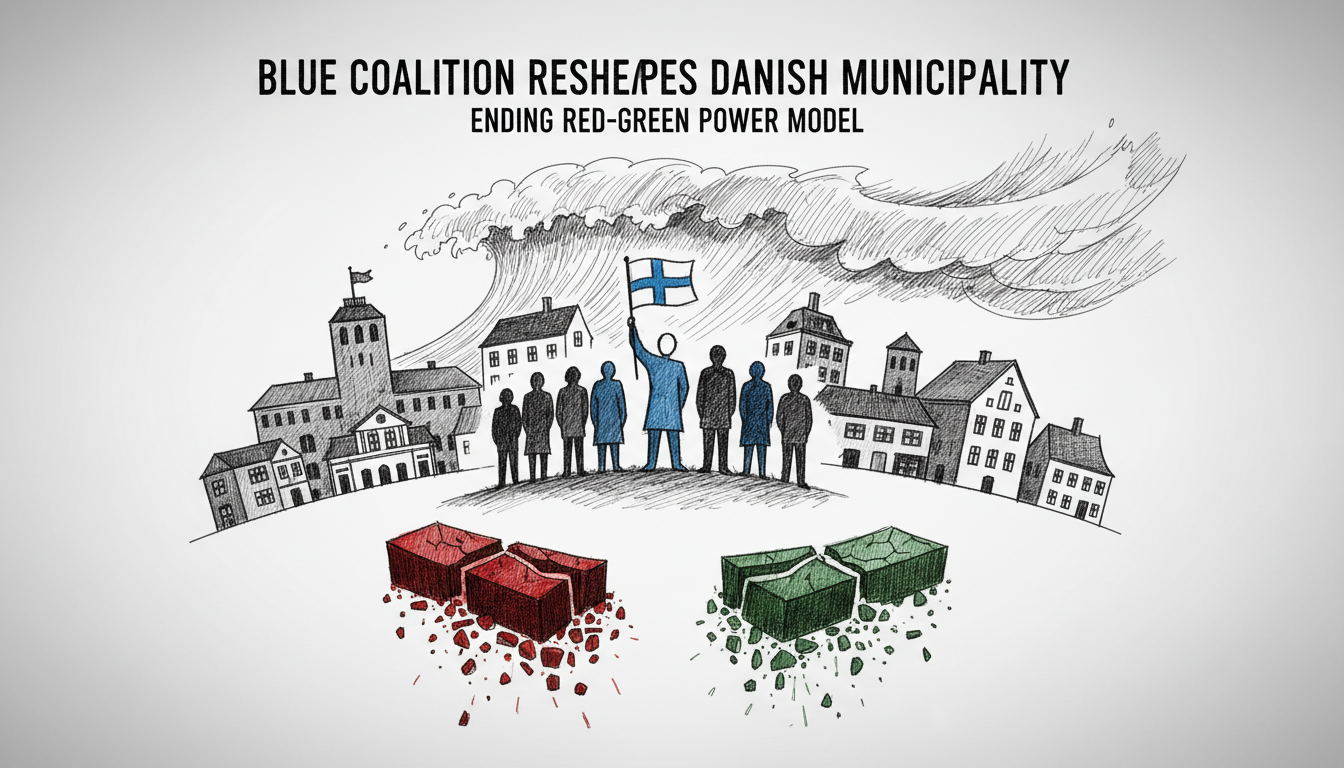
A quiet political shift in a southern Danish municipality reveals deeper currents in local governance. Vordingborg, a community on southern Zealand, has long oscillated between red and blue majorities. The recent local election saw a familiar pattern return a former mayor to power. Yet the real story lies not in the color change, but in the structural dismantling of a long-standing power-sharing agreement.
For the past two terms, Social Democrat Mikael Smed held the mayor's chain. Before him, Michael Seiding from the Liberal Party Venstre served. This election brought Seiding back. The special circumstance this time is not the blue bloc's victory over the red. That has happened before. The significant development is how Seiding succeeded in uniting all blue parties behind him. He then formed a governing coalition that breaks with the municipality's previous model.
That model saw red parties holding chairman positions while blue parties took deputy chairman roles. This rough balance of power is now over. The new blue coalition has taken full control of key committee leadership. This shift away from forced cooperation signals a more decisive, if more polarized, form of local politics. It reflects a national trend where traditional cross-bloc compromises are becoming rarer.
From my perspective covering Danish society news, this matters deeply for community integration. Municipalities like Vordingborg are the frontline of Denmark's social policy. They manage local schools, job centers, and social programs. A stable, cooperative council often fosters better long-term integration projects. A council marked by clear majority rule can push through changes faster, but it risks alienating minority voices. This is crucial for Copenhagen integration lessons applied in smaller towns.
What does this mean for residents? Policy analysis suggests service delivery may see quicker decisions. But community engagement might suffer if opposition parties are fully sidelined. The Danish welfare system relies heavily on municipal implementation. A fractured political landscape at the local level can create inconsistency. One neighborhood's access to language classes or parental support might differ from another's based on the ruling coalition's priorities.
This local result also speaks to broader Denmark immigration policy debates. Integration outcomes often hinge on local initiatives—youth clubs, cultural dialogue programs, employment partnerships. When political energy is spent on internal power struggles, these vital community-building efforts can stall. The concentration of power in one bloc could streamline these efforts. Or it could lead to policies that lack broad community buy-in.
The change in Vordingborg is a case study in microcosm. It shows how national political tensions manifest in town halls. It reminds us that elections have concrete consequences for how social services are administered. The coming months will test whether this new, unambiguous majority can govern effectively for all citizens, not just its political base. The health of the Danish social contract often depends on these quiet, local negotiations far from the national spotlight.