
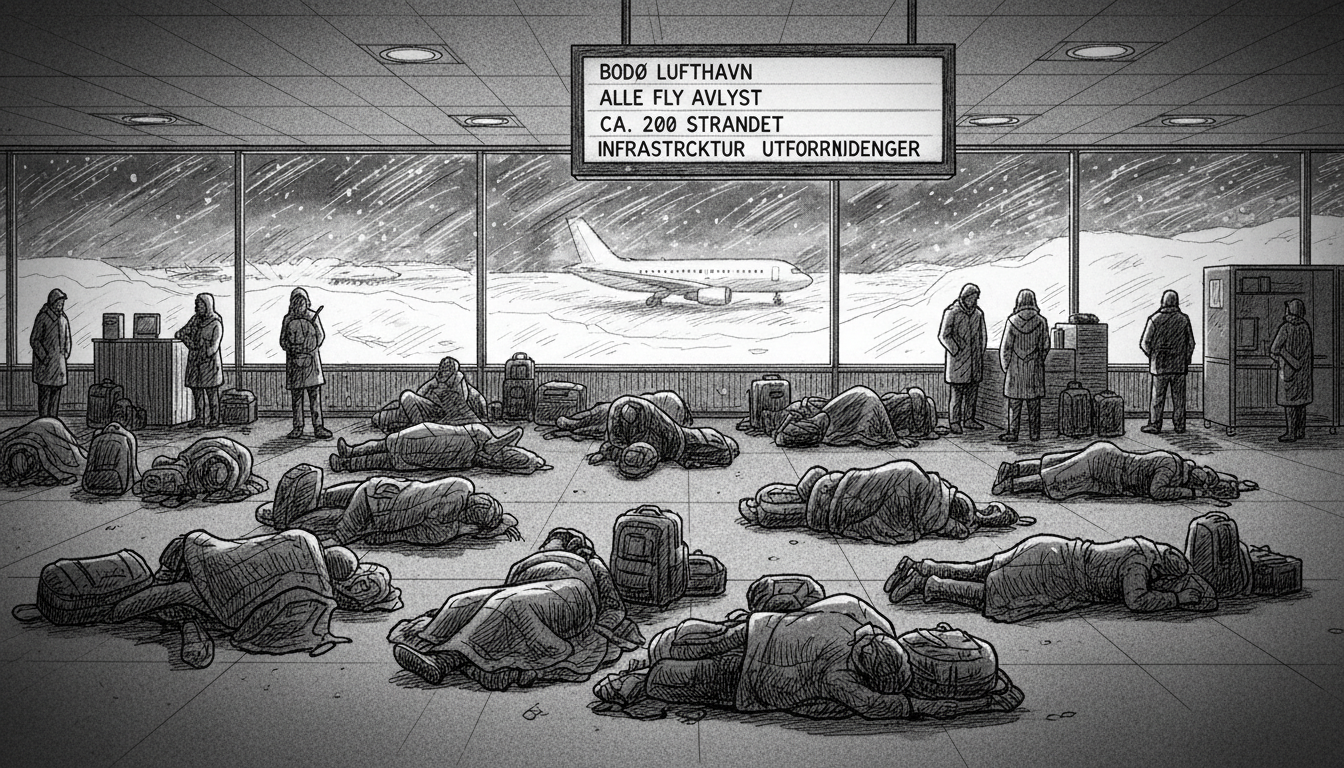
Hundreds of travelers endured a night on cold terminal floors at Bodø Airport after severe winter conditions forced complete flight cancellations. A major snowstorm created dangerous runway conditions, leaving approximately 200 passengers without accommodation or adequate information throughout the night.
Veronika Bøe Iversen, a healthcare worker returning from hospital visits, described the situation as completely terrible. She had planned to return to Mosjøen but instead spent hours waiting without proper facilities. Passengers received limited field beds and food vouchers worth 150 kroner, but all airport services had closed.
Airport authorities confirmed the runway closure extended through the night due to snow and ice accumulation. A communications director stated they faced numerous operational challenges but were doing their best under difficult circumstances. Safety concerns prevented any flight operations until at least 9 AM the following morning.
This incident highlights Norway's ongoing infrastructure challenges in northern regions during extreme weather. Bodø's location near the Arctic Circle makes it particularly vulnerable to winter disruptions. The airport serves as a critical transportation hub for the Nordland county, connecting remote communities to major population centers.
Compounding the situation, local hotels reached full capacity due to a major football match between Bodø/Glimt and Juventus. This left stranded passengers with no alternative accommodation options. Airport officials made their terminal building available and distributed their entire stock of field beds, though many still slept on arrival hall floors.
Travelers faced continued uncertainty throughout Wednesday. Many, including Iversen, booked alternative train tickets while maintaining flight reservations as backup. The widespread disruptions affected regional connectivity across northern Norway's transportation network.
Northern Norwegian airports frequently contend with harsh winter conditions that test infrastructure limits. This incident raises questions about emergency preparedness and passenger welfare protocols during extended closures. The region's extreme weather patterns demand robust contingency planning that balances safety with passenger comfort.
Air traffic officials acknowledged the demanding situation while emphasizing that runway conditions remained insufficient for safe operations. They expressed understanding for tired and desperate passengers while maintaining that safety considerations must take priority in all operational decisions.
Similar weather-related disruptions have occurred previously at northern Norwegian airports, particularly during early winter months. The frequency of these events suggests systemic challenges in maintaining consistent Arctic air service during severe weather conditions. Regional development depends heavily on reliable transportation links, making such disruptions economically significant beyond immediate passenger inconvenience.