
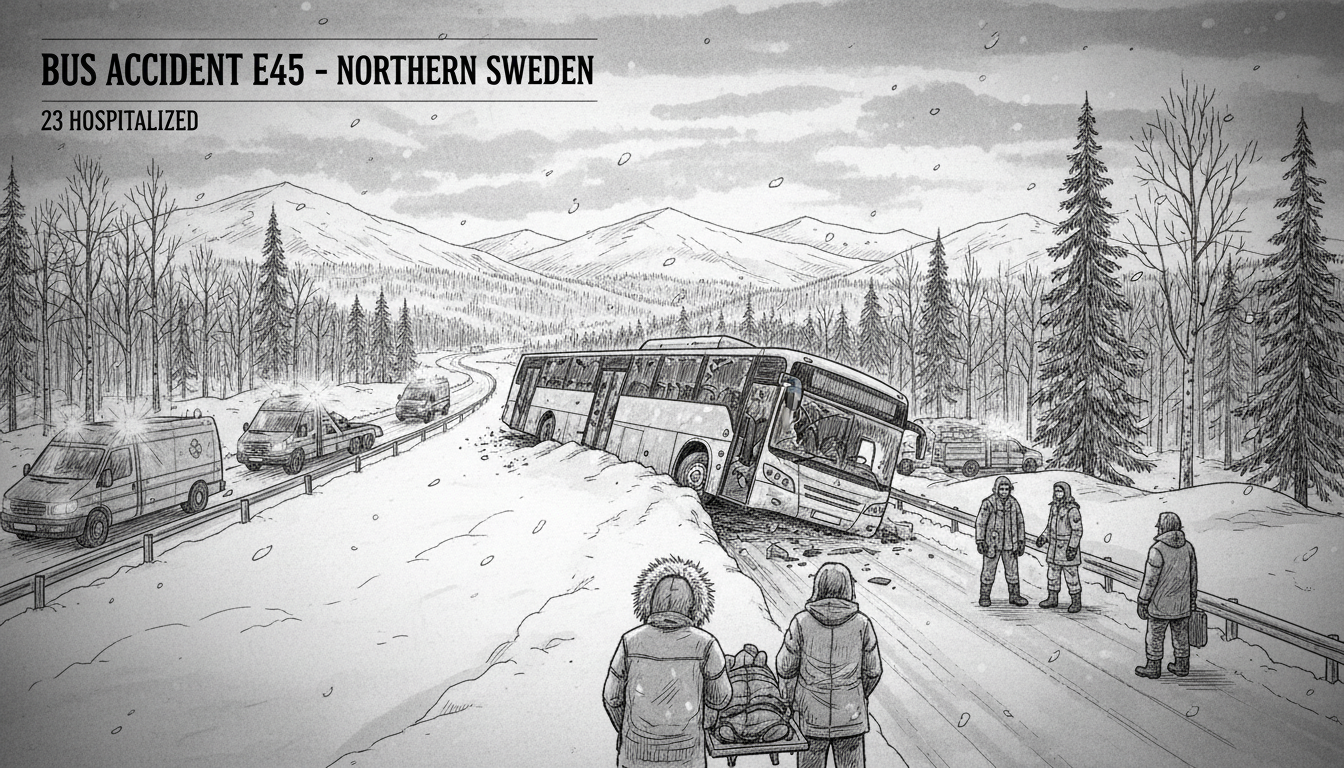
Twenty-three people remain hospitalized following Saturday's serious bus accident on the E45 highway in northern Sweden. The crash occurred between Storuman and Vilhelmina during morning hours. Medical authorities confirm injuries range from moderate to serious conditions, but no passengers face life-threatening situations.
Västerbotten region hospitals received 56 injured patients total from the incident. Emergency services transported ten critically injured individuals by ambulance, including one passenger who required extraction from trapped conditions inside the vehicle. Rescue operations involved multiple response teams working to secure the accident scene and provide immediate medical care.
This incident highlights ongoing transportation safety challenges on Sweden's northern highways during early winter conditions. The E45 corridor serves as a vital transportation artery connecting remote communities across Swedish Lapland. Previous accidents on this route have prompted infrastructure improvements, yet challenging weather and long distances between services create persistent risks.
Northern Sweden's sparse population creates particular emergency response challenges. Medical facilities in regions like Västerbotten maintain specialized trauma readiness despite serving large geographic areas. The coordinated response to this mass casualty event demonstrates Sweden's decentralized healthcare system capabilities, where regional hospitals handle serious emergencies despite distance from major urban centers.
Bus travel remains essential for connectivity in Sweden's northern territories where train service is limited. Many passengers rely on long-distance coaches for work commutes, medical appointments, and visiting family across vast distances. This accident will likely renew discussions about winter road maintenance standards and vehicle safety requirements for commercial transport in Arctic climate conditions.
What happens next for the injured passengers? Medical officials will continue providing care while transportation authorities investigate the crash circumstances. Such serious accidents typically trigger thorough reviews of road conditions, vehicle maintenance records, and driver protocols. The Swedish Transport Administration has historically implemented safety improvements following major incidents on northern highways.
International visitors should note that while Swedish roads maintain high safety standards, winter driving in northern regions presents unique challenges. Travelers using buses or rental cars should check weather forecasts and road conditions regularly when journeying through areas like Västerbotten county during colder months.