
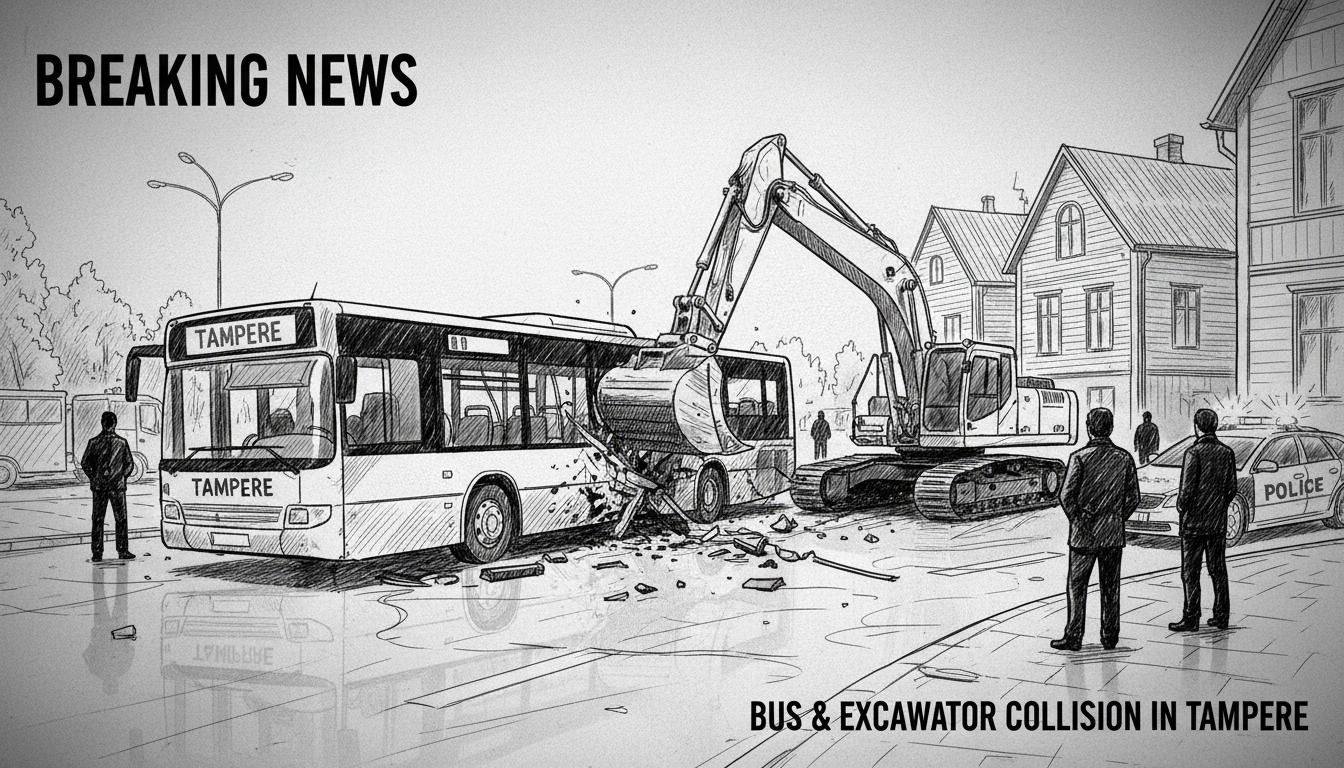
A serious traffic collision between a city bus and an excavator occurred in Tampere on Monday morning at the intersection of Lahdenperänkatu and Lempääläntie. The accident resulted in multiple injuries and temporary traffic disruptions throughout the central intersection area.
Emergency services confirmed six bus passengers and the driver received immediate medical attention at the scene. Three individuals required transport to hospital for further treatment according to rescue officials. The bus involved served regular city transit routes connecting Tampere's urban districts.
Rescue Chief Tomi-Pekka Olkkonen stated that three emergency response units attended the collision site. He noted that a tow truck had to remove the bus from the intersection center to restore normal traffic flow. Police have now launched a formal investigation into the exact circumstances that caused the collision.
Tampere's traffic infrastructure faces ongoing scrutiny as the city experiences rapid urban development. This incident highlights the challenges of managing construction vehicles alongside public transportation in growing urban centers. Finnish traffic safety records generally rank among Europe's best, yet accidents involving heavy machinery in urban settings present particular concerns.
Finland's Ministry of Transport and Communications has prioritized urban traffic safety in recent policy initiatives. The country's Vision Zero strategy aims to eliminate all traffic fatalities and serious injuries. Monday's collision in Tampere's rapidly developing Lahdenperä district demonstrates the practical difficulties in achieving these ambitious safety targets.
Local authorities must now balance construction demands with public safety as Tampere expands its infrastructure. The city's population growth has accelerated construction projects throughout urban areas. This creates inevitable interactions between heavy machinery and public transport routes that require careful coordination and safety planning.
Finnish traffic accident investigations typically examine vehicle conditions, driver actions, road design, and environmental factors. Police will likely review traffic camera footage and witness statements from this incident. The findings could influence future safety protocols for construction sites near public transportation routes in Finnish cities.
Public transportation remains a cornerstone of Finland's sustainable urban mobility strategy. Incidents like this Tampere collision test public confidence in urban transit safety. Transport authorities face pressure to maintain safety standards while accommodating necessary urban development and infrastructure improvements.
The collision's timing during morning rush hour amplified its impact on Tampere's traffic network. Commuters experienced delays throughout the city center as authorities worked to clear the scene. Such disruptions demonstrate the interconnected nature of urban transportation systems and their vulnerability to single-point failures.
Finland's comprehensive emergency response system proved effective in managing this incident. The prompt medical attention and efficient scene clearance reflect the country's robust emergency preparedness protocols. These systems undergo regular evaluation and improvement based on real-world incident responses.
Urban planners and traffic engineers will examine this collision for lessons about infrastructure design. The intersection where the accident occurred features typical Finnish urban road design with clear signage and traffic controls. Understanding why this collision occurred despite standard safety measures could inform future urban planning decisions.
As Tampere continues its growth as Finland's second-largest urban center, balancing development with safety remains paramount. This incident serves as a reminder that even with excellent safety records, continuous vigilance and improvement remain necessary in urban transportation management.