
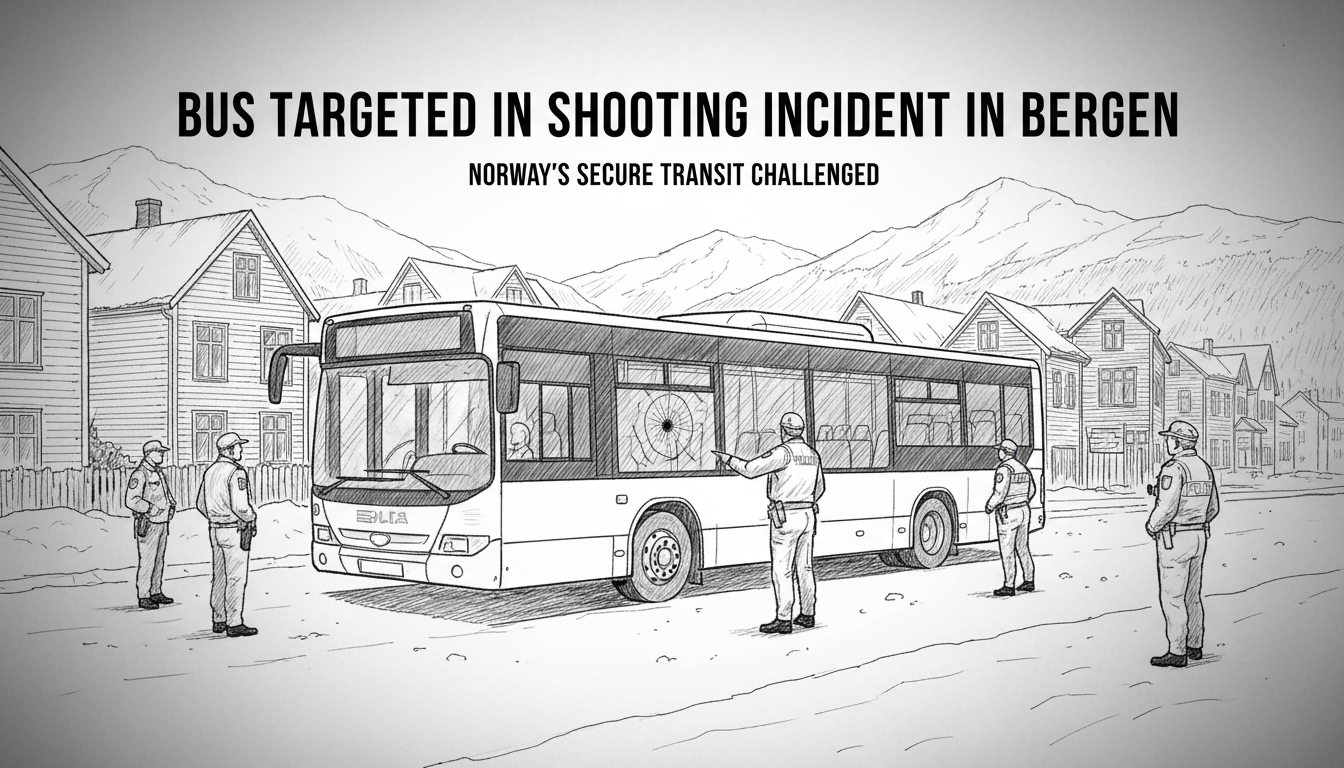
Police responded to a shooting incident targeting a public bus in Bergen's Sletten neighborhood during early morning hours. The bus company reported the attack around 3:30 AM after shots struck one of their vehicles. No passengers or driver sustained injuries in the incident. Authorities believe the perpetrator used an air weapon rather than conventional firearms. The projectile failed to penetrate the bus window, preventing potential harm to occupants.
This attack represents a concerning escalation in public transport safety challenges facing Norwegian cities. Bergen, Norway's second-largest city, maintains generally low crime rates compared to international urban centers. The Sletten area where the shooting occurred forms part of Bergen's Fana borough, known for its residential character and coastal proximity. Local police have launched a full investigation into the motive and circumstances surrounding the attack.
Norwegian public transportation systems typically experience minimal security incidents of this nature. The country's bus networks transport millions of passengers annually with strong safety records. This incident marks a rare occurrence of direct violence against public transit infrastructure. Police officials confirmed they are reviewing surveillance footage and conducting neighborhood inquiries. They urge anyone with information about the shooting to come forward immediately.
The timing of the attack during early morning hours suggests deliberate planning to avoid witnesses. Air weapons, while less lethal than firearms, still pose serious safety risks when deployed against public transportation. Norway maintains strict weapon ownership regulations, though air guns face fewer restrictions than conventional firearms. This incident may prompt renewed discussions about public transport security measures in urban areas.
Bergen's municipal government has invested heavily in public transportation infrastructure in recent years. The city's bus network serves as a critical component of Norway's broader commitment to sustainable urban mobility. Attacks on public transit infrastructure undermine public confidence in these essential services. Transportation authorities must now balance accessibility concerns with necessary security precautions.
This incident occurs amid broader European discussions about urban safety and public space protection. Norwegian cities generally maintain lower crime rates than many European counterparts, though isolated incidents challenge this perception. The Bergen police department's response will likely influence future security approaches across Norway's public transportation networks. Transportation officials emphasize that such incidents remain extremely rare in Norwegian context.