
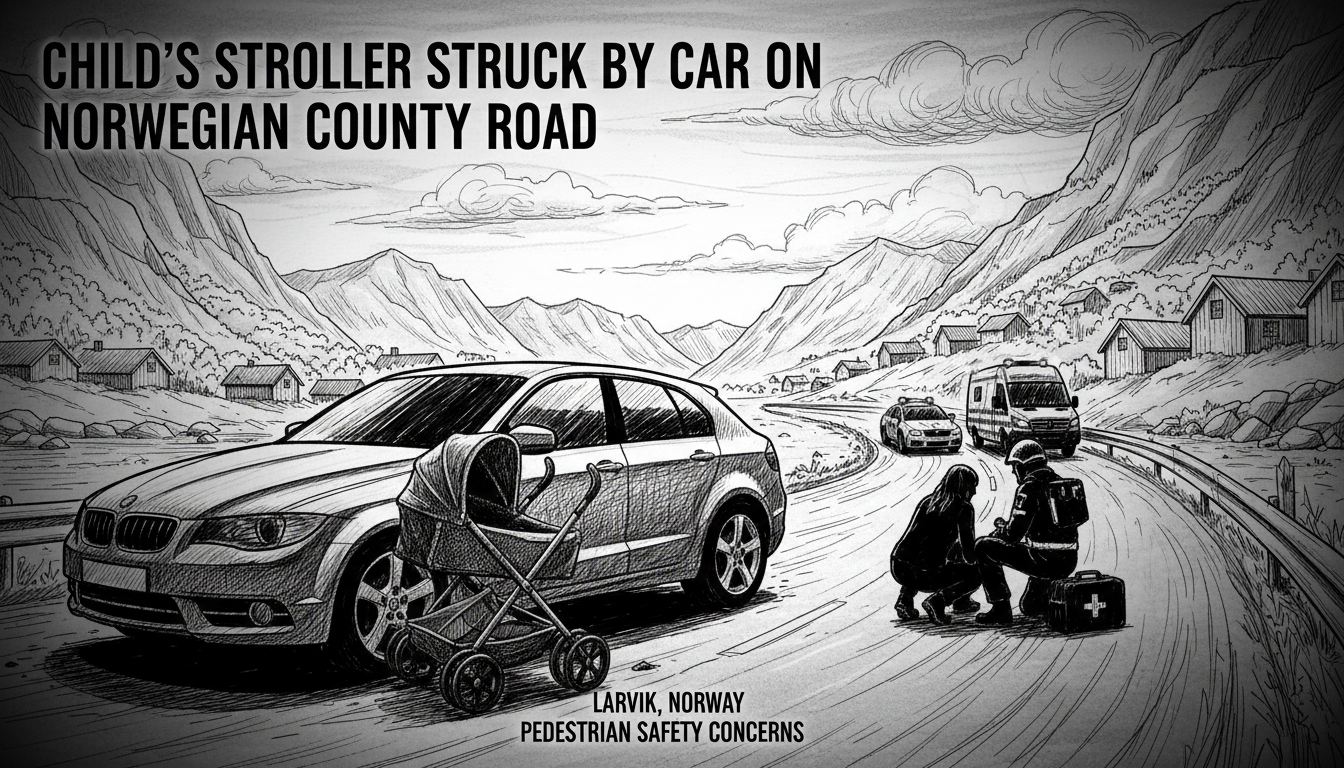
Emergency services responded to County Road 2990 in Larvik after a car struck a child's stroller. The child was reported conscious and alert at the scene. Paramedics provided immediate care. Police are now investigating the circumstances of the incident. This event on a Vestfold road highlights ongoing traffic safety concerns in Norwegian communities.
Road safety remains a persistent political issue in Norway. The Storting frequently debates infrastructure funding and traffic law enforcement. This incident occurs as local municipalities manage road maintenance budgets. Many Norwegian towns face challenges with older road designs in populated areas. County roads like FV2990 serve both local and through traffic. This mix can create risks for pedestrians and children.
Norwegian traffic safety records are generally strong. The country has low rates of traffic fatalities compared to global averages. This is due to strict laws and consistent enforcement. Yet, accidents involving vulnerable road users still occur. Each event prompts local reviews of road safety measures. Parents and community groups often call for better pedestrian infrastructure after such incidents.
The legal framework in Norway places high responsibility on drivers. Motorists must exercise extreme caution near pedestrians and children. Failure to do so can result in severe penalties. The police investigation will determine if any traffic laws were broken. Officials will examine road conditions, visibility, and driver attention. Their findings could influence local safety upgrades.
For international readers, understanding Norwegian road design is key. 'FV' stands for 'Fylkesvei,' meaning county road. These are maintained by regional governments, not the national highway agency. Larvik is a coastal town in Vestfold county, southwest of Oslo. It is a typical Norwegian community with a mix of urban and rural roadways. Traffic safety here reflects broader national priorities.
This accident's implications extend beyond the immediate response. It may renew debates about lower speed limits in residential zones. Some political parties advocate for more investment in separated walking paths. Others focus on driver education campaigns. The outcome often depends on budget allocations from the county council. These local decisions shape daily safety for Norwegian families.
The child's condition is the primary concern. Norwegian emergency medical services are highly trained. Their rapid response is a standard part of the country's welfare system. The focus now shifts to prevention. How can similar incidents be avoided on other county roads? This question will occupy local officials in the coming weeks. The answer may involve both engineering and public awareness efforts.