
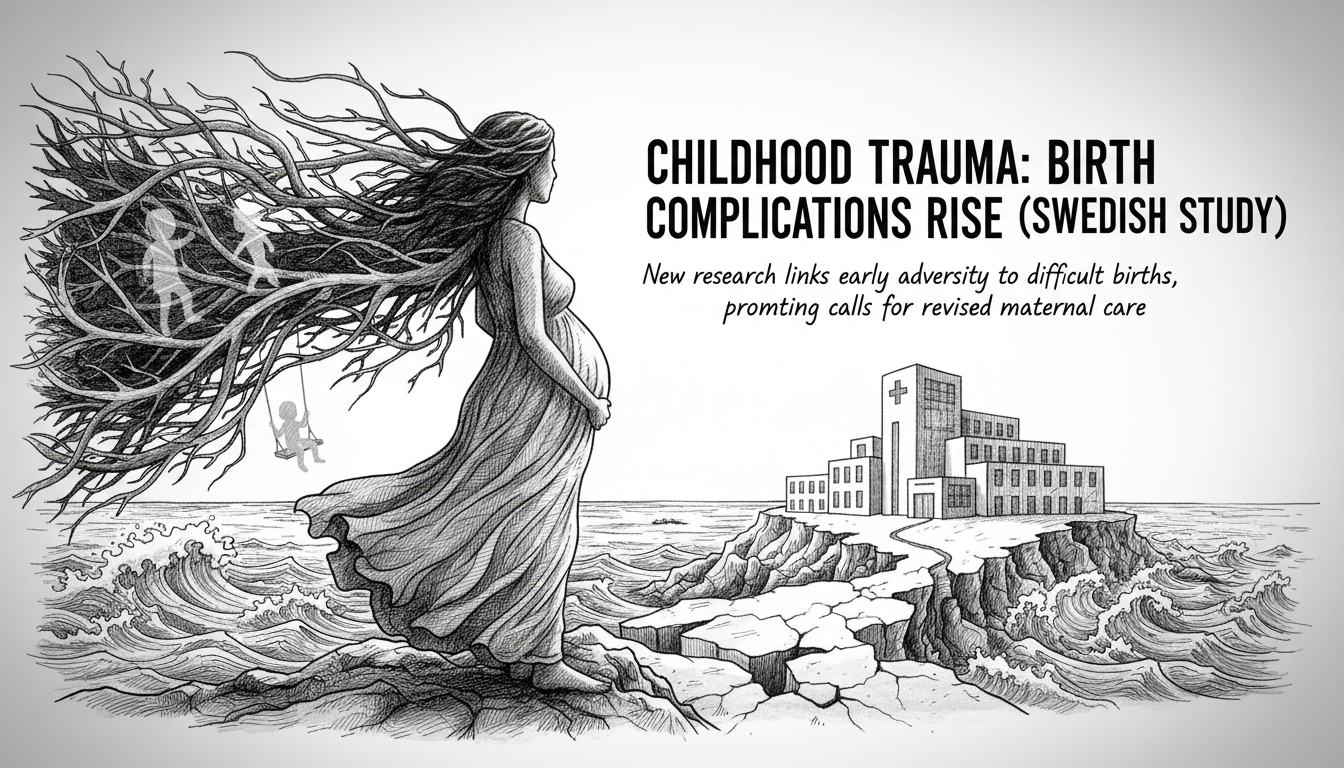
A groundbreaking Swedish study reveals that women who experienced multiple childhood traumas face significantly more complicated births. Researchers found these mothers endure higher rates of emergency C-sections, severe bleeding, and pregnancy-related illnesses.
The Uppsala University study followed 1,253 Swedish women through pregnancy and for one year after delivery. Professor Per Kristiansson, the lead researcher, expressed surprise at how strongly early life events affected physical birth outcomes.
Women with four or more childhood traumas faced quadruple the risk of pre-eclampsia compared to those reporting no trauma. Their C-section rates doubled, severe bleeding incidents tripled, and antibiotic treatments during delivery were three times more common.
This research fills a critical gap in understanding how early adverse experiences shape reproductive health. Swedish healthcare traditionally focuses on physical health during pregnancy, but this study suggests emotional history matters profoundly.
Kristiansson advocates for healthcare providers to gently inquire about childhood trauma during prenatal care. Identifying at-risk mothers early could allow for targeted support throughout pregnancy and delivery.
In Stockholm's maternity wards, midwives already practice holistic care, but this study might change screening protocols. The findings could influence prenatal care at Karolinska Hospital and other major Swedish medical centers.
Sweden's comprehensive healthcare system provides excellent maternal care, yet emotional factors sometimes receive less attention. This research highlights the need for integrated mental and physical health approaches.
For international readers, Sweden's universal healthcare makes such studies possible through detailed national registries. The country's commitment to gender equality and family support creates ideal conditions for maternal health research.
The study defined childhood trauma broadly, including physical and emotional trauma, neglect, and family dysfunction. Researchers focused specifically on birth method, delivery complications, and childhood adverse experiences.
These findings arrive as Sweden continues developing its family support systems. The research could influence how midwives and doctors approach patient care in neighborhoods like Södermalm and Vasastan.
Swedish society places strong emphasis on gender equality and family welfare. This study reinforces that supporting mothers requires understanding their complete life stories, not just their current physical condition.
The research team plans to continue investigating how early interventions might mitigate these effects. Their work represents Sweden's ongoing contribution to global maternal health knowledge.