
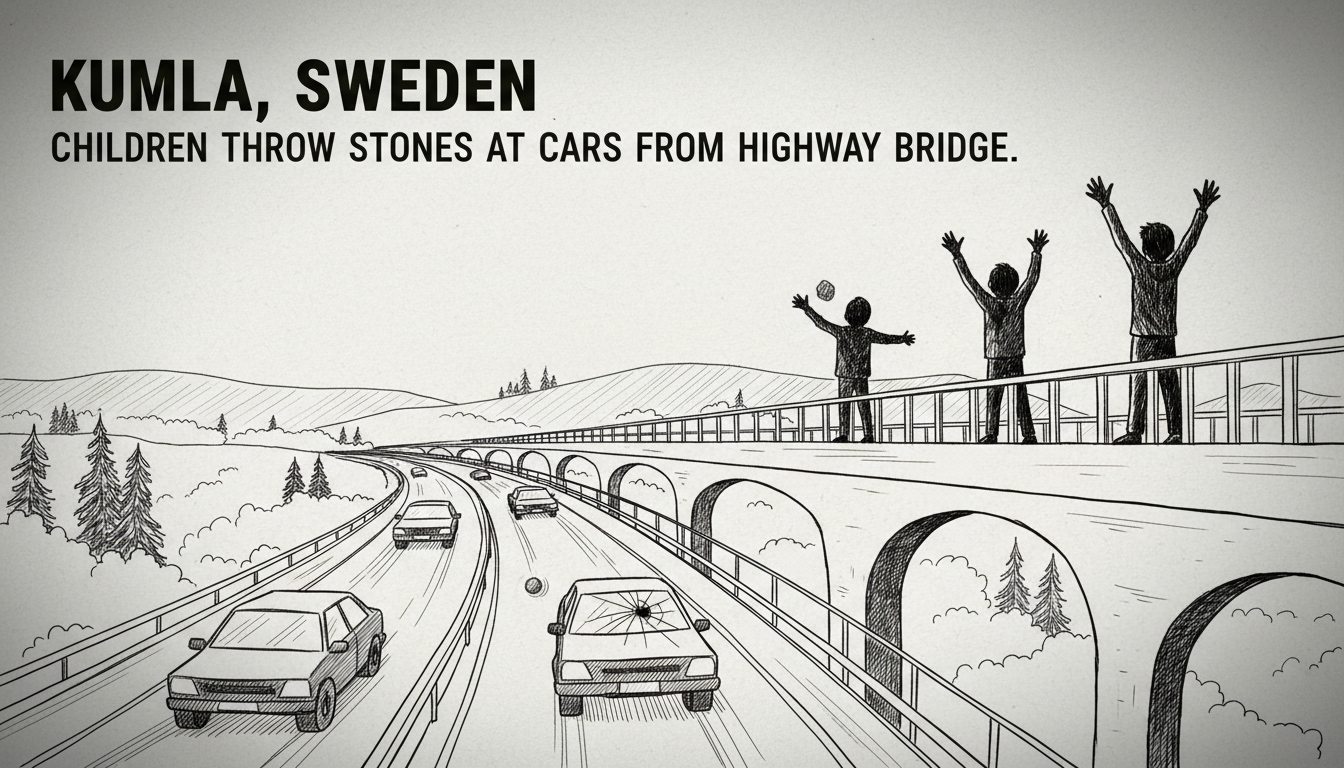
A troubling incident unfolded on a Swedish highway this afternoon. Several children were caught throwing stones at moving cars from a bridge over Route 50 in Kumla. Police say at least one vehicle was hit, though the extent of any damage remains unclear. Authorities have issued a stern warning about the severe risks of such actions. They state these acts can cause serious vehicle damage and put drivers, passengers, and other road users in grave danger. The young stone-throwers have not yet been identified.
This event taps into a recurring and deeply concerning trend in Swedish society. While isolated, stone-throwing from bridges and overpasses is a dangerous phenomenon that surfaces periodically. It speaks to complex issues of youth engagement, supervision, and the understanding of consequences. For international readers, it is important to know Sweden has strict laws regarding vandalism and endangering public safety, with serious penalties even for juveniles. The legal system focuses on rehabilitation but does not shy away from holding young offenders accountable, often involving social services and the family.
The location, Route 50 near Kumla, is a major traffic artery. Kumla itself is a municipality known for its historic prison and as a hub in central Sweden. Incidents like this disrupt the region's sense of safety and community trust. They force a conversation about after-school activities for youth and the spaces they inhabit. In Swedish cities like Stockholm, community centers in neighborhoods such as Rinkeby, Tensta, or Husby often provide structured activities to engage young people. The question arises: what similar resources or supervision exist in smaller towns or along rural stretches? This is not just a police matter but a societal one.
From a cultural perspective, Sweden prides itself on safety and a high level of social responsibility. Acts that deliberately endanger others are met with strong public disapproval. The police statement's tone reflects this collective value, emphasizing the 'devastating consequences' possible. For expats and newcomers, understanding this context is key. Swedish society generally expects a high degree of personal accountability and respect for public safety, norms that are instilled from a young age. When these norms are breached, it generates significant concern.
What happens next? Police will likely continue their investigation, reviewing any available traffic camera footage from the highway. The focus will be on identifying the children and contacting their guardians. The outcome typically involves a combination of legal proceedings for damages and mandatory meetings with social workers. The broader community may also reflect on how to better engage its youth. This small-town incident is a stark reminder that the challenges of youth delinquency and public safety are not confined to urban areas. They require vigilance and community effort across all of Sweden.