
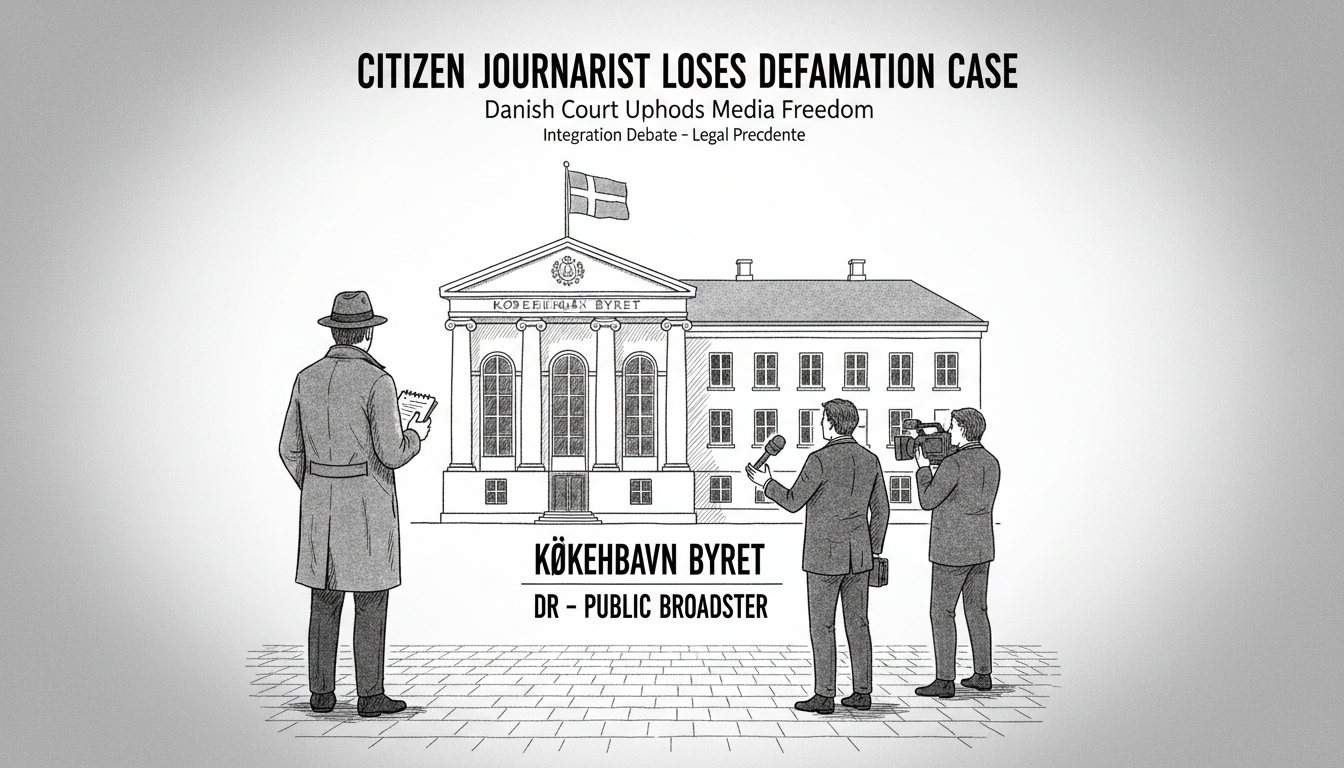
A Copenhagen court has ruled against a citizen journalist who sued the national public broadcaster for defamation. The case centered on a controversial documentary that the plaintiff claimed amounted to character assassination. The court's decision marks a significant legal moment for media freedom and public discourse in Denmark.
The plaintiff, Jesper Larsen, argued the documentary damaged his reputation. He described the program as a character assassination in public statements. The Copenhagen City Court examined the evidence and dismissed his claims. This legal outcome reinforces the broadcaster's editorial protections under Danish law.
This case touches on core tensions within Danish society news. It involves media responsibility, individual reputation, and the boundaries of critical journalism. The documentary itself reportedly focused on integration debates, a perennial topic in Copenhagen integration discussions. Such programs often examine complex social dynamics within immigrant communities.
Danish defamation law requires proving intentional harm or gross negligence. The court found the broadcaster's work did not meet this high standard. Legal experts note this threshold protects investigative journalism. It allows media to tackle sensitive subjects like Denmark immigration policy without excessive legal fear.
The ruling has implications for public debate on the Danish welfare system. Documentaries often explore how social services interact with diverse populations. They question whether policies achieve their stated goals. This scrutiny is part of a healthy democratic process, even when it provokes strong reactions.
Community leaders have mixed views on such media coverage. Some argue it fosters necessary conversations about Denmark social policy. Others worry it can simplify complex personal stories. The balance between public interest and personal dignity remains delicate. This court decision suggests a preference for protecting robust journalistic inquiry.
What does this mean for future reporting? Journalists may feel more secure when analyzing contentious social issues. Citizen critics will need substantial evidence to challenge editorial judgments legally. The decision underscores that strong criticism of media content does not automatically equal defamation. The legal system distinguishes between damaged pride and actual, unlawful harm to reputation.
This case also reflects broader Nordic media traditions. Public broadcasters hold a trusted but scrutinized position. They are expected to inform the public on matters of national importance, including integration challenges. Their programming sometimes becomes the news itself, sparking debates that extend far beyond the television screen.
The plaintiff can appeal the decision to a higher court. That process would extend the legal battle for many more months. For now, the judgment stands as a reference point for similar disputes. It clarifies the legal risks of challenging major media institutions on editorial grounds in Denmark.