
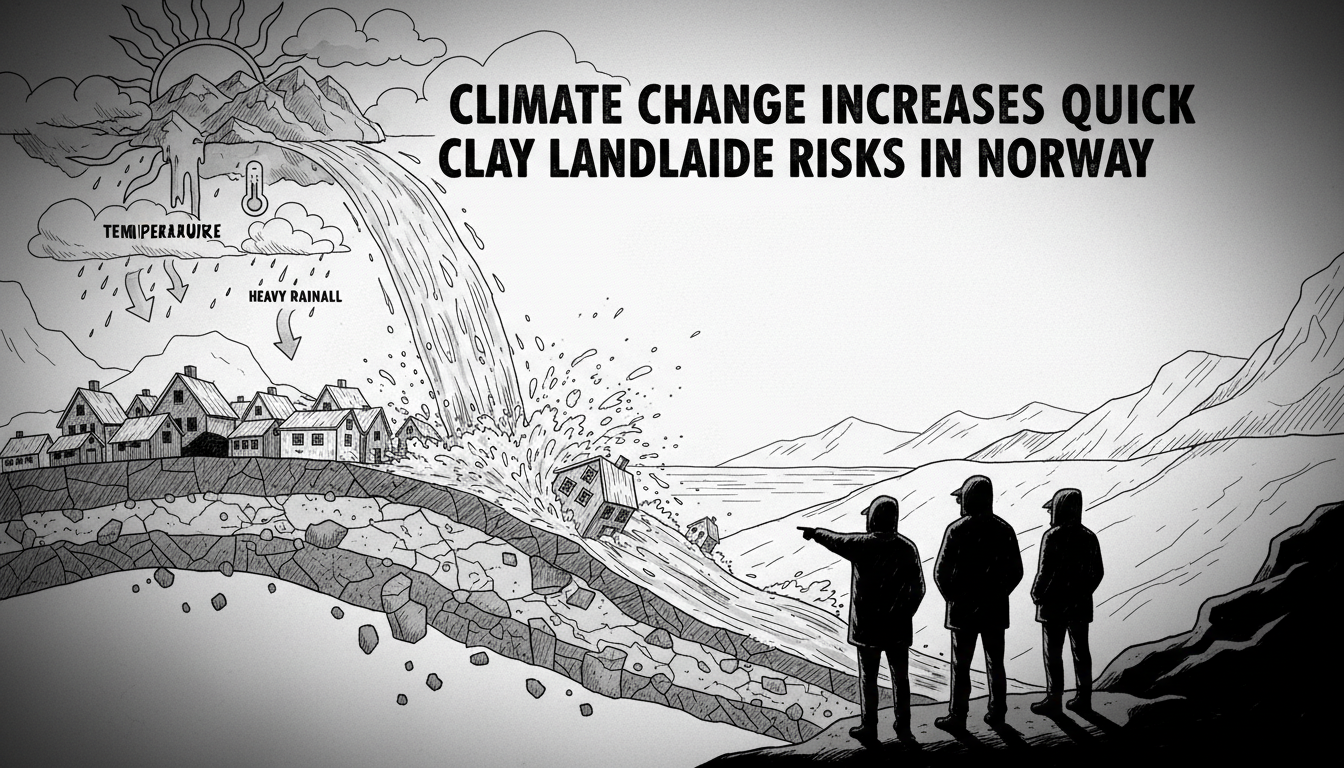
Quick clay landslides happen without warning. They can turn solid ground into liquid soup in moments.
Vidar Olsen lives in Talvik village near Alta in Northern Norway. His entire community sits on quick clay. This marine clay remains stable when undisturbed but becomes dangerous when overloaded or exposed to water pressure.
Recent landslides in Gjerdrum, Levanger and Kråknes demonstrate the fatal consequences. The 2020 Kråknes slide swept five houses into the sea near Alta.
Quick clay exists across large parts of Norway, particularly in eastern regions, Trøndelag and Northern Norway. Climate change brings new risks to these areas.
A recent climate report commissioned by environmental authorities shows Norway will experience more rainfall. Temperatures could rise by 2 degrees over 75 years, with Finnmark facing up to 2.8 degrees of warming.
Researcher Jean-Sébastien L'Heureux from the Norwegian Geotechnical Institute states climate change will definitely increase quick clay dangers. Most slides occur during spring snowmelt combined with flooding and rain.
Urbanization creates additional problems. More asphalt means rainwater flows over surfaces rather than soaking into the ground. This increases erosion along riverbanks in quick clay areas.
Less ground frost also poses risks. Rainwater penetrates groundwater more easily, increasing soil pore pressure that destabilizes slopes.
Authorities have implemented safety measures in Talvik, including lime stabilization and slope reinforcement. Monitoring equipment measures pore pressure to provide early warnings.
Building on quick clay requires expensive ground investigations. Olsen paid for extensive surveys before expanding his house. A planned housing development in Talvik was recently rejected due to high costs and risks.
Despite increased awareness, landslides still occur. The August slide in Levanger destroyed railway infrastructure and claimed one life.
L'Heureux acknowledges remaining uncertainties. More funding for mapping and research is essential. Sometimes development projects must be rejected in high-risk areas.
Norway's water resources and energy directorate has developed new digital mapping tools to identify danger zones more efficiently.
While few people face immediate risk, climate change introduces new uncertainties for communities built on quick clay. The situation demonstrates how environmental changes can transform stable ground into potential disaster zones.