
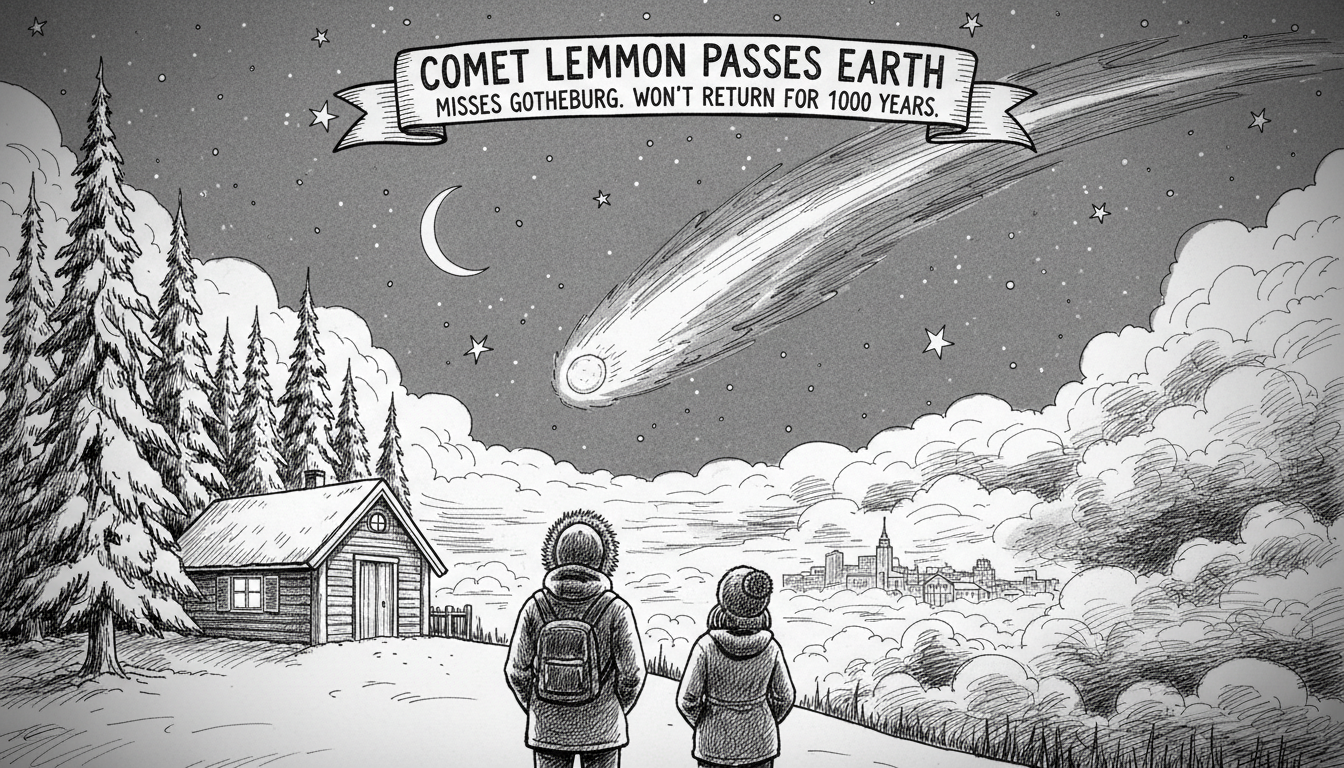
Comet Lemmon will grace night skies across Sweden for several weeks. The best viewing opportunity comes on Tuesday when it passes closest to Earth. After this approach, the comet won't return for approximately one thousand years according to astronomical calculations.
In Sweden, the comet should be most visible around 9 PM after sunset. Many observers might struggle to see it with the naked eye. Astronomy experts recommend using binoculars or a smartphone camera for better viewing.
Eric Stempels, a researcher at Uppsala University's physics and astronomy department, explained the viewing technique. "Just like with northern lights, if you use a mobile camera with a several-second exposure, you might capture that fuzzy spot in your image," he said in an interview.
Gothenburg residents face particular challenges spotting the celestial visitor. The city's coastal location and frequent cloud cover reduce viewing opportunities significantly. Urban light pollution further complicates comet watching in Sweden's second-largest city.
Why does this matter for international readers? Comet sightings remain relatively rare astronomical events that capture public imagination. This particular comet's thousand-year orbit makes this a truly once-in-many-lifetimes viewing opportunity for skywatchers worldwide.