
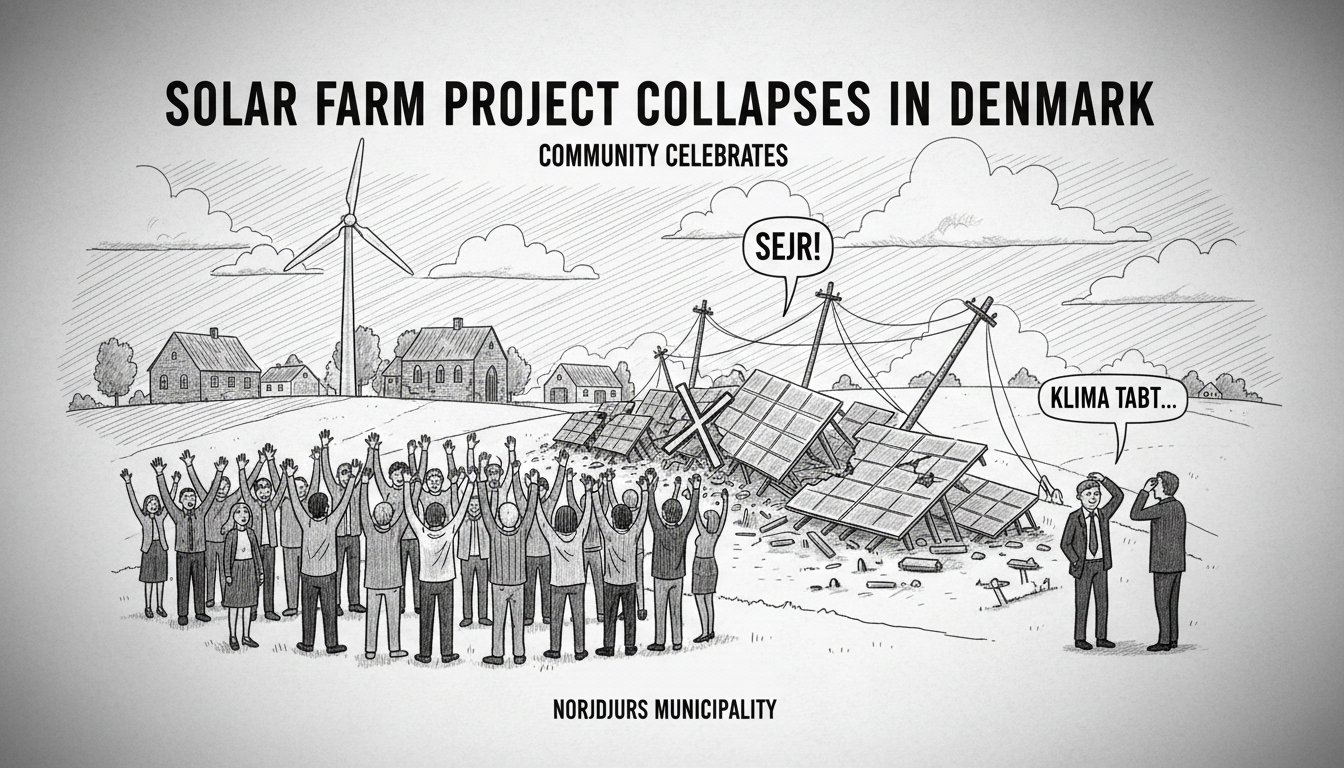
A six-year battle over a proposed solar energy park on Denmark's Djursland peninsula has ended with residents celebrating victory and local officials expressing frustration. The project, known as Kejsegården, has been cancelled after the developer, European Energy, withdrew its plans. This decision highlights a recurring tension in Denmark's green transition between national climate ambitions and local community acceptance.
Local residents like Grete Carstensen, who led the opposition group 'Solcellepark Kejsegården – nej tak' (Solar Park Kejsegården – No Thanks), describe a profound sense of relief. They have lived with the proposal for a large-scale industrial installation in their rural backyard for half a decade. Another neighbor, Niels Holm Larsen, echoed the sentiment, calling the outcome a fantastic result after years of dedicated effort. Their victory underscores a powerful dynamic in Danish society news, where organized local activism can successfully challenge large-scale development projects, even those branded as environmentally essential.
The project's scale shrank dramatically over time, from an initial 240 hectares down to a final proposal of around 80 hectares. This reduction was a political compromise demanded by the Norddjurs Municipality. However, for European Energy, the smaller footprint made the project economically unviable. The company's market regulation chief stated they would now focus on renewable energy projects elsewhere in the country. This pullout leaves the landowners who agreed to lease their fields in a difficult position, unsure if they will seek a new developer.
From a policy perspective, the cancellation represents a clear setback for municipal climate targets. Niels Ole Birk, Chairman of the Environment and Technology Committee in Norddjurs, called it a defeat and a blow to reaching 2030 goals. He noted that larger installations are necessary to meet ambitious targets, a common challenge across the Danish welfare system where top-down planning meets bottom-up resistance. Another local politician, Niels Basballe, expressed surprise at the withdrawal, stating it further delays the green transition in a region he feels is already lagging.
This case is not isolated. It reflects a broader national conversation about Denmark immigration policy into rural areas for energy infrastructure. The conflict between centralized climate policy and local democratic consent is becoming a defining feature of the green transition. Municipalities are caught in the middle, tasked with implementing national goals while responding to constituent concerns. The process reveals how Denmark social policy, which often emphasizes community cohesion and quality of life, can clash with rapid, large-scale industrial development, even for a noble cause. The question now is whether a new, more acceptable proposal can emerge or if the fields will remain purely agricultural, leaving the municipality to find alternative paths to its carbon reduction targets.
The immediate future is uncertain. Local politicians are waiting to see if new applicants emerge for a scaled-back project. For the residents of Ålsrode, the immediate future is one of regained peace. Their successful campaign demonstrates that in the Danish model, persistent civic engagement remains a potent force, capable of altering even the most well-intentioned plans. This story is a microcosm of a larger European struggle, balancing urgent environmental needs with the preservation of local landscapes and community autonomy.