
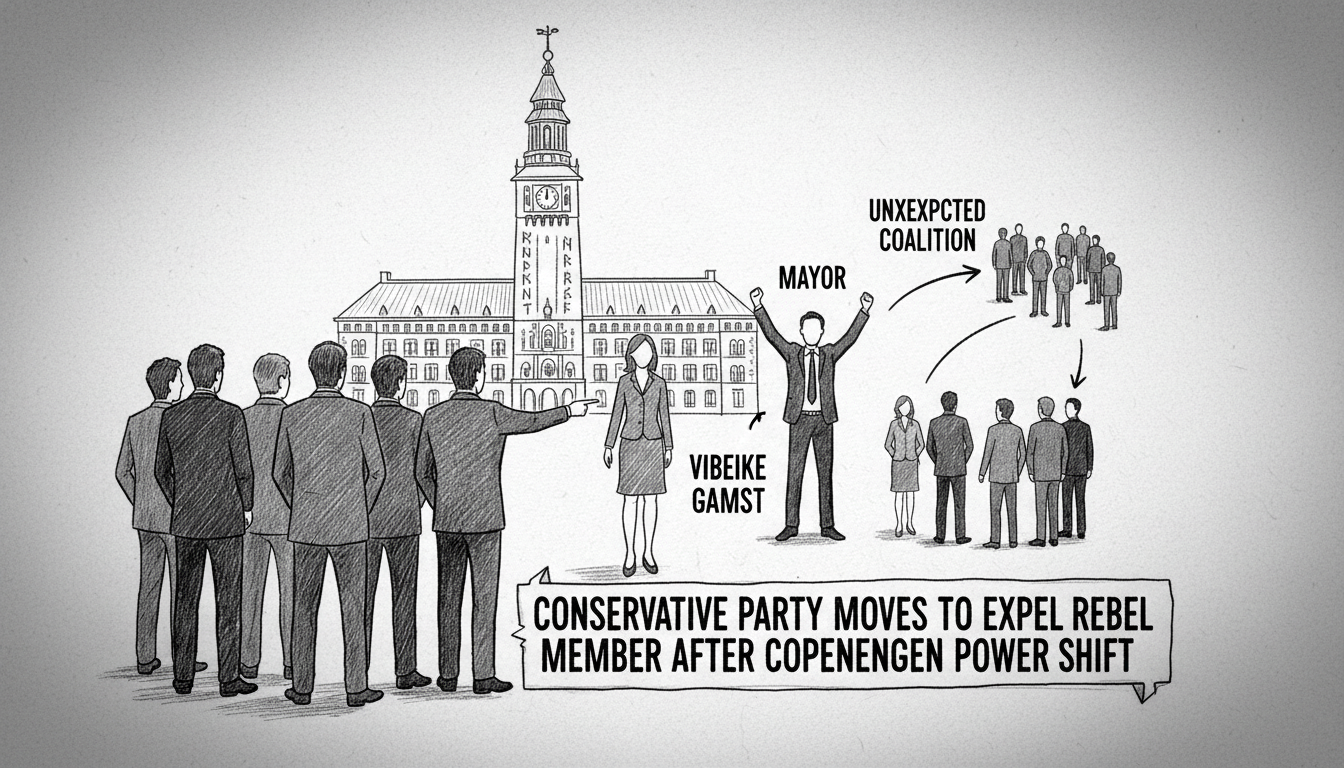
A political rebellion in Copenhagen's city council has triggered expulsion proceedings against Conservative council member Vibeke Gamst. The local Conservative association in Aalborg plans to formally recommend her exclusion from the party after she broke ranks in a crucial mayoral vote. This development follows dramatic weekend negotiations that reshaped Copenhagen's political landscape.
Peter Brix, chair of the Conservative People's Party's voter association in Aalborg, confirmed the impending action. He stated they would submit the exclusion recommendation imminently. The party's regulations require a fourteen-day waiting period before a formal exclusion assembly can convene. This procedural timeline means Gamst remains a Conservative member for now, despite the pending disciplinary action.
The crisis erupted when Gamst abandoned her party's agreed position during Sunday's mayoral selection. Conservative lead candidate Morten Thiessen had negotiated support for radical politician Jes Lunde's mayoral bid. Gamst instead joined forces with Social Democrats, Socialist People's Party, and Red-Green Alliance members. Their sixteen-vote coalition preserved Lasse Frimand's position as Copenhagen mayor.
This political drama reveals deeper tensions within Danish conservative politics. Local voter associations maintain substantial influence over party discipline and membership decisions. The situation demonstrates how individual council members can dramatically alter municipal power balances. Copenhagen integration policies often depend on these delicate political arrangements.
Danish welfare system stability frequently hinges on such council negotiations. Municipal governments manage crucial social services including senior care programs. Gamst currently serves as councilor for Senior and Care, giving her decision particular significance for elderly residents. Her political future now hangs in the balance during the exclusion process.
What does this mean for Copenhagen's governance? The city's political direction appears secure for now with Frimand maintaining leadership. Yet Conservative party unity faces serious challenges after this public rift. Danish immigration policy and other municipal services could experience ripple effects from this political realignment. The coming weeks will determine whether party discipline can withstand this exceptional breach of protocol.
Danish society news frequently highlights such political conflicts in municipal governments. These local power struggles often influence national policy debates about Denmark social policy implementation. The Gamst case illustrates how individual politicians can reshape urban governance through strategic alliances.
International observers might wonder why this local political matter deserves attention. The answer lies in Denmark's decentralized governance structure. Municipal councils wield substantial authority over integration programs, social services, and daily community life. Council members' political loyalties directly impact how Danish welfare system principles translate into local practice.