
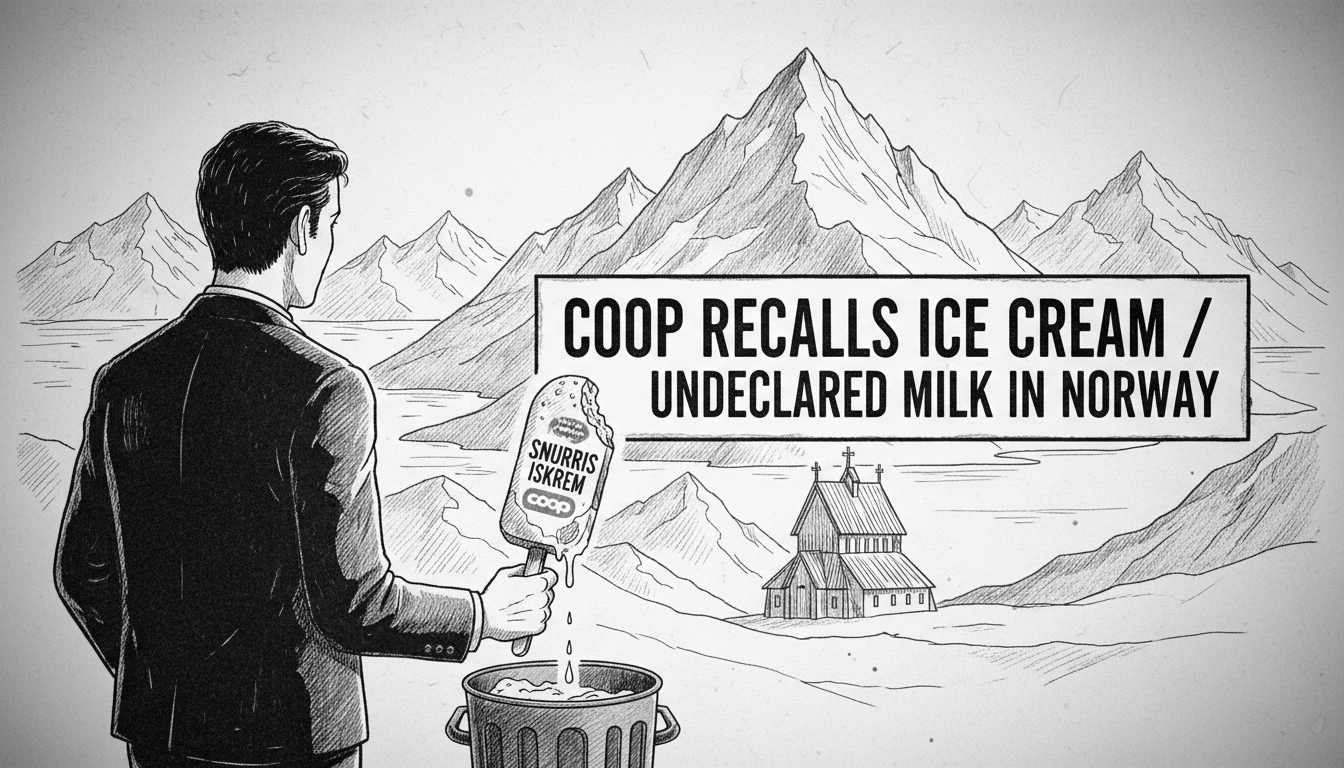
Norwegian grocery chain Coop has issued a nationwide recall for its Coop Snurris ice cream bars. The recall targets eight-packs with a best-before date of September 19 and batch number 2622510568. A production error means some packages contain higher levels of milk than declared on the label. The product is labeled as 'may contain traces of milk,' but the actual amount could pose a serious health risk to individuals with a milk allergy. Coop stated the error could lead to a severe health hazard for allergic consumers. They advise customers with milk allergies to discard the product or return it to any store. People without such allergies can safely consume the ice cream. The product is being removed from freezers in Coop stores across the country.
This recall highlights the stringent food safety protocols within the Norwegian consumer market. Norway's Mattilsynet, the Food Safety Authority, operates a vigilant system for monitoring and managing such incidents. Recalls of this nature, while concerning, are typically executed swiftly to minimize public risk. The incident will likely trigger a review of production controls at the manufacturing facility involved. For international observers, it underscores the high regulatory standards expected of retailers in Nordic countries. Consumer trust is a paramount concern for chains like Coop, which holds a substantial market share in Norway.
From a policy perspective, this event connects to broader discussions on supply chain transparency and allergen labeling. The Storting has previously debated tightening regulations around food production and import controls. Such debates often weigh economic interests against public health safeguards. This recall may fuel arguments for even stricter oversight, particularly for products with complex ingredient sourcing. It also raises questions about the resilience of local production lines as Norway navigates shifts in its domestic food industry.
The immediate economic impact is localized to Coop and its supplier. The chain must manage logistics, customer communications, and potential reputational damage. For the supplier, there will be costs associated with the halted production, investigation, and corrective measures. In the larger context, Norway's consumer protection framework is designed to handle these situations without major market disruption. The system relies on rapid response and clear public communication, which appears to be in effect here. The recall's efficiency will be a test of those protocols.
What does this mean for the average consumer? It reinforces the importance of checking product labels and batch numbers, especially for those with allergies. It also demonstrates the effectiveness of Norway's food safety alert system. For expats and international readers, it serves as a case study in Nordic regulatory responsiveness. The story is less about a single ice cream bar and more about the mechanisms that spring into action when a standard is not met. The outcome will depend on how completely the product is retrieved and what corrective actions the manufacturer implements.