
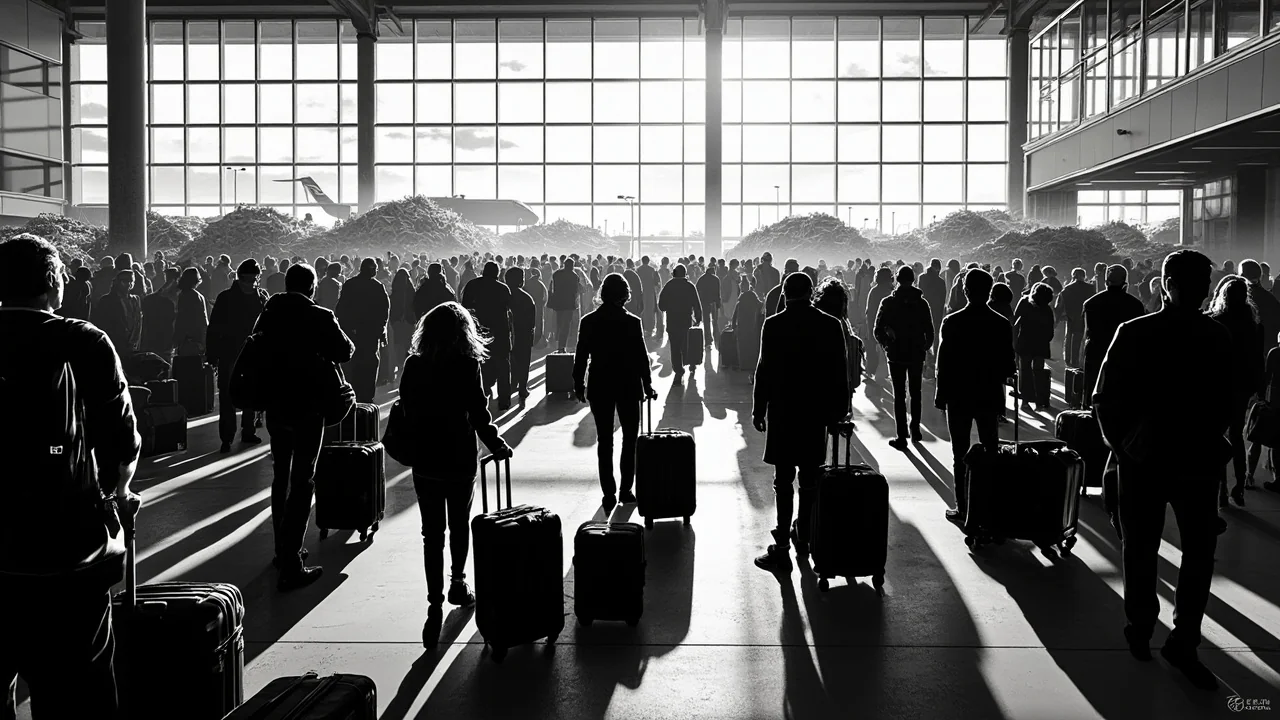
Copenhagen Airport's baggage sorting system failure delayed 7,000 pieces of luggage over a chaotic weekend, exposing vulnerabilities in critical travel infrastructure. The technical glitch, which began on Friday morning and lasted until early Sunday, forced staff to manually process all checked baggage for two days. As a journalist covering Danish society, I see this incident as more than a travel hiccup; it's a stress test on the efficiency and reliability that Denmark prides itself on. With 140,000 passengers passing through the airport during the disruption, the human impact was significant, raising questions about our dependence on integrated IT systems.
The IT Glitch That Halted Operations
Communication breakdown between two key IT systems caused the automatic baggage sorting machines at Copenhagen Airport to fail completely. Lise Agerley Kürstein, the airport's communications director, explained that the systems simply would not 'talk to each other,' a stark reminder of how fragile digital integration can be. This was not a minor software bug but a fundamental failure in the core infrastructure that handles thousands of bags daily. The immediate consequence was a total reliance on human labor to sort and route luggage, a process that is typically fully automated in modern hubs like Copenhagen. For a country known for its technological advancement, such a failure in a basic operational system is particularly jarring.
The problem manifested Friday morning, catching both airport authorities and airlines off guard. There was no gradual decline in service; the system stopped working, necessitating an emergency response. This kind of incident challenges the narrative of Denmark as a society where public services and key infrastructure operate with clockwork precision. The welfare model depends on reliable systems, and when they fail, the social contract feels strained. Passengers, many of them residents relying on smooth transit for work or family, were left in limbo, unsure when or if their belongings would follow them.
A Weekend of Intense Manual Labor
Faced with the system collapse, airport management made a swift decision: call in extra personnel and revert to manual sorting. Over Friday and Saturday, additional staff were drafted in to tackle the mounting pile of luggage. This effort involved physically handling and directing each of the thousands of bags that would normally zoom through automated conveyors. The image of workers manually sorting baggage in 2024 is a powerful contrast to the high-tech image Copenhagen Airport cultivates. It underscores a timeless truth: when technology fails, human adaptability becomes the most critical system.
The scale of the manual operation was substantial. With 140,000 passengers transiting through the airport, the volume of baggage was immense. Each bag required individual attention, slowing the entire process to a crawl compared to automated standards. This situation placed enormous pressure on ground handling teams and revealed the hidden resilience within the airport's workforce. From a social policy perspective, this event highlights the importance of having flexible labor protocols and the ability to mobilize human resources quickly during a crisis—a strength of the Danish labor market.
Passenger Impact and Institutional Response
For travelers, the disruption meant uncertainty and inconvenience. The airport's official advice was to contact individual airlines or baggage handling companies, shifting the burden of follow-up onto passengers. This is a common but frustrating aspect of air travel disruptions, where responsibility becomes diffused across multiple entities. In Denmark's highly structured society, such ambiguity can be particularly aggravating. People expect clear channels of communication and support, hallmarks of the Danish welfare system that were tested here.
The airport's communication strategy, led by Kürstein, was cautiously transparent. She acknowledged the difficulty in providing exact timelines, stating, 'It is hard to promise anything, but I have been told it will happen within a relatively short time.' This honesty is commendable but also reflects the limitations of crisis management when systems are down. No compensation figures or detailed recovery plans were immediately disclosed, leaving affected passengers to navigate the aftermath with limited guidance. This incident serves as a case study in how even well-managed institutions can struggle with customer service during operational meltdowns.
Analysis: Reliability in a Danish Context
As a reporter focused on integration and social policy, I find this baggage crisis emblematic of a broader tension. Danish society is built on trust in efficient, well-functioning public and private systems. When a key international gateway like Copenhagen Airport stumbles, it subtly chips away at that trust. For newcomers and tourists, their first experience of Denmark might be one of disorder rather than the famed order. This has indirect implications for integration, as smooth societal functioning is a backdrop for successful inclusion.
Statistically, Denmark invests heavily in infrastructure and digitalization. Yet, this event shows that investment alone cannot guarantee flawless operation. The interdependency of IT systems creates single points of failure that can have cascading effects. In a social democracy, there is an expectation that public-facing utilities will have effective contingency plans. The manual sorting was a contingency, but the prolonged delay suggests these plans had limits. Comparing this to other Nordic airports, which face similar technological pressures, could yield lessons on building more resilient systems.
The incident also touches on the Danish welfare state's implicit promise of stability. Travelers, including families, businesspeople, and immigrants visiting home, plan their lives around reliable transport. A disruption like this can mean missed connections, lost workdays, and emotional stress. While not a direct social policy issue, it affects the daily welfare of citizens and visitors alike. Municipalities and social centers might even see indirect effects if residents face unexpected costs or delays from such travel woes.
Moving Forward: Lessons from the Chaos
By early Sunday, the technical issues were repaired, and normal operations resumed. The backlog of 7,000 delayed bags began to clear, though the exact timeline for full resolution remained vague. This recovery phase is crucial for restoring confidence. Airport authorities must now conduct a thorough post-mortem to understand why the IT systems failed to communicate and how to prevent a recurrence. This involves not just technical fixes but also reviewing crisis protocols and passenger communication strategies.
For Denmark, a country that often tops global rankings for quality of life and infrastructure, this episode is a humble reminder. No system is infallible. The true test of a society's strength is not in avoiding failures but in responding to them with transparency, efficiency, and empathy. As Copenhagen Airport returns to normal, the questions linger: How can we better shield critical infrastructure from such breakdowns? And how do we ensure that when technology fails, the human response is so effective that passengers barely notice? The answers will shape not just air travel but the resilient fabric of Danish society itself.
The baggage has started moving again, but the conversation about reliability, technology, and trust is just beginning.