
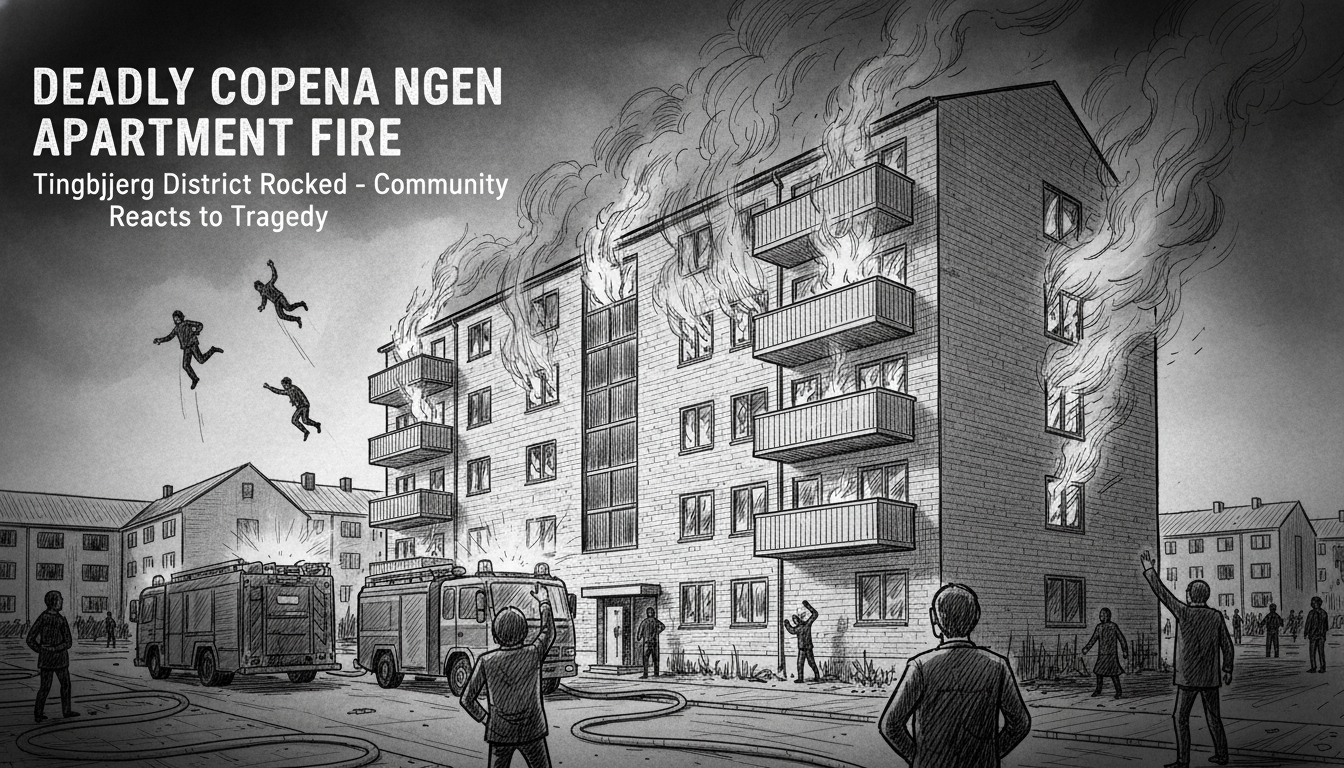
A fifty-six-year-old man died when fire erupted in a Tingbjerg neighborhood apartment building on Friday morning. Copenhagen police conducted a major evacuation as residents jumped from windows to escape the intense flames. The building's occupants faced immediate danger from both smoke and structural damage.
Police officials confirmed their technical investigation has determined the likely cause. Anders Frederiksen, the police watch commander, stated their findings point toward either a tragic accident or suicide. He noted some circumstances surrounding the fire indicated unusual behavior but could not provide specific details about these abnormal aspects.
Emergency services responded quickly to the Tingbjerg incident, coordinating rescue efforts for multiple residents. The fire department worked alongside police to ensure everyone reached safety. This coordinated response reflects Copenhagen's emergency preparedness protocols.
Tingbjerg represents an important case study in Copenhagen integration efforts. This northwestern district has undergone substantial social development programs in recent years. Community centers here work closely with municipal authorities on neighborhood safety initiatives.
The tragedy highlights ongoing challenges within Danish welfare system support networks. Mental health services remain accessible through national helplines like Livslinien, available daily from morning until dawn. Such resources form part of Denmark's comprehensive social safety net.
Danish society news often focuses on how communities respond during crises. This fire demonstrates both the strengths and limitations of current support structures. Integration policies aim to create cohesive communities, yet individual tragedies reveal where gaps persist.
Local social centers in Copenhagen districts like Tingbjerg provide crucial gathering spaces and support services. These municipal resources become particularly important following traumatic events. They help residents process collective grief and access practical assistance.
Denmark immigration policy and integration programs face constant evaluation following such incidents. The country's approach combines social housing distribution with language education and employment support. These measures aim to create stable, mixed communities where all residents feel secure.
Statistics on integration show varied outcomes across different Copenhagen neighborhoods. Educational attainment and employment rates differ substantially between districts. These socioeconomic factors influence how communities withstand and recover from crises.
The fire's impact extends beyond immediate physical damage to deeper community wellbeing. Neighbors now face the emotional aftermath while navigating practical challenges like temporary housing. Municipal social services typically coordinate such support following emergencies.
Danish social policy emphasizes prevention through building inspections and safety regulations. Yet unpredictable human factors sometimes override even the most thorough precautions. This reality confronts policymakers seeking to balance individual freedom with collective security.
Community leaders in Tingbjerg will likely organize local responses alongside official channels. Such grassroots initiatives often emerge following tragedies, complementing municipal efforts. This dual approach characterizes Denmark's blend of state support and civil society engagement.