
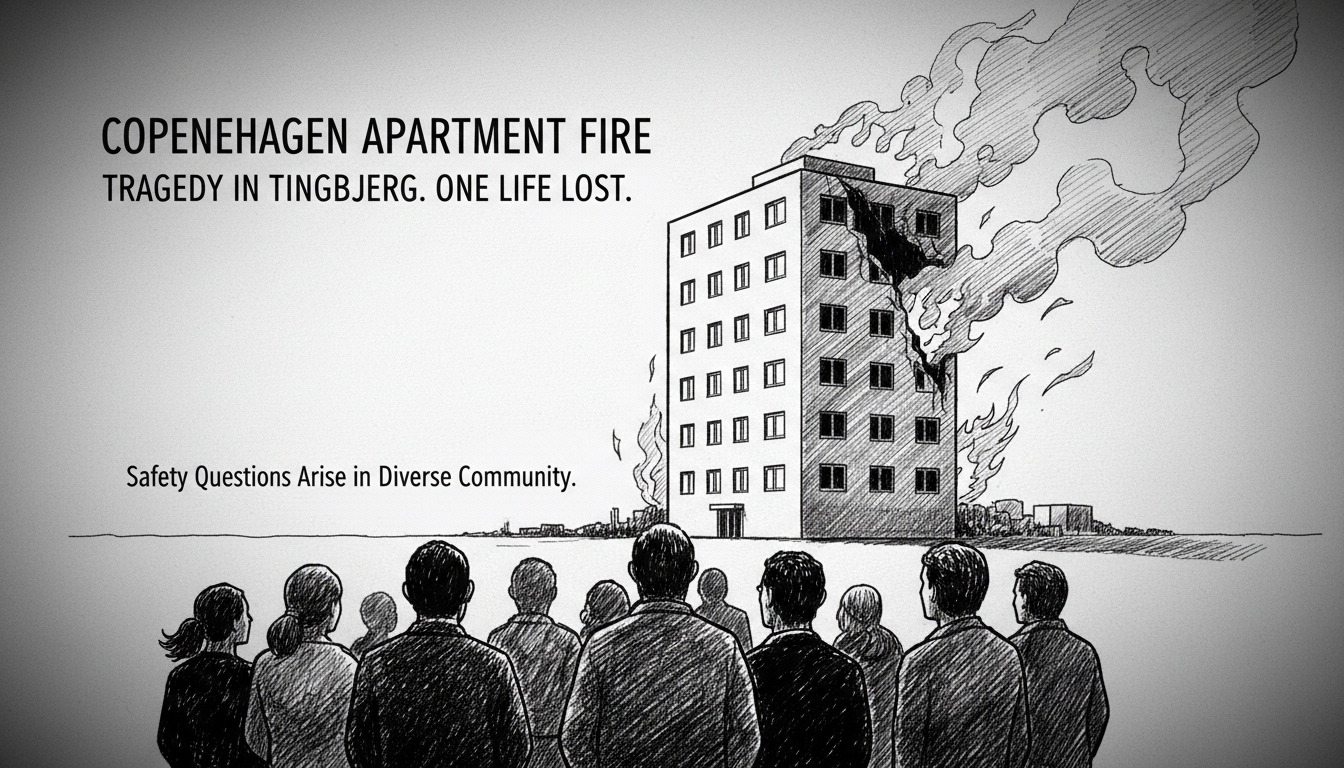
A devastating apartment fire in Copenhagen's Tingbjerg neighborhood has left one person dead and three others injured. Police remain on scene Friday evening investigating the blaze that erupted earlier in the day. The three injured individuals were treated for smoke inhalation, though their current condition remains unclear according to authorities. Emergency crews evacuated surrounding apartments during the initial response, but residents have since returned to their homes. The specific stairwell where the fire originated remains empty as investigations continue.
This tragedy strikes at a critical moment for Copenhagen integration efforts. Tingbjerg represents one of Denmark's most diverse neighborhoods, where social housing and immigration patterns create unique community dynamics. The fire raises urgent questions about building safety standards in areas with concentrated social housing. Copenhagen has invested heavily in urban renewal projects across such neighborhoods in recent years.
Rasmus Nielsen, the police officer in charge, explained the ongoing investigation. He said authorities need to complete additional examinations through Friday evening and into Saturday morning. The exact cause of the fire remains undetermined at this stage. Police have not confirmed whether the injuries to the three survivors are serious or minor.
Such incidents test Denmark's social policy frameworks and emergency response capabilities. The Danish welfare system typically provides strong support for disaster victims, including temporary housing and psychological services. Municipal social centers often coordinate follow-up care in these situations. Community leaders in Tingbjerg will likely play crucial roles in supporting affected families during the recovery process.
Integration statistics show neighborhoods like Tingbjerg face complex challenges. Educational attainment levels vary significantly across Copenhagen's districts. The city's integration policies aim to bridge these gaps through targeted programs and community initiatives. This tragedy highlights how emergency situations can disproportionately affect areas with existing social vulnerabilities.
What happens next for Tingbjerg residents? The investigation will determine whether building safety measures functioned properly. Municipal authorities typically conduct thorough reviews following such incidents. They may implement new safety protocols or building improvements based on their findings. The community's resilience will be tested in the coming weeks as families process this loss and rebuild their sense of security.
The human impact of this fire extends beyond the immediate victims. Neighbors who witnessed the emergency may require psychological support. Children in the building might need special attention at local schools. Denmark's comprehensive social safety net should provide these resources, though accessing them often depends on effective coordination between municipal services and community organizations.
This incident reminds us how quickly ordinary days can turn tragic in any community. It also demonstrates the importance of robust social infrastructure and emergency preparedness in diverse urban neighborhoods. As Copenhagen continues evolving as a multicultural city, ensuring all residents feel equally protected remains an ongoing challenge for Danish society.