
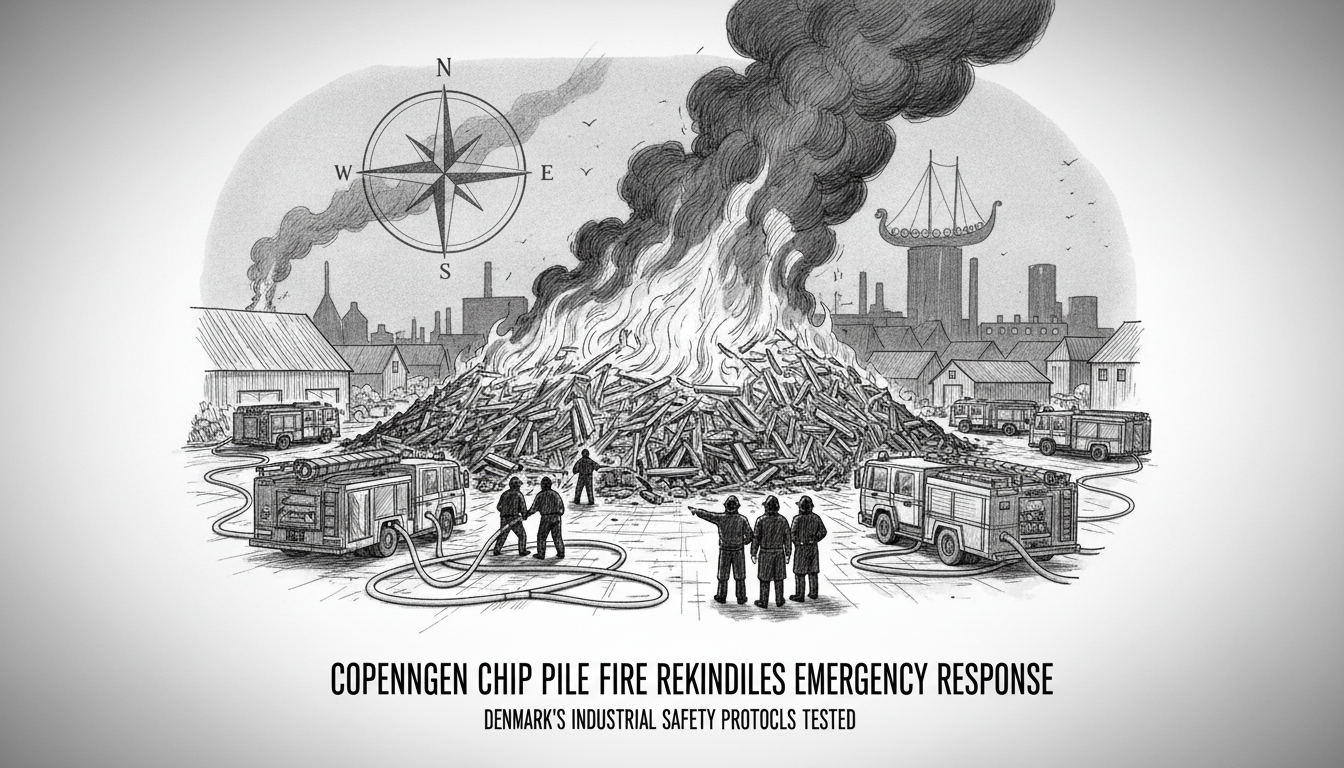
Emergency crews returned to a stubborn chip pile fire near Hobro this week. The massive wood chip mound at Væggedalen in Nr. Onsild has been smoldering since Saturday. This persistent blaze now requires additional regional resources. Four emergency vehicles with eleven personnel initially responded to the scene. Then authorities requested three more vehicles from Thisted and one from Herning. The North Jutland Emergency Services confirmed the escalation on social media. They noted this marks their third intervention at the same location.
These recurring industrial fires reveal broader challenges within Denmark's safety infrastructure. Wood chip storage presents unique fire risks that demand specialized response protocols. The Danish emergency management system relies heavily on inter-municipal cooperation during complex incidents. This incident demonstrates how regional resources supplement local fire departments. Many international readers might wonder why wood chips pose such persistent fire hazards. The answer lies in spontaneous combustion within large organic material piles. Decomposition generates heat that can ignite materials without external sparks.
Danish industrial safety regulations require specific storage procedures for combustible materials. Yet these precautions sometimes prove insufficient during extended dry periods. The repeated flare-ups near Hobro suggest deeper systemic issues. They highlight the tension between agricultural production needs and public safety concerns. Local municipalities face difficult balancing acts in regulating industrial operations. This incident will likely prompt reviews of regional emergency response coordination. It may also accelerate discussions about updating material storage guidelines across Danish municipalities.
International observers should note Denmark's decentralized emergency response model. The system depends on seamless cooperation between municipal and national resources. Events like this Hobro fire test the effectiveness of that collaboration. They also demonstrate how Denmark's welfare state extends to emergency preparedness. The immediate deployment of additional resources reflects this commitment. Yet the recurring nature of such incidents raises questions about prevention effectiveness. Danish authorities must now address both immediate safety concerns and long-term prevention strategies.
What does this mean for Denmark's reputation as a safety-conscious society? The quick resource mobilization shows system strengths. But the repeated incidents reveal persistent vulnerabilities in industrial safety practices. This balance between responsive capability and preventive measures defines modern Danish emergency management. The ongoing situation near Hobro serves as a real-time case study in this complex dynamic.