
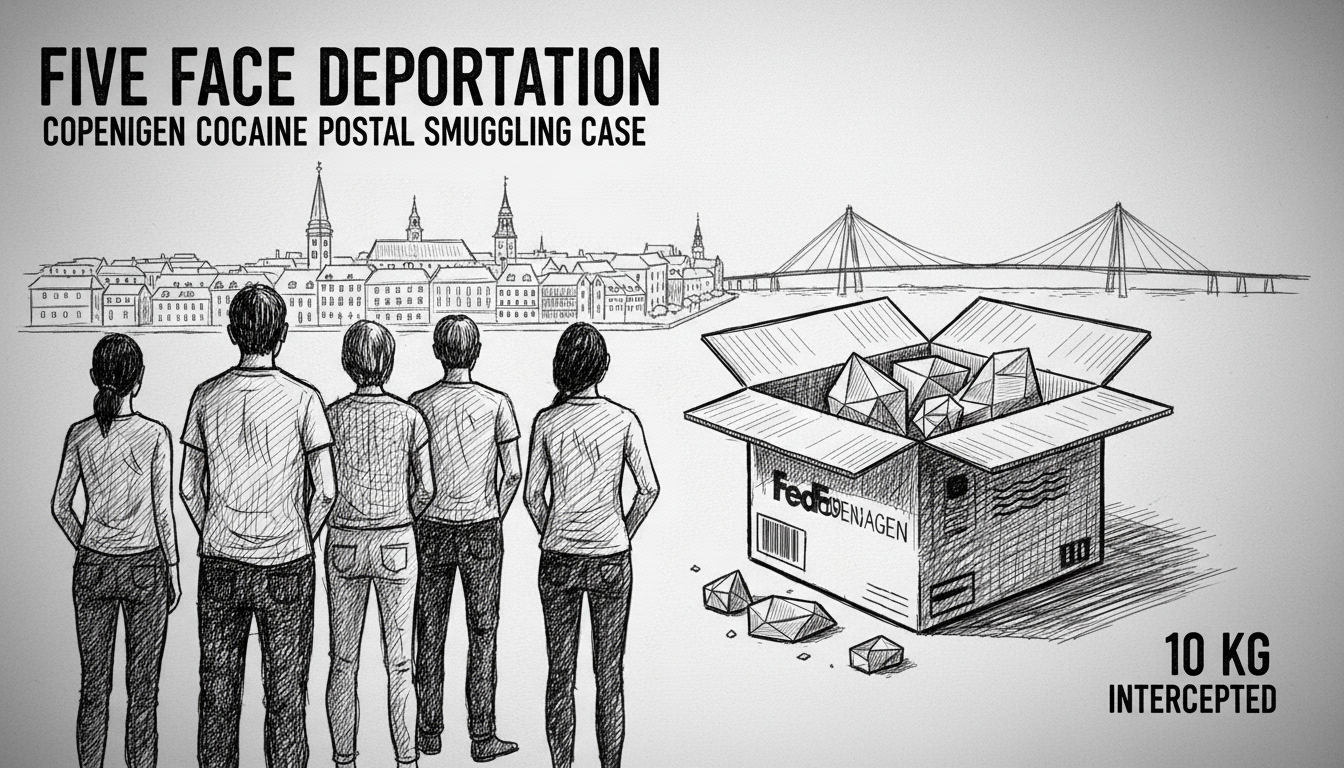
Five young individuals now confront potential deportation from Denmark following their involvement in an elaborate cocaine smuggling operation using international postal services. Copenhagen District Court heard how authorities intercepted ten kilograms of cocaine concealed within FedEx packages from the United States. The prosecution seeks both imprisonment and expulsion from Danish territory for all defendants, who maintain their innocence in the ongoing trial.
This case highlights ongoing challenges within Denmark's integration framework, particularly involving young residents connected to international criminal networks. The defendants, all in their early to mid-twenties, represent precisely the demographic that Danish integration policies aim to support through education and employment opportunities. Their alleged involvement in serious drug trafficking raises difficult questions about social inclusion mechanisms in urban centers like Copenhagen.
According to court documents, the operation began in February when one defendant purchased four starter packages containing SIM cards and phone numbers from a Statoil service station in Kastrup. He then provided two telephone numbers to unknown accomplices abroad. The following day, collaborators shipped two separate packages from New York and Houston, each containing five kilograms of cocaine destined for FedEx package shops in Hvidovre and Kastrup.
Danish Customs authorities had already identified and seized both shipments before the retrieval attempts. When one defendant tried to collect the Kastrup package on February 7th, he discovered authorities had intercepted it hours earlier. Police arrested him three hours after the failed collection attempt. Meanwhile, two other defendants allegedly retrieved the second package from Hvidovre on February 11th, unaware that police had replaced the cocaine with alternative contents.
The coordinated police operation demonstrates increased vigilance against international drug trafficking through postal systems. Customs officials worked closely with local law enforcement to monitor both packages from their arrival in Denmark. This case reflects broader patterns of criminal networks exploiting global shipping systems while relying on local contacts for distribution.
Danish integration policies face constant pressure when legal residents become involved in serious criminal activities. The deportation requests signal the government's firm stance against drug-related crimes, particularly those with international connections. Municipal integration programs throughout the Copenhagen region continually work to provide alternative pathways for young residents, but cases like this reveal the persistent appeal of quick financial gains through illegal means.
Community leaders in neighborhoods like Hvidovre and Rødovre express concern about criminal networks targeting vulnerable young people. Local social centers have intensified outreach programs focusing on employment training and educational support. The case's outcome could influence future policy discussions about balancing integration efforts with strict law enforcement approaches to drug crimes.
The trial continues with five court days scheduled, concluding in mid-December. All five defendants remain in custody under identity protection orders. Their cases will test both Denmark's criminal justice system and its immigration policies regarding non-citizens convicted of serious offenses.
This prosecution comes amid ongoing debates about Denmark's social contract with its immigrant communities. The welfare system provides substantial support for integration, but requires reciprocal commitment to legal compliance. Cases involving young people facing deportation for criminal activity often spark difficult conversations about prevention, rehabilitation, and community responsibility.
Local authorities in Copenhagen municipalities have increased collaboration with customs and border control agencies in recent years. They focus on early intervention strategies when young residents show signs of criminal involvement. The current case may prompt further evaluation of these prevention methods and their effectiveness in different urban environments.