
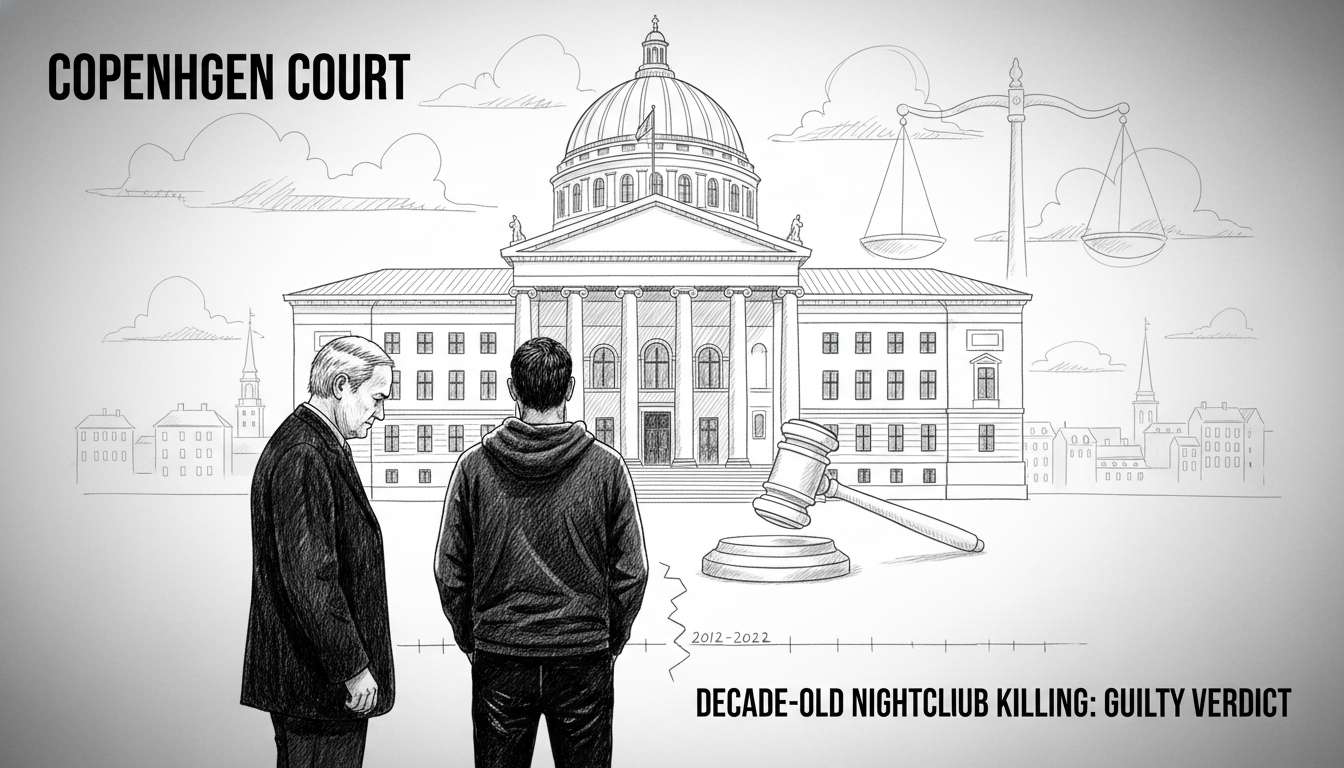
A Copenhagen court has delivered a guilty verdict for murder in a case that has stretched across continents and over a decade. The ruling closes a painful chapter for a Danish family and highlights complex questions about justice, international law, and integration within Danish society. The victim, Jonas Thomsen Sekyere, was a 21-year-old law student when his life ended outside a nightclub in the city's Vesterbro district. He would have turned 35 this month.
The convicted man, Omer Sheik Hassan Muse, fled Denmark for Somaliland and Ethiopia following the killing. He returned to Denmark only last year after a lengthy extradition process. During the trial, Muse admitted to acts of violence but denied the charge of murder. He claimed he did not intend for his actions to be fatal. A unanimous jury in the Copenhagen City Court disagreed, finding him guilty of intentional homicide.
The court heard that the confrontation occurred at the 'Bakken' nightclub in the Meatpacking District. Muse, then 27, was armed with a knife. He stabbed Sekyere three times. One wound pierced the young man's heart. The presiding judge stated the attack happened 'without reason,' according to the court's official finding.
This case intersects with broader themes in Danish society news, particularly concerning Copenhagen integration and Denmark immigration policy. The long delay in justice, involving flight to another continent, raises questions about the reach of the Danish legal system. It also touches on the social fabric of neighborhoods like Vesterbro, areas often discussed in debates about community cohesion.
The path to this verdict was not straightforward. Muse had previously been convicted for the same crime in Somaliland, where he served six years of a ten-year sentence. Danish authorities did not recognize that verdict. A special prosecutor noted the foreign trial lacked the evidential standards required under Danish welfare system protections. This forced a full trial in Denmark.
There is a personal dimension here that statistics on integration cannot capture. A young Danish man with his future ahead was lost. His family has waited over ten years for this legal resolution. The case now moves to sentencing. The court must decide what credit, if any, to give for the time Muse already spent imprisoned abroad. A sentence is expected by Thursday.
This story is more than a crime report. It is a stark reminder of how violence can irrevocably alter lives and test the systems designed to deliver justice. It shows the challenges Danish municipalities and social centers can face when incidents have international dimensions. The final judgment will bring a measure of closure, but it cannot return what was taken on that November morning so long ago.