
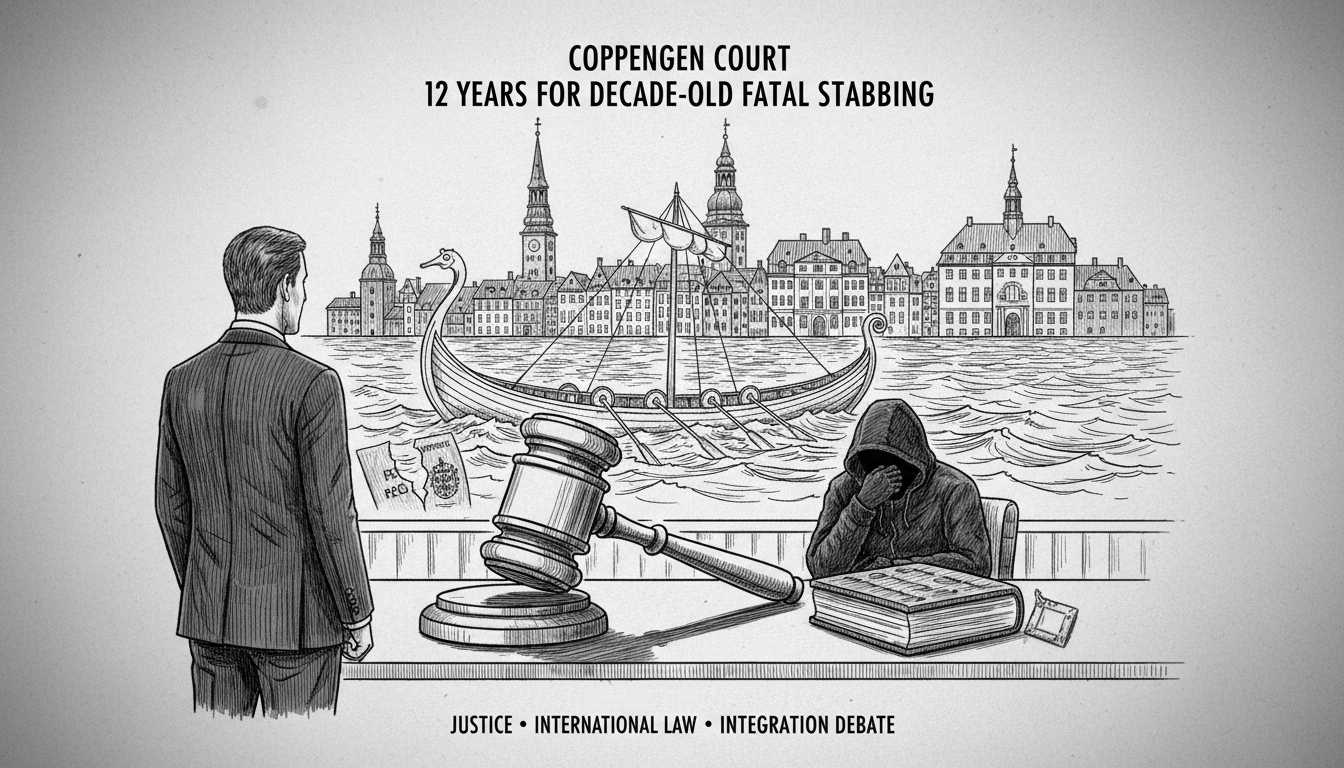
A Copenhagen court has sentenced a 40-year-old man to 12 years in prison for a fatal stabbing that occurred over a decade ago. The man, Omer Hassan Sheik Muse, was found guilty of killing 21-year-old law student Jonas Thomsen Sekyere with three knife wounds at a nightclub in the city's Kødbyen meatpacking district. The verdict was delivered on Thursday afternoon. This case highlights the long and complex path justice can take, especially when suspects flee across international borders.
Muse fled Denmark after the killing, escaping to Somaliland and Ethiopia in Africa. He only returned to Denmark last year following an extended extradition process. During his time abroad, authorities in Somaliland convicted him for the same murder. Danish prosecutors did not formally recognize that foreign judgment. The court did, however, credit the time he served in African detention toward his Danish sentence.
Copenhagen City Court reduced the 12-year term by precisely 2,156 days. This reduction equals nearly six years for his pre-trial detention abroad. Muse has appealed the verdict immediately. He seeks a full acquittal for the murder charge, though he admits to acts of violence that resulted in death. His defense will now move to a higher court.
This case opens a window into Denmark's legal approach to transnational crimes and integration challenges. The victim, Jonas Sekyere, was a young Danish student with a Ghanaian background. His death represents a profound loss of potential within Danish society. The long delay in final justice also raises questions about system efficiency and closure for families.
From an integration perspective, cases of serious crime involving individuals with migration backgrounds receive intense scrutiny. They often fuel broader debates about social cohesion and the effectiveness of Denmark's immigration policy. Statistics consistently show that successful integration correlates strongly with education and employment outcomes. Incidents like this, while rare, can disproportionately impact public perception and policy discussions.
Community leaders in Copenhagen often stress that such tragedies are individual failures, not representative of any group. They point to the many success stories within immigrant communities. Yet, the political reality is that each high-profile case tests the Danish welfare system's capacity for inclusion. It pressures the social contract that balances compassion with security.
Municipal social centers and integration programs work to address root causes like marginalization. Their goal is to prevent alienation before it leads to conflict. The final resolution of this case, after 13 years, may offer some measure of solace. It also serves as a stark reminder of the human cost when integration efforts falter and violence erupts. The Danish legal system has now spoken, but the societal echoes of this event will linger far longer.