
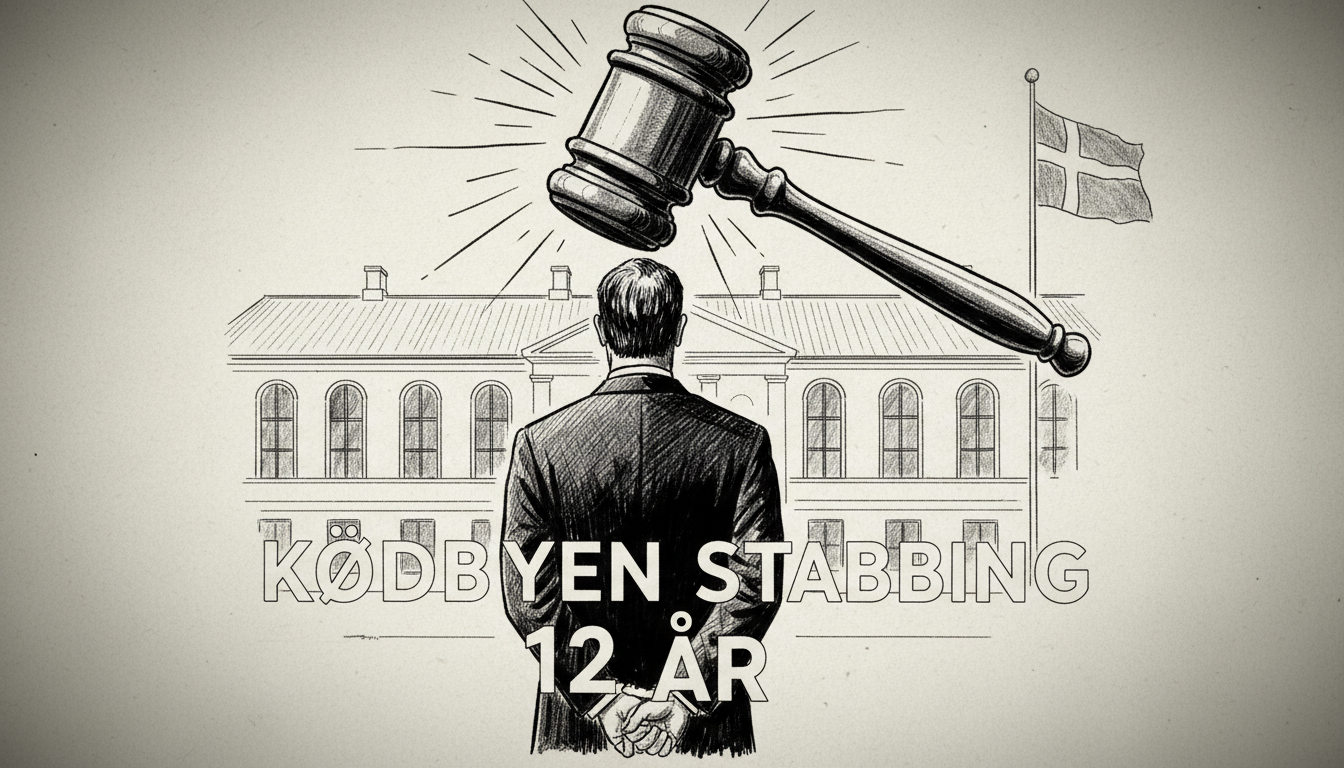
A Copenhagen court has sentenced a 40-year-old man to 12 years in prison for a fatal stabbing that occurred 13 years ago. The man was found guilty of killing 21-year-old law student Jonas Thomsen Sekyere at a nightclub in the city's Kødbyen meatpacking district. The court delivered its verdict on Thursday afternoon. The convicted individual, Omer Hassan Sheik Muse, fled Denmark for Somaliland and Ethiopia in Africa immediately after the crime. He only returned to Denmark last year following a lengthy extradition process. The court reduced his 12-year sentence by 2,156 days, nearly six years, to account for time he served in an African prison. Muse has appealed the verdict, seeking acquittal, while acknowledging he committed an act of violence resulting in death.
This case highlights critical aspects of the Danish justice and integration systems. Kødbyen, once an industrial zone, has transformed into a popular nightlife hub. This transformation sometimes creates friction in Copenhagen integration efforts, mixing diverse social groups in tight urban spaces. The long delay between crime and sentencing shows the complexities of international legal cooperation. It also tests the Danish welfare system's approach to rehabilitation and retribution.
Danish society news often focuses on how the legal system handles cases with cross-border elements. The court's decision to credit foreign prison time reflects standard Danish legal practice. Yet it raises questions about justice for victims' families after such long waits. Community leaders in Copenhagen have long called for more preventative social measures in nightlife areas. They argue for better lighting, increased security patrols, and youth outreach programs. These measures aim to address root causes before tragedies occur.
Denmark social policy experts note this case intersects with broader discussions on immigration policy and justice. The prolonged extradition process illustrates the administrative challenges municipalities can face. It also shows the human impact on all involved, from the victim's family to the convicted individual. The Danish legal system prioritizes concrete evidence and procedural correctness, even in emotionally charged cases. This approach seeks to balance societal safety with individual rights, a core tenet of the Danish welfare system.
What does this mean for Copenhagen's community and international observers? First, it demonstrates the Danish judicial system's persistence. Second, it underscores the ongoing work needed in urban integration and safety. Third, it shows how historical cases continue to shape present-day legal and social landscapes. The appeal process will now determine the final chapter of this long-running case. Its outcome will be closely watched by those interested in Denmark immigration policy and criminal justice reform.