
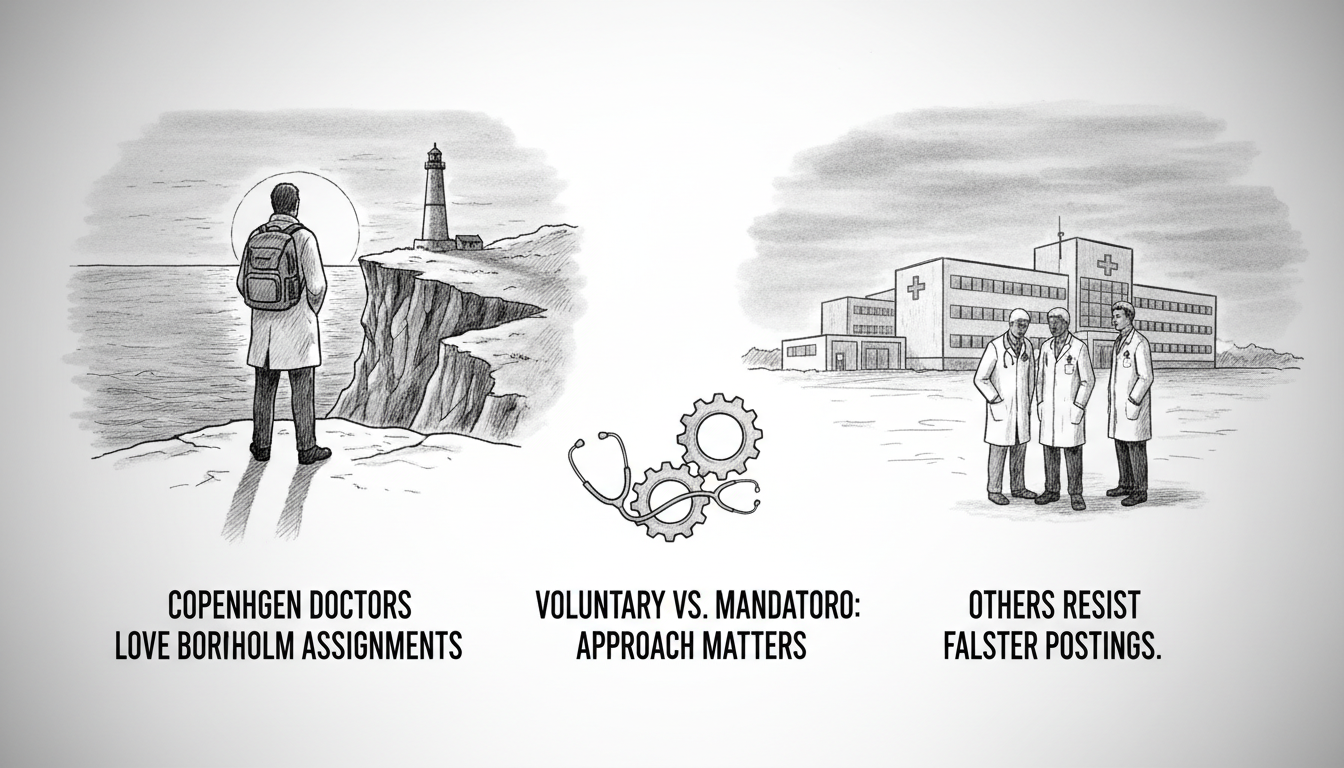
Doctors in Copenhagen happily travel to Bornholm for shifts. Meanwhile, physicians in Roskilde and Køge object to mandatory assignments in Falster. The key difference comes down to choice.
When Denmark merges its Capital and Zealand regions in 2027, politicians face a major challenge. They must improve medical coverage in remote hospital areas.
Several candidates point to Bornholm's solution. This Baltic island once struggled with specialist shortages like Lolland-Falster does now.
The Capital Region flies doctors weekly from Copenhagen hospitals to Bornholm. Patients receive care locally instead of traveling to the capital.
This program began in 2024. Bornholm Hospital reports better shift coverage and shorter wait times for scans and surgery.
Lars Gaardhøj, chairman of the Capital Region, wants to expand this model. He aims to address doctor shortages at Nykøbing Falster Hospital.
He said in a statement that this approach delivers good results. Patients can receive treatment closer to home.
Liberal candidate Camilla Hove Lund agrees. She supports adapting Bornholm's partnership solution.
Doctors traveling to Bornholm receive extra pay. They get 1,000 Danish kroner per shift plus compensation for travel time. Consecutive shifts include accommodation options.
Lund believes these benefits make relocation attractive for staff.
Hanne Christensen, a senior neurologist at Bispebjerg Hospital, flies to Rønne every other week. She welcomes the opportunity.
She finds it a enjoyable professional challenge. Christensen also values healthcare equality and proximity.
Her experience contrasts sharply with doctors in Roskilde and Køge. They must complete approximately one monthly shift at Nykøbing Falster Hospital.
Susanne Wammen, chair of the Senior Doctors' Association, explains the disparity. Bornholm participants volunteer for assignments. They help design the process and join familiar teams.
Wammen said the 94 doctors from Køge and Roskilde lack input. They received shift mandates without consultation.
She acknowledges their responsibility to address staffing shortages. But doctors shouldn't feel like temporary substitutes covering schedule gaps.
Christensen agrees with this assessment. She would consider commuting to Falster instead of Bornholm under different circumstances.
Team integration and schedule flexibility matter most, she noted.
Voters will select candidates for the new Eastern Denmark Region in November's regional election. The merger takes effect in 2027.
The medical staffing dilemma highlights a universal workplace truth: voluntary participation with proper support yields better results than imposed assignments.