
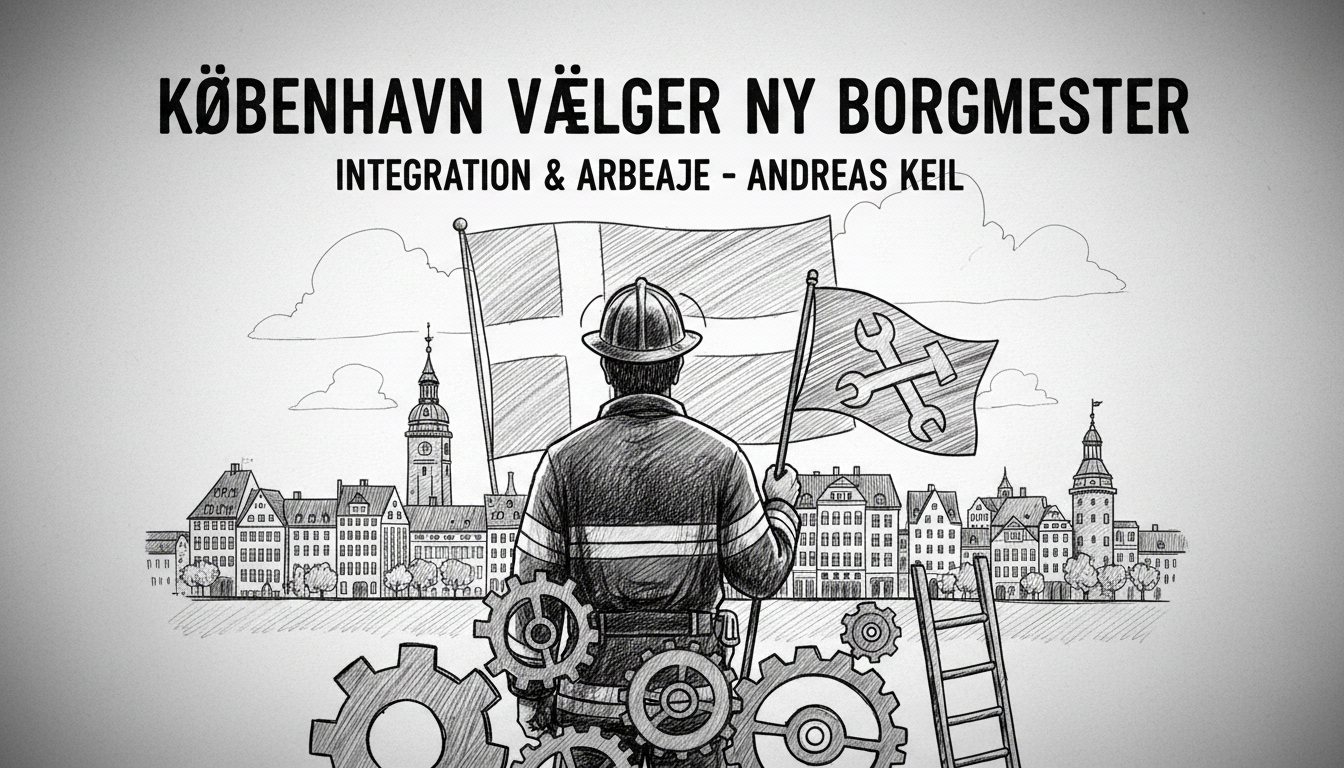
Copenhagen's Social Democrats have chosen Andreas Keil as their new mayor for employment, integration, and business. The party held an extraordinary delegate meeting to confirm his selection. Keil is a member of the Copenhagen City Council and has served there since the local election in 2013. In the most recent election, he received 960 personal votes, the sixth highest among Social Democratic candidates for the council. His professional background is as a firefighter and ambulance responder, and he has worked for years as a union representative.
This appointment places a frontline emergency worker at the helm of Copenhagen's integration and labor market policy. It is a notable shift. The role of a 'borgmester' in the Danish system is powerful, overseeing entire municipal departments. Keil will now direct policy for one of Denmark's most diverse cities. His election signals a potential focus on practical, ground-level experience in social policy. Copenhagen faces ongoing challenges in integrating new residents into the labor market and society. The city's social centers and municipal job programs are key tools in this effort.
Denmark's welfare system is often praised but its integration policies are frequently debated. Success is measured by employment rates, education levels, and social cohesion. Recent statistics show mixed results, with some groups achieving high educational attainment while others struggle with long-term unemployment. The new mayor's task is to bridge these gaps. He must balance national immigration policy with local Copenhagen realities. Community leaders in neighborhoods like Nørrebro and Vestegnen will watch his first moves closely.
What does a firefighter and union rep bring to this complex desk job? He brings direct experience with the city's diverse population and an understanding of workplace dynamics. His role as a tillidsrepræsentant, a trusted union representative, means he has negotiated for workers' rights. This background could translate into policies that emphasize fair employment conditions and clear pathways to jobs. It is a hands-on profile for a hands-on problem. The real test will be translating that experience into effective administration and coalition-building within the city council.
The move is also a clear political signal from the Social Democrats. They are placing a figure with strong blue-collar and union credentials in a high-profile role. It reinforces their message as the party of working people, even in a capital city. Some will question if his lack of traditional political or bureaucratic experience is a weakness. Others will see it as a strength, a chance for fresh perspective. His success will depend heavily on the professional staff in Copenhagen's municipal administration. They provide the continuity and expertise that any elected official needs.
For international observers, this highlights how Danish municipalities wield significant power. Integration policy is not made in Brussels or even solely in the national parliament in Christiansborg. It is implemented and shaped daily in cities like Copenhagen, Aarhus, and Odense. The choice of mayor here directly affects services, language classes, and job training programs. It is a reminder that in Denmark's decentralized system, local elections matter immensely for social policy outcomes. The focus now turns to the policy agenda Keil will set in the coming months.