
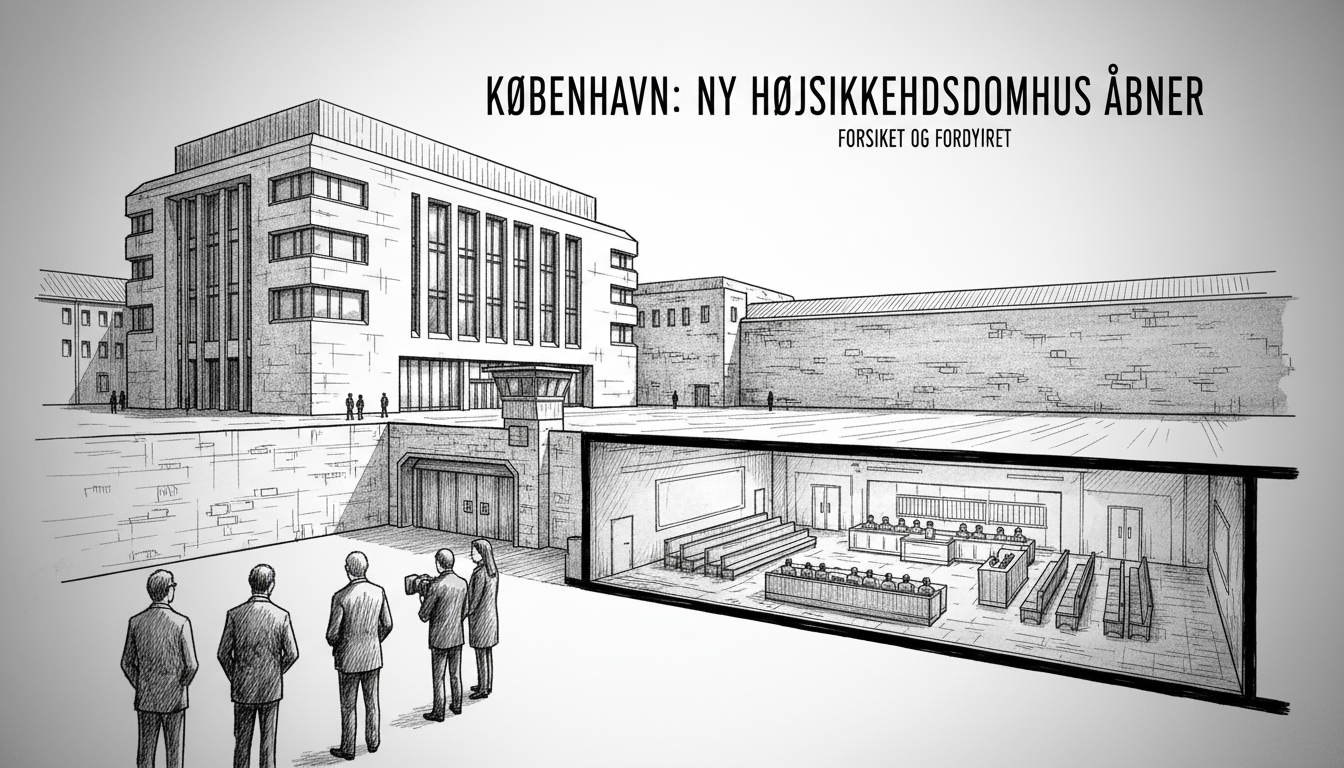
A new high-security courthouse has opened in Copenhagen after years of delays and budget overruns. The facility stands adjacent to Vestre Fængsel, Denmark's largest prison, and is connected via a secure tunnel. This design eliminates the need for outdoor prisoner transport, a significant security upgrade. The building will host preliminary hearings for the Copenhagen and Frederiksberg district courts. Its basement contains a large, specially secured courtroom designed for the city's most complex criminal trials, capable of holding up to fifteen defendants behind a protective glass wall.
The project was originally slated for completion several years ago but faced repeated setbacks. Construction issues, including water damage and mold discovered in ventilation ducts, pushed the timeline back. A dispute between the national Building and Construction Agency and the main project consultant also contributed to the delays. The final cost reached nearly 179 million Danish kroner. This figure substantially exceeds the original 2019 estimate of approximately 125 million kroner, according to official ministry reports.
For court observers and the public, access procedures remain familiar. Visitors must pass through standard security checks to enter the standalone building. Most regular court proceedings will continue at the existing courthouses on Nytorv in central Copenhagen and in Frederiksberg. Some preliminary hearings may also still occur in the older buildings. The new facility's primary function is to handle cases requiring the highest level of security, particularly those involving multiple defendants in custody.
This development reflects a broader trend in Danish justice infrastructure, prioritizing secure and efficient logistics. The direct tunnel connection represents a practical solution to a long-standing operational challenge. It reduces risks associated with transporting detainees through public streets and saves considerable staff time for prison officers. The cost overruns, however, highlight recurring issues in major public construction projects in Denmark, where initial budgets often prove unrealistic.
The opening comes at a time when discussions about judicial capacity and security are prominent. The ability to securely process high-profile, multi-defendant cases in a dedicated space addresses a specific operational need. While the delays and budget issues are regrettable, the finished facility provides a tangible upgrade to Copenhagen's legal infrastructure. It demonstrates a clear, if expensive, commitment to maintaining secure and functional court proceedings for the most serious cases facing the Danish justice system.