
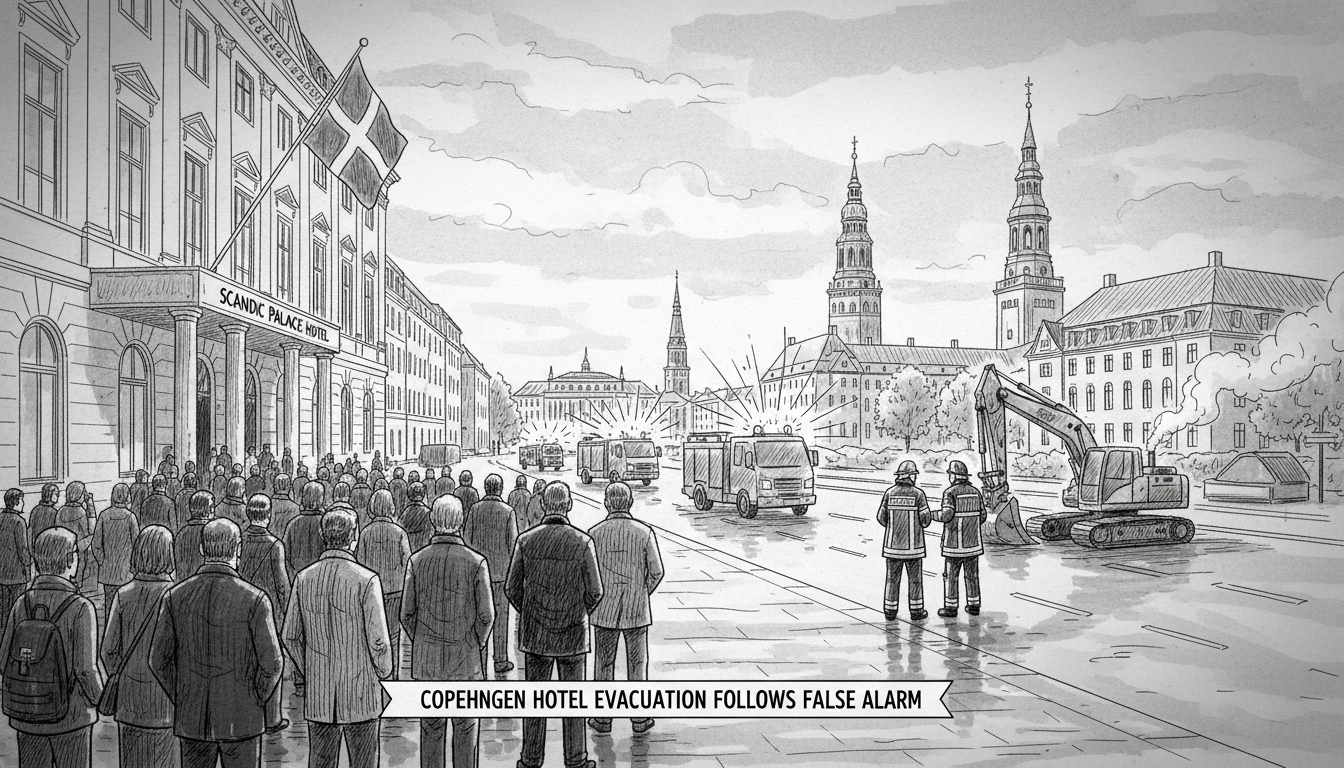
Copenhagen's historic City Hall Square witnessed an unexpected emergency response on Sunday afternoon. Approximately thirty firefighters with eight emergency vehicles descended upon Scandic Palace Hotel following reports of gas odors and smoke. The capital's emergency services responded swiftly to multiple alerts from the downtown location.
The operation commander explained they received initial calls about gas smells. Hotel fire alarms activated shortly afterward, he confirmed in a statement. Initial concerns about potential fire hazards prompted immediate action from emergency crews.
Further investigation revealed the source was construction workers using petroleum-powered equipment. The machinery produced noticeable smoke that seeped into hotel ventilation systems. Such incidents highlight urban challenges in historic city centers where renovation work frequently occurs alongside daily operations.
Hotel management initiated evacuation procedures as a precautionary measure. The operations commander emphasized this was absolutely the correct response. He noted people should always activate alarm systems when suspecting fire risks, especially in crowded hotel environments.
Copenhagen's emergency protocols demonstrated their effectiveness during this incident. The city maintains robust response systems for potential threats in densely populated areas. This reflects Denmark's comprehensive approach to public safety within its welfare system framework.
Integration of safety measures into urban planning remains crucial for cities like Copenhagen. The incident occurred near important civic spaces frequented by tourists and residents alike. Such locations require particular attention to emergency preparedness and public communication.
Danish municipalities coordinate closely with emergency services to maintain response readiness. Social centers and public buildings implement strict safety standards nationwide. This infrastructure supports Denmark's reputation for organized crisis management and community protection.
The hotel has since been declared safe for reentry. No injuries were reported during the evacuation process. The event concluded without major disruption to city center activities.
Urban development in Copenhagen continues balancing historical preservation with modern safety requirements. This incident demonstrates how routine maintenance work can trigger emergency responses in sensitive locations. City planners constantly evaluate how construction activities affect public spaces and emergency service accessibility.
Denmark's approach to public safety integrates professional emergency services with responsible citizen action. The proper use of alarm systems by hotel guests and staff prevented potential escalation. This collaboration between residents and authorities characterizes effective social policy implementation.