
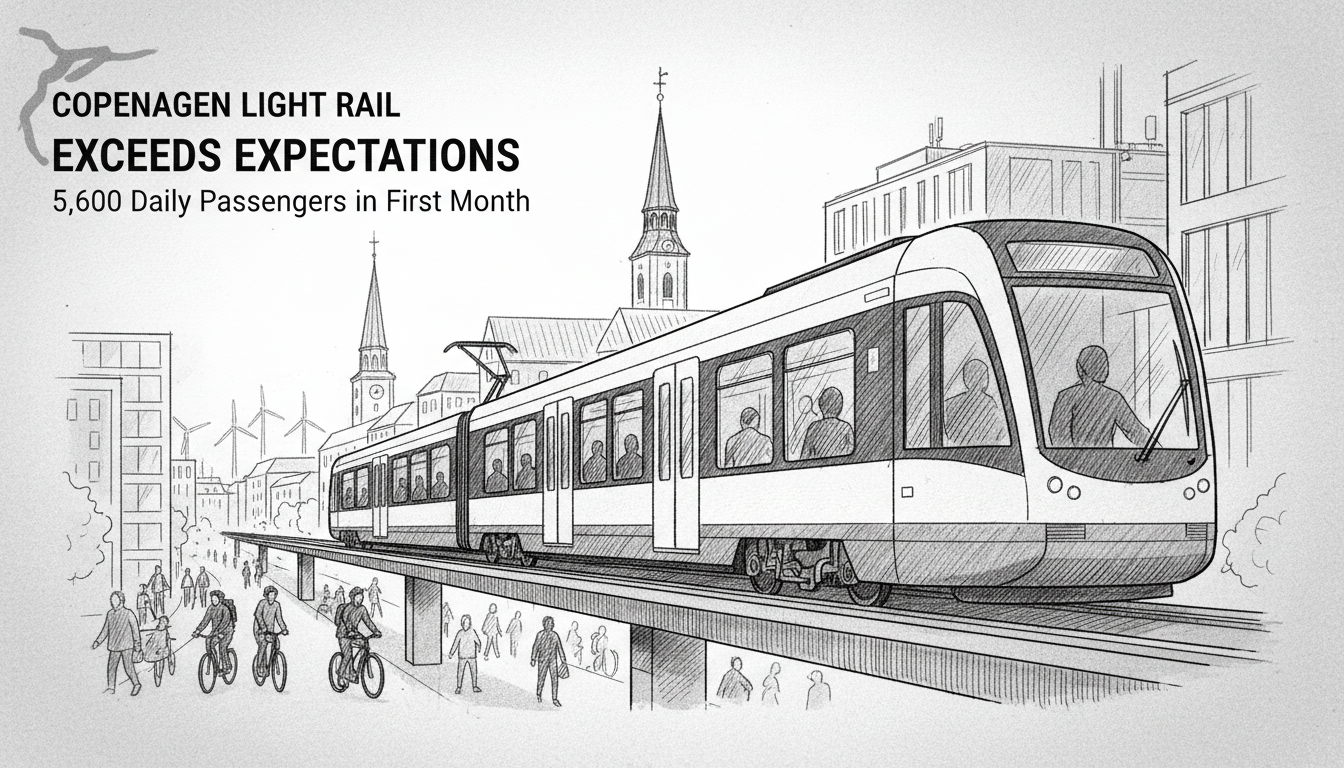
Copenhagen's new light rail system has surpassed all passenger projections during its inaugural month of operation. The capital region's transit service reported approximately 5,600 daily weekday riders since its late October launch. This figure dramatically exceeds initial forecasts of 3,500 passengers projected for the entire first six months. The strong numbers demonstrate growing public acceptance of Denmark's latest sustainable transportation initiative.
Glostrup and Ishøj stations emerged as the most frequented stops along the initial 12-station route connecting Ishøj to Rødovre. This northern segment represents just the beginning of a comprehensive network expansion. The next phase extending from Herlev Syd to Lundtofte should commence operations by summer. When fully operational, officials anticipate 12,000 daily passengers with projections reaching 38,000 daily travelers by the decade's end.
The successful launch occurs against a complex backdrop of Danish society news and transportation policy. Denmark's social policy increasingly prioritizes sustainable urban mobility while maintaining its renowned welfare system standards. The light rail project reflects Copenhagen integration strategies that connect suburban communities with urban centers. This transportation development aligns with broader Denmark immigration policy goals that facilitate mobility for new residents accessing employment and services across municipal boundaries.
Safety concerns have surfaced alongside the promising ridership numbers. Several incidents occurred where the light rail vehicles interacted too closely with other traffic participants. A tragic pre-opening collision during testing phases resulted in a cyclist's fatal accident. More recently, a motorist in Gladsaxe mistakenly drove onto the tracks requiring assistance. These events highlight the ongoing adjustment period for all road users.
Operations Director Frank Pedersen acknowledged the system remains in its startup phase. He emphasized continuous adjustments and optimizations to ensure the best possible experience for all passengers. Chief Operating Officer Søren Boysen echoed this commitment in official statements. Their focus remains on creating predictable daily operations and safe traffic flow for everyone interacting with the light rail system.
The ambitious project originated in 2011 through collaboration between multiple municipalities, the Capital Region, and the Transport Ministry. This coordinated approach reflects Denmark's consensus-driven governance model. The light rail represents a modern tram system operating primarily in dedicated lanes rather than sharing roadways with cyclists and motorists. Similar systems already operate successfully in Aarhus and Odense, demonstrating nationwide commitment to alternative transportation infrastructure.
This transportation development carries significant implications for Copenhagen's urban planning and Denmark social policy implementation. The light rail facilitates access to social services, educational institutions, and employment centers across municipal boundaries. For international observers, the project demonstrates Denmark's methodical approach to infrastructure development within its comprehensive welfare system framework. The system's strong start suggests Danish residents are embracing this new mobility option despite initial safety concerns.
What does this mean for Copenhagen's future development? The light rail's early success indicates potential for reshaping urban mobility patterns. It could reduce car dependency in suburban areas while improving access to central Copenhagen. The project represents a substantial investment in sustainable transportation that aligns with Denmark's environmental objectives. As the network expands, it will likely influence housing development and commercial activity along its corridor.