
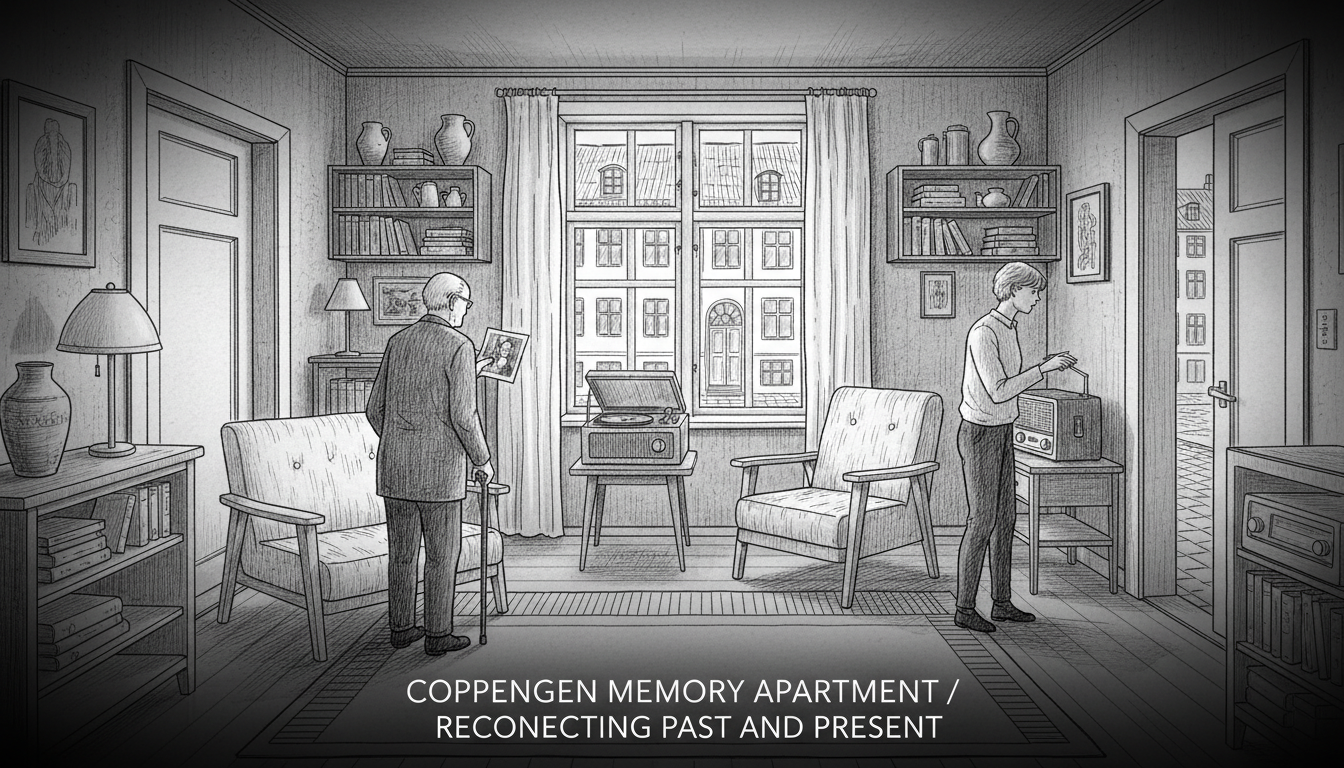
Six elderly residents living with Alzheimer's disease recently visited a unique memory apartment in Copenhagen's historic Den Gamle By museum. The space replicates a typical Danish home from the late 1950s, now decorated for the Christmas season. This initiative represents a growing trend in Danish social care, focusing on sensory stimulation and emotional well-being for those with cognitive decline. The Danish welfare system increasingly funds such non-pharmacological interventions, recognizing their value for quality of life.
Den Gamle By, or The Old Town, is an open-air museum famous for its preserved historical buildings. Its memory apartment is not a sterile exhibit but a fully immersive environment. Visitors can touch objects, smell seasonal spices, and hear period-appropriate music. For the participants, familiar sights like a specific brand of coffee or a vintage radio can trigger powerful, personal recollections. Care staff report observing moments of clarity and joy during these sessions, moments that are often rare in the progression of dementia.
This approach connects directly to broader Danish social policy on aging and integration. Denmark faces a demographic shift with a growing elderly population. Municipalities like Copenhagen are tasked with providing dignified care that respects individual history. Projects like the memory apartment also serve an integrative function. They help newer residents and care workers, some from immigrant backgrounds, understand the cultural and historical context of the people they support. It builds bridges across generations and origins within the Danish society news landscape.
Statistics from the Danish Health Authority show that over 90,000 people in Denmark live with dementia, a number expected to rise. National strategies now emphasize 'person-centered care' which aligns with initiatives like the memory apartment. Community centers and social housing associations across Danish municipalities are adopting similar concepts, creating smaller-scale reminiscence corners. The goal is to combat the profound isolation that often accompanies memory loss.
A project coordinator involved with the museum said the environment acts as a key to locked memories. Officials from Copenhagen's health and elderly administration have noted the positive outcomes in their reports. They see value in funding these cultural partnerships. The direct human impact is clear. One family member shared that their relative, usually silent, spoke vividly for minutes about childhood Christmases after visiting the apartment. This emotional reconnection is a powerful counter to the disease's trajectory.
From a policy analysis perspective, this reflects Denmark's pragmatic yet humane approach to social challenges. The country invests in its welfare system not just for basic needs but for holistic well-being. While debates on Denmark immigration policy often focus on new arrivals, integration here has a different meaning. It is about integrating citizens into society throughout all life stages, ensuring no one is left behind as they age. The memory apartment is a small but telling example. It shows how cultural institutions can partner with the care sector to create meaningful interventions. This model could influence elder care approaches in other Nordic nations facing similar demographic pressures.
Honest commentary is needed here. Such projects are commendable and impactful, but they are also resource-intensive. They reach a limited number of people compared to the scale of need. Their existence highlights the high standard of Danish social care aspirations, but also the constant pressure on municipal budgets to deliver these innovative services universally. The real test will be whether these pilot concepts can be scaled effectively across the country's many municipalities, moving from special museum visits to standard practice in daily care centers.