
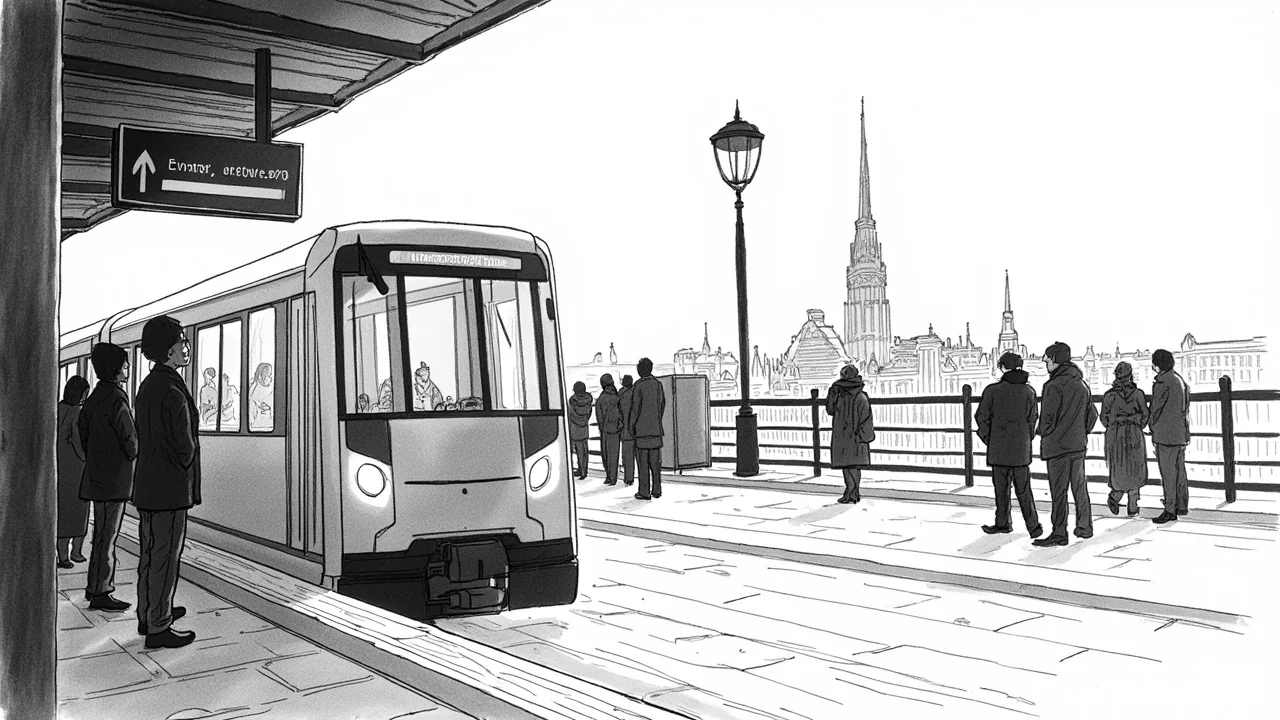
Copenhagen's metro system faced a Saturday morning disruption affecting an estimated thousands of weekend travelers. A fire alarm at Lergravsparken Station on Amager prompted a full emergency response, leading to a temporary closure and bypass of the busy stop. Police and fire services confirmed their presence, though the incident was swiftly declared a false alarm originating from a technical room.
For over an hour, trains on the M1 and M2 lines did not stop at the station. This procedure, a standard safety protocol, rerouted passenger flow on a day when many sought refuge from the biting cold underground. The swift resolution prevented injury and major delays, but the event highlights the fragile interdependence of urban mobility.
The Anatomy of a False Alarm
Police Vagtchef Dyre Sønnicksen initially reported the cause was likely an electrical short circuit. Technicians were dispatched to investigate the source within the station's infrastructure. Operationschef Frank Mikkelsen from Hovedstadens Beredskab later clarified the situation was a 'blind alarm,' a term used for a technical fault triggering the system without an actual fire.
Such faults, while inconvenient, are a documented part of modern safety infrastructure. The response followed a precise script: emergency services secure the site, the operator implements a bypass protocol, and technicians diagnose the problem. Normal service resumed by 2:00 PM, a timeline reflecting efficient crisis management.
Yet for passengers, the experience was one of sudden adjustment. Plans were changed, routes were replanned, and the predictable rhythm of a Saturday was subtly interrupted. These micro-disruptions are absorbed daily by city dwellers, a testament to the general resilience of the public transport network.
Systems Under Scrutiny: Reliability as Social Contract
This minor incident opens a window into a larger Danish social compact. The consistent reliability of public services like the Metro forms a backbone of daily life and economic activity. It is a silent promise made by the system to its users, crucial for everyone from students and service workers to professionals and tourists.
When that promise sees a minor break, however brief, it prompts reflection. For integrated communities and new residents, predictable infrastructure is more than convenience; it is a foundation for participation. Employment, education, and social connection often depend on the assumption that the train will arrive.
The Metro's automated system is a point of national pride, symbolizing efficient, modern planning. Its 24/7 operation is especially vital in a city like Copenhagen, which actively discourages private car use. Therefore, its operational integrity is never just a technical matter, but a socio-economic one.
Expert Perspective: The Cost of Interruption
While a single false alarm has minimal impact, patterns matter. 'Every unscheduled stop in a highly tuned system like Copenhagen's Metro creates a cascade of minor delays and logistical headaches,' notes a former transport planner familiar with the network. 'The system's strength is its predictability. The public's trust is built on that consistency.'
From an integration standpoint, reliable public transport is a non-negotiable facilitator. Language schools, job centers, and cultural hubs are often accessed via these routes. A breakdown, even a small one, can disproportionately affect those with less flexible work schedules or limited resources for alternative transport like taxis.
Furthermore, the concentration of services and housing in areas like Amager, served by stations like Lergravsparken, means disruptions have a wide ripple effect. These neighborhoods are typically diverse, with higher densities of immigrants and young families. For them, the Metro isn't a luxury; it's a lifeline woven into the fabric of their weekly routine.
The Bigger Picture: Maintenance and Public Trust
The episode underscores the invisible work of maintenance that keeps a city running. Technical rooms, sensor networks, and control systems require constant investment. This happens away from public view, until a fault occurs. The Danish welfare model extends into this infrastructure, funding it through collective taxation for collective benefit.
Public reaction to these events is often a bellwether for institutional trust. A swift, transparent, and resolved incident reinforces confidence. Mismanagement or poor communication can damage it. In this case, authorities provided clear, timely information, a key factor in maintaining public calm and cooperation.
Compared to larger systemic challenges in Danish society, a metro false alarm is a minor blip. Yet, it serves as a real-time stress test. It demonstrates how emergency services, transport operators, and communications teams coordinate. This mundane resilience is what allows a complex, cosmopolitan city to function smoothly.
A Return to Normal Rhythm
By afternoon, the digital boards at Metro stations showed normal service. The incident at Lergravsparken faded from public attention, another resolved footnote in the city's daily log. For the technicians and emergency responders, it was a routine call. For the passengers who altered their paths, it was a momentary pause.
These events, while trivial in isolation, collectively shape the experience of urban life. They test protocols, measure public patience, and remind us of the intricate systems we depend on. In a society that values tryghed – security and certainty – even a small, resolved disruption prompts a moment of collective awareness. The trains are running again, but the underlying question of how we maintain the systems that bind us together continues.