
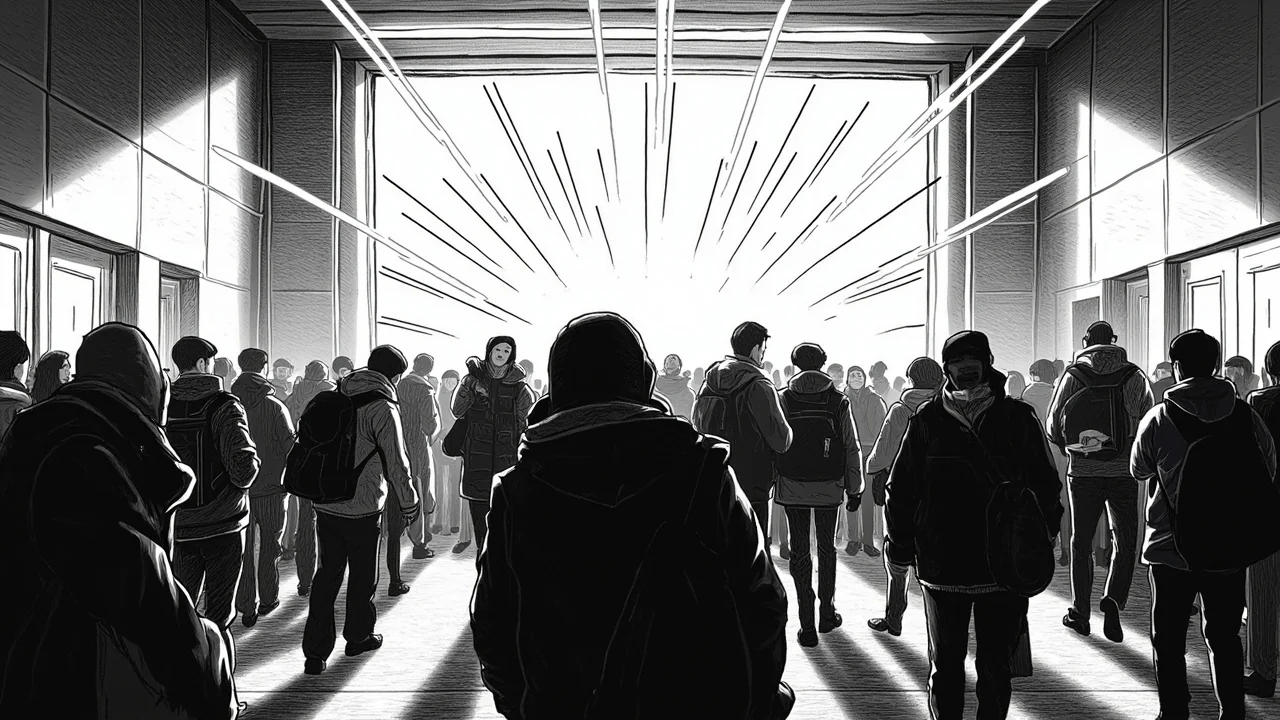
Denmark's Copenhagen metro system, integral to over 600,000 daily passenger journeys, faced a critical safety test Saturday when a fire alarm forced the closure of Lergravsparken station. The alarm triggered an immediate emergency response, halting services on the M1 and M2 lines and dispatching four firefighters to investigate a floor shaft. This incident underscores the fragility of urban infrastructure in a city where public transport is a lifeline for diverse communities. As a journalist covering Danish society, I see such events not just as operational hiccups but as moments that reveal the resilience of our social fabric and the effectiveness of our welfare systems.
Emergency Response Unfolds at Key Hub
Copenhagen's Metro Company confirmed the alarm on its website, stating that trains bypassed Lergravsparken station during the investigation. Firefighters were seen examining a technical shaft in the station floor, a scene that drew attention from commuters and local residents. The disruption affected lines connecting the city center to suburbs like Vestamager and Lufthavnen, areas with high concentrations of immigrant families and students. In moments like these, the metro's role as an equalizer in Danish society becomes starkly apparent. It is more than a transport network; it is a conduit for integration, enabling access to education, jobs, and social services across Copenhagen's municipalities.
Public safety protocols swung into action swiftly, reflecting Denmark's robust emergency preparedness. However, such incidents prompt deeper questions about maintenance and aging infrastructure in a system launched just over two decades ago. The Copenhagen metro, often hailed for its efficiency, has faced occasional technical issues, but fire alarms are rare and treated with utmost seriousness. This event occurred on a Saturday, typically a busy day for shopping and social activities, amplifying its impact on low-income families who rely on affordable transit options. Disruptions can isolate vulnerable groups, particularly in neighborhoods dependent on these lines for connectivity.
Analyzing the Social Ripple Effects
From my perspective, focusing on integration and social policy, this fire alarm is a microcosm of broader challenges in Danish welfare. Copenhagen's metro is a critical component of the city's strategy to foster social cohesion, reducing geographic barriers that often marginalize immigrant communities. When services halt, it disproportionately affects those in outer districts, where public transport is the primary link to urban centers. Statistics from Danish municipalities show that areas like those served by M1 and M2 have higher rates of residents from non-Western backgrounds, making reliable transit key to their participation in society.
The incident at Lergravsparken station highlights the intersection of public safety and social equity. Denmark's welfare system prides itself on universal access, but infrastructure failures can expose gaps in service delivery. For instance, students attending language schools or integration courses may miss crucial appointments, while workers in service industries face income loss from delays. Community leaders in Copenhagen have long advocated for more resilient public transport, arguing that investment in maintenance is an investment in social inclusion. As one local organizer from a social center in Amager noted, 'When the metro stops, our community feels cut off—it's a reminder of how fragile connectivity can be.'
Municipal Protocols and Public Trust
Copenhagen's emergency services, including the fire department, responded within minutes, a testament to Denmark's high standards in public safety. The Metro Company's transparent communication via its website helped manage passenger expectations, but real-time updates are essential for maintaining public trust. In Danish society, where trust in institutions is a cornerstone of the welfare model, incidents like this test the responsiveness of authorities. The investigation into the shaft at Lergravsparken will likely focus on technical causes, but from a policy angle, it should also consider community feedback on service reliability.
Comparatively, Denmark's public transport systems have strong safety records, with few major incidents in recent years. However, this alarm serves as a wake-up call for proactive measures. Municipal budgets for infrastructure upkeep must balance with social spending, a tension in Danish politics. As integration policies emphasize mobility and access, ensuring that transport networks remain dependable is crucial for preventing social exclusion. Data from the Danish Transport Authority indicates that metro disruptions can lead to increased anxiety among commuters, particularly new residents unfamiliar with alternative routes.
Broader Implications for Urban Integration
Reflecting on this event, it's clear that Copenhagen's metro is more than steel and concrete; it's a symbol of Danish egalitarian values. The disruption at Lergravsparken station, though resolved quickly, underscores the need for continuous investment in public infrastructure as a tool for social policy. In a city where over 30% of residents have immigrant backgrounds, according to Copenhagen Municipality figures, efficient transport is vital for economic integration and cultural exchange. Incidents like this can strain the social contract if not handled with sensitivity and transparency.
Looking ahead, Danish authorities should use this as an opportunity to review safety drills and community engagement strategies. Public transport systems in Nordic capitals are often models for sustainability, but they must also be bastions of reliability. For Copenhagen, maintaining its metro's integrity is essential to supporting the welfare system that defines Denmark. As services resume and normalcy returns, we must ask: How can we fortify our infrastructure to better serve all citizens, ensuring that no community is left behind in times of crisis? The answer lies in policies that prioritize both safety and social cohesion, weaving resilience into the urban fabric.