
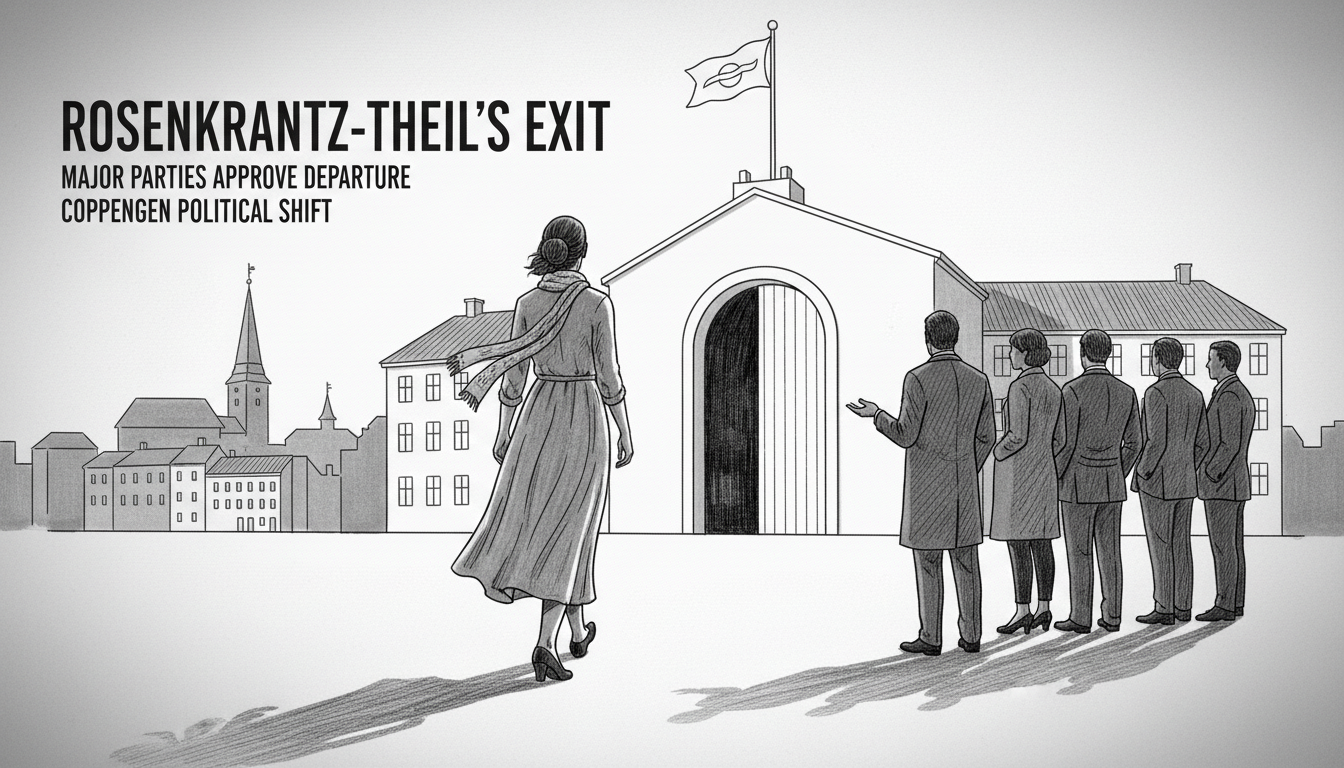
Copenhagen faces an unusual political situation as multiple parties indicate they won't block Pernille Rosenkrantz-Theil's departure from the city council. The former employment mayor candidate received substantial personal votes in the recent election but announced her political exit over the weekend. This development raises important questions about political commitment and municipal governance in Denmark's capital.
Conservative group leader Morten Melchiors expressed mixed feelings about the situation. He called the sudden withdrawal completely unstable and inappropriate behavior. But he also acknowledged that forcing an unwilling politician to remain serves no constructive purpose. The Conservative party will support her departure unless legal advisors strongly recommend otherwise.
Danish municipal regulations typically restrict council members from resigning without valid reasons. Acceptable grounds include health issues, other public positions, or family circumstances. A municipal researcher explained these rules to media outlets, noting Rosenkrantz-Theil hasn't cited any of these traditional justifications.
Emil Moselund of the Social Liberal Party echoed similar practical concerns. He suggested that uninterested politicians shouldn't remain in office regardless of circumstances. The Social Democrats have other capable members who could fill the vacancy, he noted. This reflects Copenhagen's broader political reality where party representation matters deeply for municipal influence.
Political transitions like this impact Copenhagen integration efforts and social service delivery. The employment mayor position oversees crucial programs affecting immigrant communities and workforce development. Rosenkrantz-Theil's departure creates uncertainty about policy continuity in these areas.
The situation highlights tensions within Denmark social policy implementation. Local politicians carry significant responsibility for welfare program administration. When elected officials leave unexpectedly, it disrupts the careful balance of Danish welfare system management. Copenhagen's social centers and municipal services depend on stable political leadership.
Niels Bjerrum has already announced he will assume Rosenkrantz-Theil's council seat. He currently serves as alternate representative for another Social Democrat member. This quick succession planning demonstrates the party's effort to maintain their political influence despite the unexpected vacancy.
The broader implications for Denmark immigration policy remain unclear. Copenhagen integration programs often depend on consistent political advocacy within municipal government. Leadership changes can temporarily slow initiative implementation, particularly for social services targeting immigrant populations.
This incident reflects ongoing challenges in Danish political culture. The high personal vote count for Rosenkrantz-Theil suggests strong public support that now goes unrepresented. Such situations test the resilience of municipal governance structures and public trust in political institutions.
Copenhagen's political landscape continues evolving as parties navigate this unexpected transition. The city's approach to this situation may set precedents for handling similar cases in Danish municipal politics.