
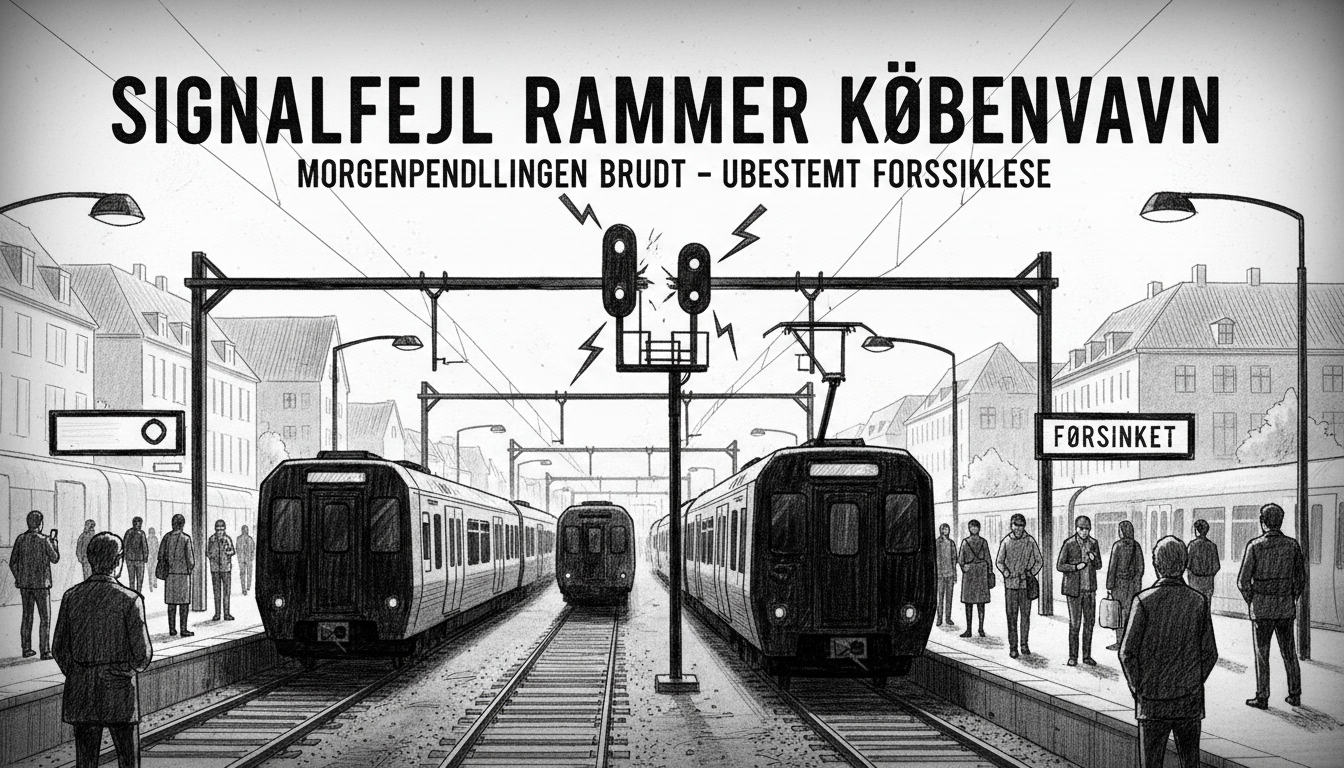
Copenhagen's S-train network experienced significant disruptions during Monday morning rush hour due to signal system failures at Hellerup Station. Fewer trains operated across multiple lines, creating challenges for thousands of commuters navigating Denmark's capital city. The transportation authority confirmed the service reductions at 6:33 AM, affecting critical routes connecting suburban areas with central Copenhagen.
Line A between Hillerød and Hundige saw reduced frequency, while Line C between Copenhagen Central and Klampenborg faced similar cuts. Line E between Svanemøllen and Holte and Line F between Klampenborg and Copenhagen South also operated with limited service. Transportation officials noted potential additional cancellations and delays across other routes as they worked to resolve the technical issues.
This incident highlights the vulnerability of urban transit systems that thousands of Copenhagen residents rely on daily. The S-tog network typically transports approximately 357,000 passengers each weekday, making it the backbone of metropolitan mobility. When signal failures occur, they create ripple effects throughout the city's transportation ecosystem.
Public transportation reliability directly impacts social integration in Danish society. New residents and international commuters often depend heavily on predictable transit schedules to access employment, education, and community services. Service disruptions can disproportionately affect those still navigating Copenhagen's urban landscape and learning Danish social systems.
Municipal social centers across Copenhagen regions note that transportation access remains crucial for successful integration. Reliable public transit enables participation in language classes, cultural activities, and community events that foster connection. When systems fail, it creates barriers beyond simple inconvenience.
Danish welfare systems traditionally prioritize efficient public services as part of their social contract. Transportation infrastructure represents a key component of this commitment, with substantial public investment in maintaining and upgrading networks. Technical failures like Monday's signal problems test this social compact and raise questions about maintenance priorities.
Transportation authorities have not provided an estimated resolution time, leaving commuters to seek alternative arrangements. The ongoing situation demonstrates how technical infrastructure directly shapes daily life in Scandinavian urban centers. Copenhagen's integration success often depends on these fundamental systems operating smoothly.
As Denmark continues refining its immigration policies and social support structures, reliable public infrastructure remains foundational. Monday's disruptions serve as a reminder that social policy implementation depends on practical systems functioning as intended. The relationship between technical reliability and social inclusion deserves continued attention from municipal planners and policymakers alike.